Anna Netrebko has delivered a performance of operatic greatness, transforming the Royal Opera House's enduring production of Turandot. The Russian soprano's appearance in the title role for a limited run of pre-Christmas performances has provided the defining highlight of this classic staging's latest revival.
A Theatrical Classic Endures
Andrei Serban's production, first seen in 1984, celebrates its 40th anniversary this year. Despite its age, it remains a formidable box office draw, with 22 performances scheduled at Covent Garden within a single year. In an economically challenging climate for opera, Puccini's final, unfinished work offers reliable appeal, not least due to the iconic tenor aria Nessun Dorma.
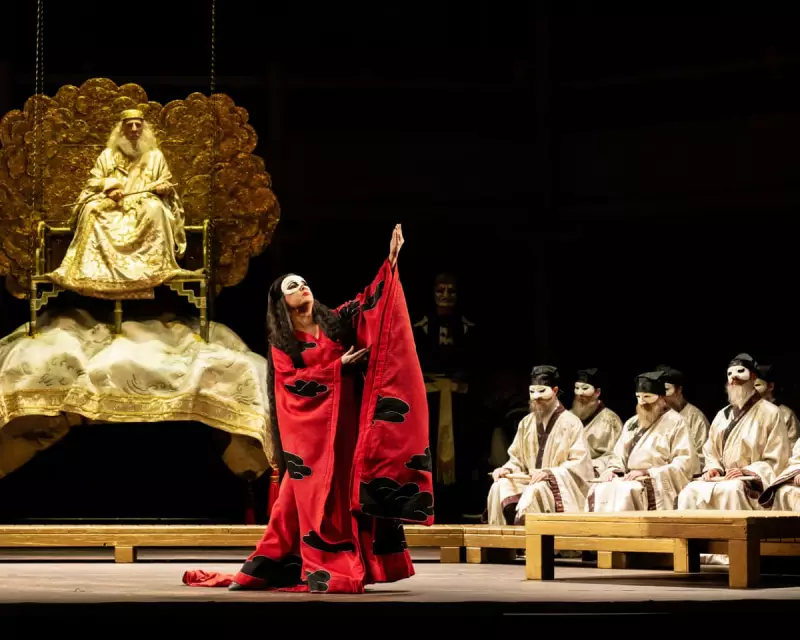
Revived confidently by Jack Furness, the production is known for its oppressive sets and shadowy, watching figures. Kate Flatt's eye-catching orientalist choreography adds to the ritualistic atmosphere of what is Puccini's darkest and most choral opera. The staging is a proven theatrical commodity, blending musical innovation with sheer spectacle.

Netrebko's Transformative Presence
The arrival of Anna Netrebko, however, shifted the entire production onto a different plane. From her first entrance in the second act, her vocal richness and grand phrasing rendered much of what preceded it as routine. She brings a combination of formidable power and, where Puccini's score allows, a surprising softness and extended lyrical line.
While some may note occasional caveats regarding vibrato or textual detail, such critiques place her in the league of legends like Maria Callas and Joan Sutherland. Her interpretation of the icy princess avoids metallic harshness, instead finding nuance in the great riddle scene that forms the opera's core. It is a performance that reminds the audience they are witnessing true greatness.
A Strong Cast in a Formidable Shadow
Inevitably, the other principals were somewhat eclipsed by Netrebko's commanding presence. Yusif Eyvazov began stentorianly as Calaf, the determined suitor, though his rendition of Nessun Dorma later relied more on vocal heft than lyricism. Masabane Cecilia Rangwanasha offered a warmly sung and touching portrayal of the slave girl Liù, the opera's true emotional heart.
The trio of ministers—Ping, Pang, and Pong—were energetically played by Simone del Savio, Emmanuel Fonoti-Fuimaono, and James Kryshak. Rafał Siwek provided dignified support as the exiled king Timur, and veteran tenor Raúl Giménez appeared as the Emperor Altoum. In the pit, conductor Daniel Oren led a relentless but ultimately unilluminating performance.
The current run of Turandot at the Royal Opera House continues until 4 February. While Serban's production remains a compelling classic, it is Netrebko's exceptional contribution that will define this particular chapter in its long and successful history.