A major new Netflix documentary promises to peel back the glossy pop veneer of one of Britain's most successful boy bands, revealing a history of internal strife, personal demons, and profound mental health battles.
The Highs and Devastating Lows of a Pop Phenomenon
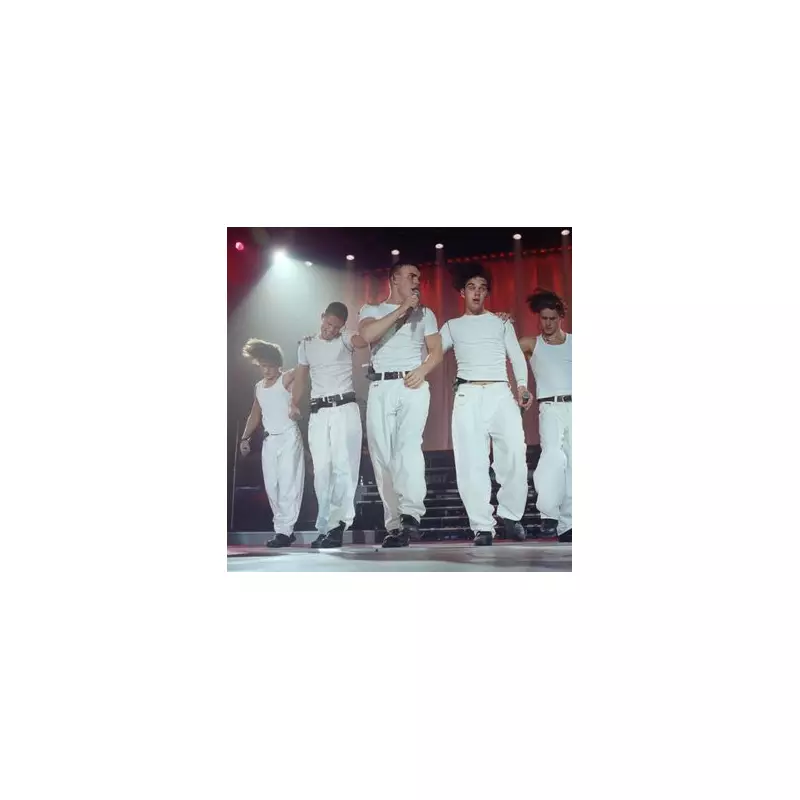
Take That, the defining boy band of their generation, have enjoyed staggering success since forming in 1990, amassing 12 UK Number 1 singles and nine Number 1 albums. However, a forthcoming three-part series, titled simply 'Take That', uses 35 years of rare archive and new interviews to expose the turbulent reality behind the hits.
The documentary, which launches on Tuesday, January 27, features candid revelations from Gary Barlow, Howard Donald, and Mark Owen, alongside archive footage of former members Jason Orange and Robbie Williams. Gary Barlow admitted that revisiting the past was challenging, particularly the period after the band's initial split. "Some of it was hard to watch," he said. "It was just a hard, hard time."

Robbie's Exit and Howard's Suicide Contemplation
The film charts the band's relentless early grind and subsequent stratospheric fame, before detailing the cracks that appeared. Robbie Williams's growing frustration with his secondary role and Gary Barlow's songwriting dominance culminated in his infamous exit in July 1995, shortly after a booze-fuelled appearance at Glastonbury.
Williams confesses he was drinking neat vodka daily, describing himself as an alcoholic who was "not fit" for rehearsals. His departure foreshadowed the band's complete dissolution a year later, a decision that hit Howard Donald the hardest.
In one of the documentary's most heartbreaking admissions, Donald reveals he was pushed to the brink. "It was almost going towards a depressive state," he recalls. "I decided to go to the Thames... I was seriously thinking of jumping in, thinking I wanted to kill myself." He credits a long-term partner with helping him through that dark period.
Barlow's Crippling Jealousy and Retreat from the Spotlight
Following the split, Gary Barlow's launch of a solo career coincided with a very public and bitter feud with Robbie Williams. The war of words turned decisively when Williams released the mega-hit 'Angels', propelling him to untouchable solo stardom.
"I remember sat there thinking, 'Well, that's it. I can't catch that'," Barlow admits. Consumed by jealousy, he fled to America on a failed radio tour, only to return to the UK and be dropped by his record label. He became a "national laughing stock", mocked on TV shows and at awards ceremonies.
Barlow subsequently entered a deep depression, not leaving his Cheshire home for 13 months. "I just wanted to crawl into a hole," he says. He purposefully gained weight to avoid recognition and developed an eating disorder, while pretending to his family he was still writing music. "I'd literally sit there watching the piano... It is awful and it went on for years," he confesses.
Reformation, New Dynamics, and Lasting Scars
The documentary also covers the band's triumphant, if complex, reformation in 2005. Spurred by a documentary project and their own financial and professional uncertainties, the four-piece (minus Williams) reconvened. A tipsy rehearsal of their dance to 'Pray' convinced them they could still perform.
The comeback led to huge success, but with changed dynamics, including equal songwriting royalties. However, Jason Orange remained uneasy with the scale of the operation and eventually quit after Robbie Williams briefly rejoined for a tour, leaving the band as the current trio of Barlow, Donald, and Owen.
The series concludes by reflecting on the band's enduring legacy and the scars that remain. It is a raw and unvarnished look at the price of pop stardom, the fragility of mental health, and the difficult path to reconciliation—both with each other and with their past selves.
*'Take That' is released on Netflix on Tuesday, January 27.*