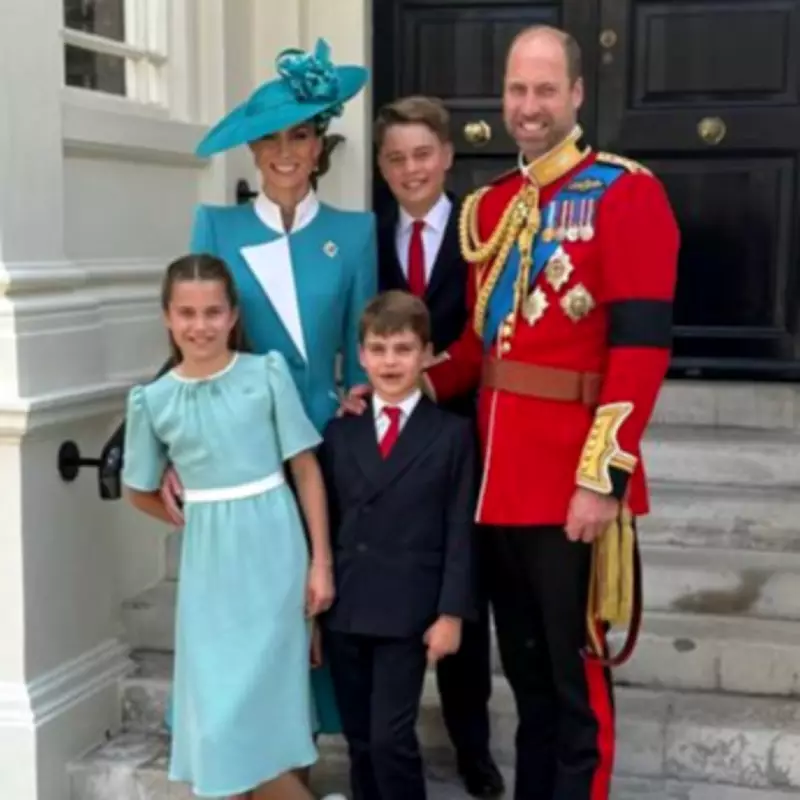
For generations, the established image of royal parenting was characterised by formality, distance, and a profound sense of duty, often placing public responsibilities above private family life. However, the Princess of Wales, Kate Middleton, has fundamentally rewritten this long-standing rulebook, embracing a modern, family-centric approach that reflects the realities of raising children in what experts describe as 'a totally different age'.
A Simple Question That Signals Profound Change
According to royal expert and author Katie Nicholl, the mother-of-three operates with one clear, non-negotiable priority. Before any official engagement or overseas tour is finalised, her first question to aides is not about diplomatic protocols or sartorial requirements. Instead, she consistently asks: "How does this work for us as a family?" This simple yet powerful inquiry underscores a seismic shift in priorities within the monarchy, placing family cohesion at the forefront of royal planning.
Hands-On Parenting in a Modern Monarchy
While the family does benefit from the support of nanny Maria Teresa Turrion Borrallo, who has been with them since 2014, the arrangement is notably 'light touch'. Nicholl explains that the help is essential due to their demanding schedules but is not a round-the-clock presence. "We're not talking about butlers, chefs and housekeepers either – it's very slimline," she notes. Kate Middleton actively seeks to maintain a hands-on role in her children's daily lives, reportedly enjoying responsibilities like the school run and ensuring the family sits down to eat together whenever possible.

Contrasting With Historical Precedents
This contemporary approach stands in stark contrast to the parenting norms of previous royal generations. Historical examples, such as Queen Elizabeth II and Prince Philip embarking on a six-month Commonwealth tour in 1953 while leaving a young Prince Charles and Princess Anne at home, now seem almost unthinkable under the current model. Every effort is now made to ensure Prince George, Princess Charlotte, and Prince Louis experience a childhood that is as ordinary as possible, complete with playdates, school clubs, and typical family activities.
The Diana Legacy and Its Evolution
This modern philosophy of royal motherhood finds its roots in the groundbreaking approach of the late Princess Diana. She was the first to significantly challenge tradition by, for instance, taking a baby Prince William on an official tour and insisting on public displays of affection with her sons. Diana famously injected a sense of normalcy and fun into their upbringing, organising trips to theme parks like Thorpe Park, visits to the cinema, and meals at McDonald's.
She also worked to instil empathy from an early age, taking William and Harry to visit hospitals and homeless shelters. "Life outside palace walls was very much Diana's vision," says Katie Nicholl, "and Kate and William have taken that further with their three children." The current Prince and Princess of Wales have embraced and expanded upon this legacy, fully integrating their roles as parents with their duties as senior working royals, thereby redefining what it means to raise a future king and his siblings in the 21st century.