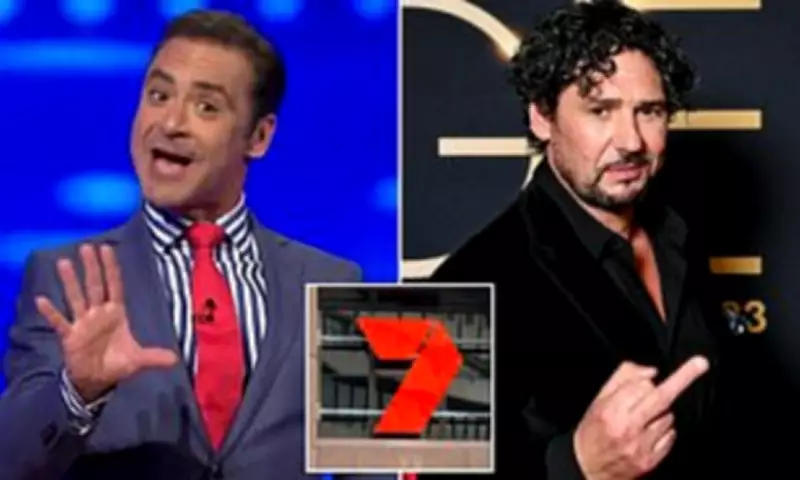
Channel Seven's Historic Tolerance for Controversial Stars Faces Major Review
For years, industry critics have quipped that Channel Seven operated under a straightforward principle regarding its top personalities: if ratings remained strong, negative headlines were largely irrelevant. However, this long-standing cultural approach within Australian television now appears poised for significant transformation. Following Southern Cross Media's acquisition of the network, television insiders report growing speculation that Seven's historic leniency toward controversial on-air talent may soon undergo rigorous reassessment.
New Ownership Signals Cultural Shift
Multiple sources indicate that Southern Cross leadership is actively seeking to reshape the broadcaster's internal culture, particularly concerning the management of high-profile personalities who generate adverse publicity. 'There's definitely a feeling the rules could be changing,' one industry insider revealed to Daily Mail. 'For years Seven maintained a reputation for supporting its stars through turbulent periods. The crucial question now is whether the new regime will adopt this same permissive approach.'
The network has previously faced substantial criticism for its handling of controversial figures, with the Andrew O'Keefe saga frequently cited as emblematic of Seven's willingness to stand by talent during difficult times. O'Keefe, once celebrated as a network 'golden boy' hosting popular programs including Deal Or No Deal, The Chase Australia, and Weekend Sunrise, experienced multiple controversies before Seven ultimately declined to renew his contract in late 2020.
Past Controversies Resurface
O'Keefe's subsequent public struggles with drug addiction have included rehabilitation center admissions and legal issues. In June last year, he was compelled to return his Order of Australia following complaints about retaining the honour despite assault and drug convictions. More recently, in July 2024, the former Deal or No Deal host tested positive for methamphetamine while driving in Sydney's eastern suburbs. He pleaded guilty to driving with meth in his system at Waverley Local Court in February 2025, receiving a $440 fine and six-month driving disqualification.
Current Stars Under Scrutiny
Industry observers note that the cultural mood within Channel Seven appears to be shifting as new ownership establishes itself. One situation reportedly fueling internal discussions involves Seven personality Colin Fassnidge, whose recent court appearance has reignited conversations about how the broadcaster manages public controversies involving its stars.
The celebrity chef appeared in a NSW Local Court this week after pleading guilty to driving with cocaine in his system following a roadside drug test in Sydney last year. Despite this being a repeat offence, Fassnidge avoided conviction and was instead placed on a two-year good behaviour bond. He informed the court that the fallout had already cost him sponsorships and placed television opportunities on hold.
Broader Cultural Redefinition
This situation has prompted renewed industry-wide discussion about how television networks respond when high-profile talent becomes embroiled in public controversies. According to industry chatter, some executives believe the new leadership may adopt a firmer stance than previous management when similar situations arise. Others suggest the potential transformation extends beyond targeting individual personalities to redefining the broader cultural environment that has characterized the network for years.
'It's less about any one person and more about the environment moving forward,' the insider explained. 'There's a growing sense that matters which might have been overlooked in the past could now be addressed very differently.' Whether this cultural evolution ultimately results in significant talent changes remains uncertain, but with new owners now steering the network, many within television believe Channel Seven could be entering a distinctly different era.
Uncertain Future for Controversial Stars
For some of the broadcaster's more controversial personalities, this cultural shift could signal that the era of unlimited second chances is concluding. Inside Channel Seven, uncertainty reportedly surrounds whether Colin Fassnidge might be dropped from My Kitchen Rules if new leadership decides to make an example of the popular television host and celebrity chef.
The landmark merger between Seven West Media and Southern Cross Media Group became official in January, combining Seven Network's television and publishing assets with SCA's extensive Triple M and Hit Network radio products in a $2 billion deal. This corporate restructuring has already brought significant leadership changes, with billionaire Kerry Stokes stepping down as chairman last month, marking the end of an era for the media mogul.
Former SCA chair Heith Mackay-Cruise has assumed the interim chairman position, while the new board made the surprising decision to dismiss CEO Jeff Howard, appointing former SCA CEO John Kelly as interim head of television and radio divisions until a permanent chief executive is identified. Daily Mail has contacted Seven for comment regarding these cultural developments.