Critics Deeply Divided Over New Wuthering Heights Film Adaptation
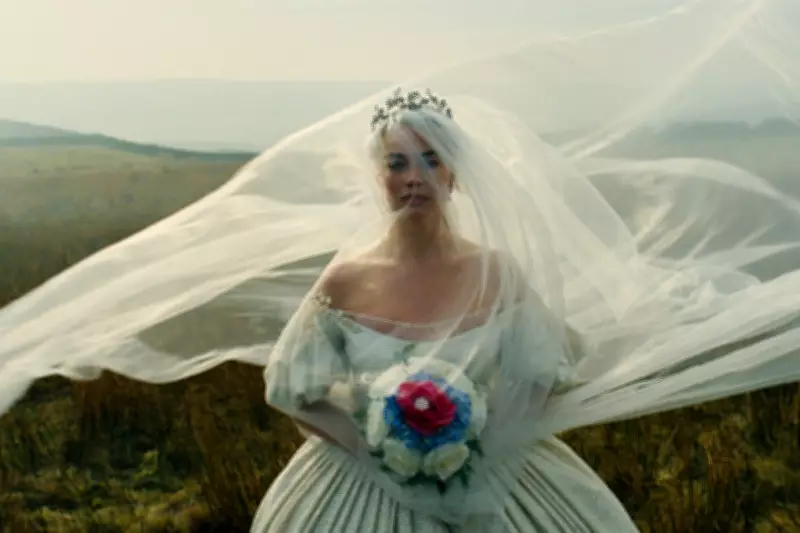
Emerald Fennell's highly anticipated new film adaptation of Emily Brontë's classic gothic novel Wuthering Heights has premiered to a fiercely polarised critical reception. Starring Margot Robbie as Cathy and Jacob Elordi as Heathcliff, the movie is described as a very loose interpretation that aims to recall Fennell's own teenage experience of reading the text.
Praise for Bold and Wild Stylistic Choices
Among the positive reviews, the BBC awarded the film four stars, noting: "Under it all, Fennell channels something essential in the book – the corrosive behaviour that can result from thwarted desire. Jealousy, anger and vengeance are as natural to Cathy and Heathcliff as their endless passion for each other." The review suggested that if viewers embrace the film's audacious style as a reinvention rather than a strict adaptation, they would find it "utterly absorbing."
Robbie Collin of The Telegraph bestowed a five-star rating, praising the production as "resplendently lurid, oozy and wild." He described it as "an obsessive film about obsession" that hungrily embroils viewers in its own mad compulsions. Collin compared it to Fennell's previous work Saltburn, suggesting it might be even lewder though slightly less graphic, with bodily fluids savoured and traditional bodice-ripper elements present throughout.

Scathing Criticism of Emotional Depth and Characterisation
However, other prominent critics delivered scathing assessments of the adaptation. The Guardian's Peter Bradshaw awarded just two stars, contending the film "doesn't have the live-ammo impact" of Fennell's previous works. He elaborated that it appeared as "a luxurious pose of unserious abandon" that was "quasi-erotic, pseudo-romantic and then ersatz-sad, a club night of mock emotion."
The Times' Kevin Maher also gave two stars, criticising what he called the "chemistry-free central romance between the bizarrely uninteresting Heathcliff and Cathy." He noted "conspicuous longueurs and characterisations that barely reflect the complexity of an Instagram reel let alone the greatest gothic novel in English literature." Maher described Robbie's Cathy as living "entirely on the surface like Bronte Barbie" while Elordi's Heathcliff represented a "fatally shallow characterisation" with a shaky Yorkshire accent.
Harshest Assessment Questions Adaptation's Integrity
The Independent's Clarisse Loughrey delivered the harshest critique with a single-star rating, calling the film "an astonishingly hollow work." She argued that it "uses the guise of interpretation to gut one of the most impassioned, emotionally violent novels ever written, and then toss its flayed skin over whatever romance tropes seem most marketable."
Loughrey observed that Heathcliff had become "a wet-eyed, Mills & Boon mirage created entirely to induce swooning" rather than the complicated, challenging figure from the novel. She concluded that while Robbie and Elordi "don't entirely lack chemistry, their characters do feel so thinned out that their performances are pushed almost to the border of pantomime."
Release and Broader Context
This highly polarising adaptation of Wuthering Heights is scheduled for release in UK cinemas on 13 February. The division among critics reflects broader debates about how classic literature should be adapted for contemporary audiences, with some embracing bold reinterpretations while others demand greater fidelity to source material's emotional complexity and character depth.
The film represents Fennell's follow-up to her controversial success Saltburn, continuing her exploration of provocative themes and stylised aesthetics. Whether audiences will side with critics praising its wild, lurid qualities or those condemning its emotional hollowness remains to be seen as the film reaches wider viewership.