Dead Man's Wire Review: Gus Van Sant's Bland Take on Outrageous True Crime
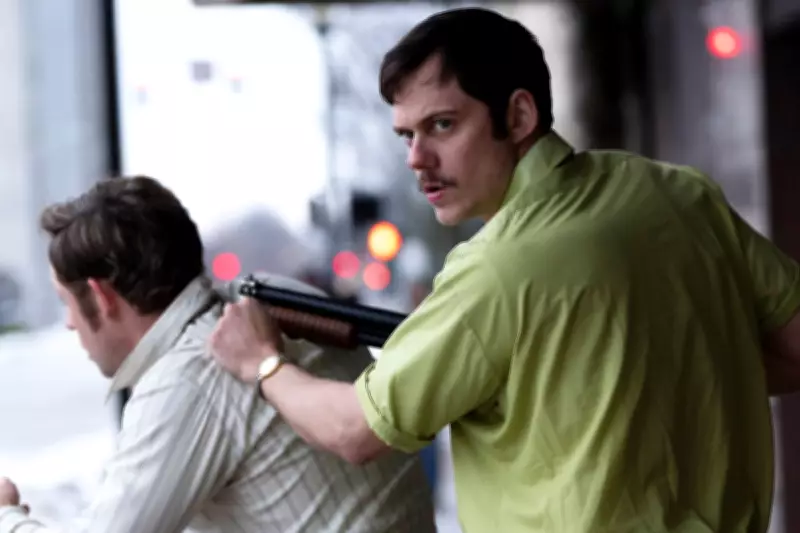
Gus Van Sant's latest film, Dead Man's Wire, attempts to hold audiences captive with a retelling of one of the most shocking true crime stories from the 1970s. Starring Bill Skarsgård and Al Pacino, this thriller recounts the events of February 8, 1977, when Tony Kiritsis took mortgage broker Richard Hall hostage in a dramatic standoff.
A Tense Premise with Historical Specificity
The film's title derives from the deadly contraption Kiritsis used: a thin wire wrapped around Hall's neck, connected to a shotgun that would fire with any sudden movement. This setup creates an atmosphere of imminent danger, yet Van Sant's direction often feels claustrophobic and restrictive. Instead of exploring the broader implications of the story, the film pins viewers too close to the immediate situation, limiting their ability to engage with the characters' deeper motivations.
Bill Skarsgård delivers a twitchy, intense performance as Kiritsis, capturing the volatile nature of a man driven by proletariat rage after being wronged by financial institutions. His portrayal, complete with a distinctive moustache and fringe, adds a layer of unpredictability to the character. However, the film's narrow focus prevents Skarsgård from fully exploring Kiritsis's complexity as a symbol of era-defining combustibility.

Nostalgic Elements and Media Portrayals
Dead Man's Wire leans heavily into historical nostalgia, depicting a time when cassette tapes, corded telephones, and local radio held significant cultural power. Colman Domingo shines as radio DJ Fred Temple, whose charismatic voice and celebrity status are used to manipulate Kiritsis during the crisis. Similarly, Myha'la's portrayal of television journalist Linda Page highlights the media's role in shaping public perception during the Seventies.
Al Pacino's performance as Hall's father adds a gleeful, almost theatrical dimension to the film, with his Foghorn Leghorn accent and legendary acting prowess drawing clear parallels to his role in Dog Day Afternoon. Van Sant's references to this classic film underscore his exploration of the American psyche, though the connection feels more like an homage than a substantive commentary.
Missed Opportunities and Narrow Vision
Despite its compelling premise, Dead Man's Wire falls short as a biopic. Kiritsis's self-conscious attempts to portray himself as an average Joe clash with the film's inability to answer deeper questions about the line between thief and Robin Hood. Van Sant's direction, while technically proficient, lacks the breadth needed to fully contextualize the story within its socio-economic backdrop.
The police investigation, led by Cary Elwes's Detective Michael Grable, is depicted as a chaotic "f***ing shit show," with psychologists simplistically labeling Kiritsis's motives as "anger." This superficial analysis undermines the film's potential to delve into the systemic issues that fueled such acts of desperation.
Ultimately, Dead Man's Wire is a film that prioritizes historical accuracy over narrative depth. While it captures the tension and panic of the 1977 hostage crisis, it fails to provide the insightful biopic that Kiritsis's story deserves. Van Sant's vision remains too narrow, leaving audiences with a gripping but ultimately bland retelling of an outrageous true crime event.
Director: Gus Van Sant
Starring: Bill Skarsgård, Dacre Montgomery, Cary Elwes, Myha'la, Colman Domingo, Al Pacino
Certificate: 15
Runtime: 106 minutes
Release Date: In cinemas from 20 March