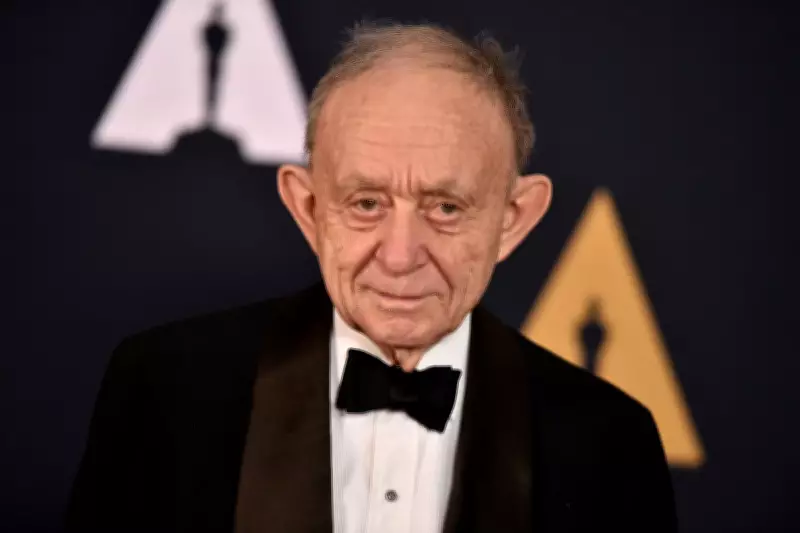
The world of cinema has lost one of its most influential and revered documentary filmmakers. Frederick Wiseman, the Oscar-winning director whose penetrating examinations of American institutions defined a genre, died on Monday at the age of 96. His passing was confirmed through a joint statement issued by his family and his long-standing production company, Zipporah Films.
A Legacy of Unadorned Truth
Frederick Wiseman's career was a monumental exploration of the fabric of American society. With more than 35 documentaries to his name, many spanning several hours, he crafted a unique and revelatory history of the nation's public and private institutions. His films, which aired widely on public television and were celebrated at international festivals, earned him an honorary Academy Award in 2016, cementing his status among the world's most admired filmmakers.
"He will be deeply missed by his family, friends, colleagues, and the countless filmmakers and audiences around the world whose lives and perspectives were shaped by his unique vision," the official statement read in part. Additional details regarding his death were not immediately disclosed.

Pioneering a Distinct Cinematic Style
Wiseman did not begin his filmmaking journey until his mid-30s, but he quickly ascended to rank alongside celebrated peers like D.A. Pennebaker and Robert Drew. He was instrumental in establishing the modern documentary as a vital and surprising art form. His signature style was marked by the absence of narration, prerecorded soundtracks, and title cards. He operated with a minuscule crew, often serving as his own sound engineer, which allowed for a seamless and profoundly affecting cinematic experience.
Despite frequent associations, Wiseman forcefully rejected the label of "cinema verite," dismissing it as a "pompous French term that has absolutely no meaning." His approach was more nuanced, focusing on raw observation rather than stylistic dogma.
Landmark Films and Lasting Impact
Wiseman's filmography is a catalog of American life, with self-explanatory titles that spoke to their content: "High School," "Hospital," "Public Housing," "Basic Training," and "Boxing Gym." However, his true subject was always human behavior within these structured environments.
"The institution is also just an excuse to observe human behavior in somewhat defined conditions," Wiseman told The Associated Press in 2020. "The films are as much about that as they are about institutions."
The Controversial Masterpiece: Titicut Follies
His first full-length film, "Titicut Follies" (1967), became a landmark of documentary cinema and a source of prolonged legal controversy. The film exposed the harrowing conditions at the Bridgewater State Hospital for the criminally insane in Massachusetts. Its shocking footage of inmate mistreatment led state officials to successfully restrict its release for over two decades, granting it an almost mythical status among cinephiles.
Superior Court Judge Andrew Meyer, who eventually lifted all restrictions in 1991, acknowledged the intrusion but praised the film's immense value, writing: "I also regarded 'Titicut Follies' as an outstanding film, artistically and thoughtfully edited with great social and historical value. Another observation about the film: It is true."
Capturing the American Experience
In "High School" (1968), Wiseman turned his lens on a suburban Philadelphia school, capturing the mundane and the profound—from a student's request to use a telephone to an English teacher's earnest analysis of Simon & Garfunkel lyrics. The New Yorker's Pauline Kael noted that the film evoked a powerful empathy, extending "our understanding of our common life the way novelists used to."
Wiseman's work balanced the bitter and the sweet. He documented cruelty and indifference but also kindness and civility. "I think it's as important to document kindness, civility and generosity of spirit as it is to show cruelty, banality and indifference," he remarked upon accepting his honorary Oscar.

A Life of Diverse Pursuits
Born in Boston to a prominent attorney father and a mother who worked in a children's psychiatric ward, Wiseman's path to filmmaking was unconventional. He was educated at Williams College and Yale Law School, and his early career included work in the Massachusetts attorney general’s office, a stint as a court reporter, and roles in academia.
Drafted into the Army in 1955 and stationed in Paris, he began experimenting with a Super 8 camera. "I reached the witching age of 30 and figured I better do something I liked," he recalled in a 2016 interview. The advent of synchronous sound technology opened new possibilities, and he seized them.
His filmmaking career began in narrative drama, producing the 1964 adaptation of "The Cool World." This experience gave him the confidence to direct, leading to his groundbreaking documentary work.
An Enduring Creative Spirit
Wiseman's productivity never waned. In his 80s and 90s, he created ambitious works like "Crazy Horse," about a Parisian dance revue; the four-hour "At Berkeley," exploring the famed university; and "Monrovia, Indiana," a portrait of a rural community. He also had a significant parallel career in theater, staging plays and even adapting his film "Welfare" into an opera. In 2025, he took brief acting roles in two acclaimed movies.
Much of his work was produced through Zipporah Films, named for his wife, who died in 2021. He is survived by their two children. Frederick Wiseman's unparalleled body of work stands as a poetic and unflinching chronicle of American life, ensuring his legacy will endure for generations to come.