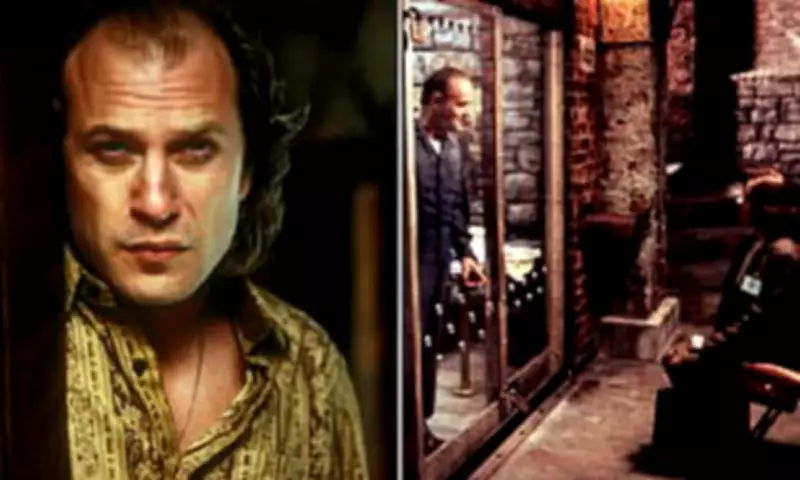
In a significant cultural reappraisal, the creators behind the Oscar-winning horror masterpiece The Silence of the Lambs have publicly expressed profound regret towards the transgender community concerning the film's depiction of the character Buffalo Bill. This landmark apology arrives precisely thirty-five years after the film's initial release on February 14, 1991, as contemporary critics increasingly condemn its failure to align with modern social sensibilities.
A Legacy Under Scrutiny
Actor Ted Levine, who portrayed the serial killer Buffalo Bill, and producer Edward Saxon have both issued formal apologies for what they now recognise as a decades-old cinematic misstep. The film, adapted from Thomas Harris's novel, follows FBI trainee Clarice Starling, played by Jodie Foster, as she hunts the elusive Buffalo Bill with the infamous assistance of cannibalistic psychiatrist Hannibal Lecter.
Despite achieving monumental critical success, including sweeping the 1992 Academy Awards with wins for Best Picture, Best Director, Best Actor, Best Actress, and Best Adapted Screenplay, the film's legacy is now shadowed by controversy. Levine's chilling performance as Buffalo Bill has faced intense modern criticism for perpetuating homophobic and transphobic stereotypes.

The Problematic Portrayal
In the narrative, Buffalo Bill is depicted donning women's clothing, stalking female victims, and wearing their skin in a grotesque attempt to construct a 'woman suit' to alter his identity. This portrayal has been widely interpreted as linking trans identity with violent psychopathy, a harmful trope that the creators now acknowledge.
Levine candidly told The Hollywood Reporter that certain elements of the film have not aged well. 'There are certain aspects of the movie that don't hold up too well,' he admitted. 'We all know more, and I'm a lot wiser about transgender issues. There are some lines in that script and movie that are unfortunate.'
One particularly criticised line involves Hannibal Lecter explicitly stating that Buffalo Bill is 'not really transgender,' describing him as a man who 'hates his own identity' and mistakenly 'thinks that makes him a transsexual,' while his pathology is portrayed as uniquely savage.
Creators Reflect on Creative Choices
Producer Edward Saxon echoed these sentiments, clarifying that the creative team never intended Buffalo Bill to be interpreted as trans or gay, but rather as a profoundly deranged individual. 'We were really loyal to the book,' Saxon explained. 'As we made the film, there was just no question in our minds that Buffalo Bill was a completely aberrant personality — that he wasn't gay or trans. He was sick.'
However, Saxon expressed deep remorse for the unintended consequences, stating, 'To that extent, we missed it. From my point of view, we weren't sensitive enough to the legacy of a lot of stereotypes and their ability to harm.' He emphasised that the portrayal did not stem from malice, but from a lack of awareness at the time.
Fan Backlash and Cultural Debate
This apology has ignited fierce debate among the film's dedicated fanbase, with many expressing outrage that the creators are apologising for what they consider one of the greatest horror films ever made. On social media, one fan urged others to 'purchase a physical copy of it before it's deemed 'problematic',' while another lamented, 'I guess this is yet another example that many of the greatest films ever made couldn't be made today.'
A third commentator argued, 'The notion that it is transphobic is also absurd...they make it clear the killer Buffalo Bill isn't trans.' This highlights the ongoing tension between artistic legacy and evolving social standards.

Levine's Personal Conflict
Despite the film's enduring cult status, Ted Levine harbours conflicted emotions about his iconic role. He reflected, 'I didn't play him as being gay or trans. I think he was just a f***ed-up heterosexual man. That's what I was doing.' Yet, he unequivocally condemned the film's broader implications, stating, 'It's unfortunate that the film vilified that, and it's f****ed wrong. And you can quote me on that.'
This heartfelt apology from the film's creators marks a pivotal moment in Hollywood's ongoing reckoning with its past, demonstrating how even revered classics are being re-evaluated through a modern ethical lens. The dialogue surrounding The Silence of the Lambs underscores the complex interplay between cinematic art, historical context, and contemporary values.