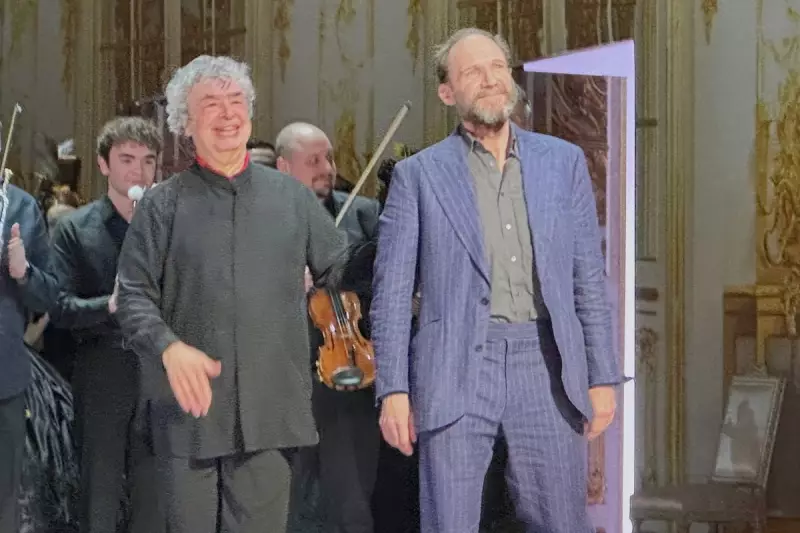
Renowned actor Ralph Fiennes has embarked on a remarkable new artistic journey, making his highly anticipated opera directing debut at the prestigious Paris Opera. The celebrated star of stage and screen has taken the helm of Tchaikovsky's timeless masterpiece "Eugene Onegin" at the historic Palais Garnier, bringing his distinctive cinematic perspective to the operatic world for the first time.
A Cinematic Vision for the Opera Stage
The three-time Academy Award nominee and Tony Award winner approached his operatic debut with the visual sensibility of a film director, carefully controlling audience focus through innovative lighting techniques. Fiennes employed bright illumination near the proscenium while allowing other characters to recede into faded lighting at the rear, creating a dramatic visual hierarchy that echoes cinematic close-up techniques.
"It became clear that his priorities are quite cinematic as if everything is kind of in close up," observed mezzo-soprano Susan Graham, who performs Madame Larina in the production. This approach represents a significant departure from traditional opera staging, with Fiennes encouraging performers to eschew grand gestures in favour of more subtle, emotionally authentic movements.

Historical Connections and Personal Journey
Fiennes' relationship with Pushkin's 1833 novel, which forms the basis of Tchaikovsky's opera, spans decades. The actor first encountered the work as a drama student when a teacher suggested he read Pushkin's novel in verse. "I was completely transfixed by the poem and the character," Fiennes recalled during a public discussion earlier this month.
This personal history deepened when Fiennes portrayed the title character in the 1999 film adaptation "Onegin," directed by his sister Martha Fiennes. His connection to Russian culture further developed through directing "The White Crow," a 2018 film about ballet legend Rudolf Nureyev.
The invitation to direct came from conductor Semyon Bychkov, recently announced as the Paris Opera's future music director. "Ralph is an immense actor and director, with a profound connection to Russian culture," Bychkov wrote in a text message explaining his choice.
Innovative Rehearsal Techniques and Staging
Fiennes introduced unconventional rehearsal methods that surprised the experienced opera cast. He frequently asked singers to speak the libretto rather than sing it, helping them connect more deeply with the text's conversational qualities. Armenian soprano Ruzan Mantashyan, who portrays Tatyana, found this approach revelatory despite its initial strangeness.
"It's strange for a singer to do, but I think during that you discover some new possibilities or new colours that you could use in your acting," Mantashyan explained. "Of course, it comes from the actor's perspective. He listens to music, but his first tool is in the text."
The production features simple yet evocative sets by Michael Levine, with trees on backdrops and leaves on the ground establishing the Larin country estate. These elements transform seamlessly as the action moves to snowy outdoor scenes for Lensky's fateful duel with Onegin in Act 2, before transitioning to Prince Gremin's opulent St. Petersburg ballroom in the final act.
Contemporary Sensibilities in Period Setting
Despite setting the opera firmly in the 1830s, Fiennes emphasised contemporary body language and emotional authenticity. Costume designer Annemarie Woods created outfits that aren't strictly period-accurate, allowing for more natural movement and expression. This blend of historical setting with modern physicality creates a unique tension that enhances the emotional impact of key scenes.
The production's emotional intensity proved particularly powerful during rehearsals, with tenor Bogdan Volkov reportedly having tears streaming down his face during Lensky's second-act aria. Baritone Boris Pinkhasovich, in the title role, occasionally sings directly to the audience rather than to other characters, creating an intimate connection that breaks traditional operatic conventions.

Accelerated Production Timeline
The entire production came together with remarkable speed, with rehearsals beginning on December 1st and moving to the stage on January 9th, just two and a half weeks before the January 27th premiere. This compressed timeline surprised some participants but ultimately contributed to the production's fresh, spontaneous energy.
"The process is very fast and very, very messy and some people are very surprised by that," admitted set designer Michael Levine. "I think maybe it's helpful having me around saying: Don't worry. Just keep pushing, keep working on all this time and detail and moving forward."
Critical Reception and Future Broadcast
The production has already generated significant excitement, with the entire eleven-performance run through February 27th completely sold out. French television will broadcast the opera on February 9th, allowing a wider audience to experience Fiennes' directorial interpretation.
Fiennes' final vision for the production culminates in a powerful image of the shattered Onegin, collapsed and sobbing while clutching the shawl he grabbed from Tatyana during their confrontation - the same shawl she wore when they first met. This poignant visual conclusion underscores the production's emphasis on emotional authenticity and psychological depth.
As Fiennes returns to London theatre in April with David Hare's "Grace Pervades," his successful operatic debut marks a significant expansion of his already impressive directorial repertoire, demonstrating that cinematic vision can translate powerfully to the operatic stage when guided by genuine artistic connection and innovative thinking.