Rom-Com Renaissance: Winter's Heartwarming Wave from Broadway to Streaming
A fresh wave of romantic comedies is heating up winter screens and Broadway, with creators noting audiences still crave love stories despite critical marginalisation. From the Broadway musical "Two Strangers (Carry a Cake Across New York)" to streaming sensations like "Heated Rivalry" and "Nobody Wants This," the genre is experiencing a notable resurgence.
The Classic Setup with Modern Twists
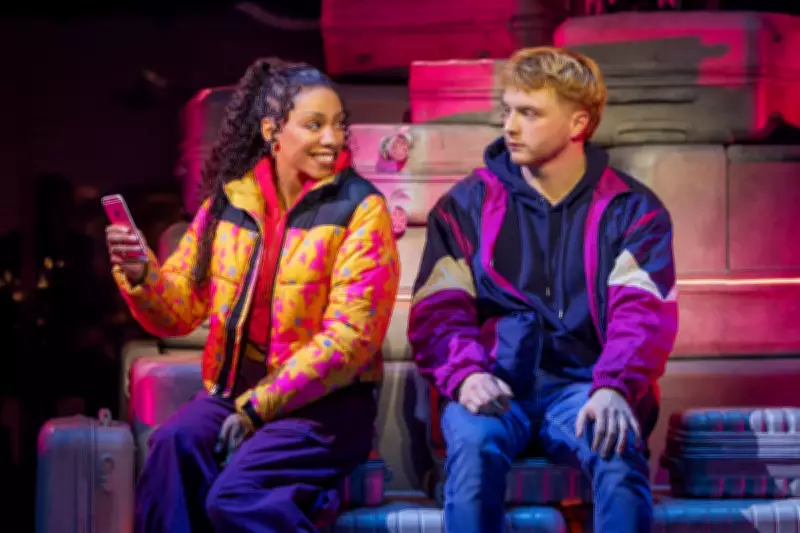
The classic opposites-attract setup forms the basis for the new Broadway musical "Two Strangers (Carry a Cake Across New York)." This production features a British wide-eyed optimist and an American world-weary character who clash over Christmas songs yet find themselves perfectly matched. It joins a clutch of popular new romantic comedies warming hearts this winter across various media platforms.
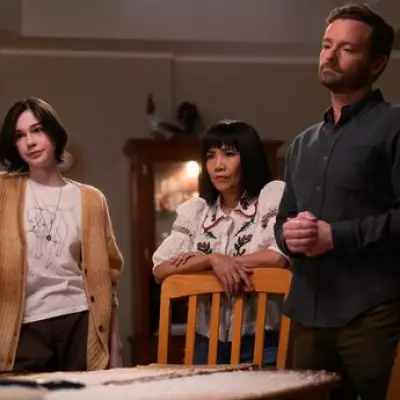
Notable entries include the HBO Max hockey show and word-of-mouth sensation "Heated Rivalry," the Netflix agnostic-falls-for-a-rabbi series "Nobody Wants This," and the see-you-next-year movie adaptation "People We Meet on Vacation" which has become a huge Netflix hit. Additional titles contributing to this wave include "My Oxford Year," the upcoming "Reminders of Him," and the dependable "Bridgerton," now in its fourth season. "Two Strangers (Carry a Cake Across New York)" lands on Broadway beside the Tony-winning android rom-com "Maybe Happy Ending."

"They're all the same story, really," says Kit Buchan, who with Jim Barne wrote the "Two Strangers" musical. "How do two people inextricably drawn together but separated by an overwhelming obstacle melt into one another?"
Psychological Perspectives on Genre Waves
Paul Eastwick, a psychology professor at the University of California, Davis and author of "Bonded by Evolution," studies romantic attraction and welcomes the burst in rom-coms. "I definitely get the sense that there are waves and this is the time of year when we get usually one or two surprise, probably streaming, hits in this genre," says Eastwick, who also co-hosts "Love Factually," a podcast using science to explore major rom-coms.
He observes that the genre no longer receives the respect it deserves, recalling that rom-coms used to be significant movie events that garnered awards. For instance, "Ghost," the highest-grossing film of 1990, earned five Oscar nominations and won two. "It feels a little marginalized these days in the critic spaces and in the box-office spaces," he notes. "I hope that people don't stop making these because people clearly want them."
Innovative Twists on Traditional Formulas
Some entries in this winter's bumper crop of rom-coms take the traditional formula and twist it slightly. "Heated Rivalry," which averaged 10.6 million viewers per episode in the U.S., features same-sex lovers. "Nobody Wants This," whose second season garnered 8.6 million views in its first four days of streaming, explores religious conversion themes. "People We Meet on Vacation," which drew 17.2 million views over its January launch weekend, flips the gender of the partner who typically serves as the wisecracking agent of chaos.
"I think that's often what makes some of these very compelling is where you're able to wink and nod a little bit at the genre and have fun with it while conforming to people's expectations at least somewhat," Eastwick explains.
Grounding Romance in Reality
"Two Strangers (Carry a Cake Across New York)" employs the opposites-attract dynamic in the rom-com-friendly setting of New York but makes the would-be lovers quite ordinary. She works as a coffee store server while he serves as a movie theater sweeper.
"Rom-coms tend to be rich white people with time on their hands. And that's OK. We love it. We love watching them," says Buchan. "'But what if you're shut out of that?' was part of the question that we were asking when we set out to write it."
The musical also winks about its adoration of rom-com conventions. "If this was a movie," says the smitten British character, "we'd go ice-skating." In another scene, he decides there should be a montage of her trying on fabulous outfits in a dressing room parade, which later materialises.

The creators admit to being huge fans of rom-coms, with "When Harry Met Sally" serving as their gold standard, even as they gently skewer the genre out of affection. "I think our greatest ambition of all was to write something that not only parodies and questions the mores of that genre and the stereotypes, but also slots into that genre in its own way," Buchan reveals.
Elevating the Genre Through Craftsmanship
Director Brett Haley had never made a rom-com before adapting "People We Meet on Vacation" from Emily Henry's novel. To craft the film, he reached back to classics he adored, including "Jerry Maguire," "My Best Friend's Wedding," and "When Harry Met Sally."
"They're incredibly elevated. You care about the characters, the writing is impeccable, the performances are impeccable, the filmmaking is incredible," he says. "To me, we just sort of lost some of that elevation. And I don't think there's anything wrong, by the way, with your Hallmark movies or other rom-coms that are a little fluffier, a little lighter. They're just sort of meant to be put on and enjoyed and not taken really art."
Haley focused on grounding the comedy, romance, and yearning in reality with his star-crossed lovers Emily Bader and Tom Blyth, who play will-they-or-won't-they friends. He too argues that rom-coms aren't respected by contemporary critics, noting that the genre which began with classics like "It Happened One Night" and "Bringing Up Baby" is too easily dismissed in 2026.
"If an action movie is elevated and checks all the boxes, you'll find that critics go, 'Hey, yeah, this did it. This was great,'" he observes. "But when a romance does it and checks the boxes and does everything right, they go, 'Oh, we've seen this before.'"
Despite critical reactions, Haley believes average viewers yearn to sit on the couch or visit the theater to share the experience of falling head over heels. "It's especially dark right now. And I think that people want to believe in love," he reflects. "I think there's real value in a film that can genuinely make you feel good, even just for an escape for two hours. There is true worth in that."