Rose Review: Sandra Hüller Delivers a Masterful Performance in a Grimy Gender Examination
Austrian director Markus Schleinzer's captivating new film, Rose, presents a stark and eerie monochrome period drama set in rural southern Germany following the Thirty Years' War. This gripping movie, while grim in its themes, is beautifully shot and as engrossing as a lurid soap opera, delving deep into gender stereotypes and satirising the central mythic tenets of patriarchal Christianity.
A Story of Deception and Survival
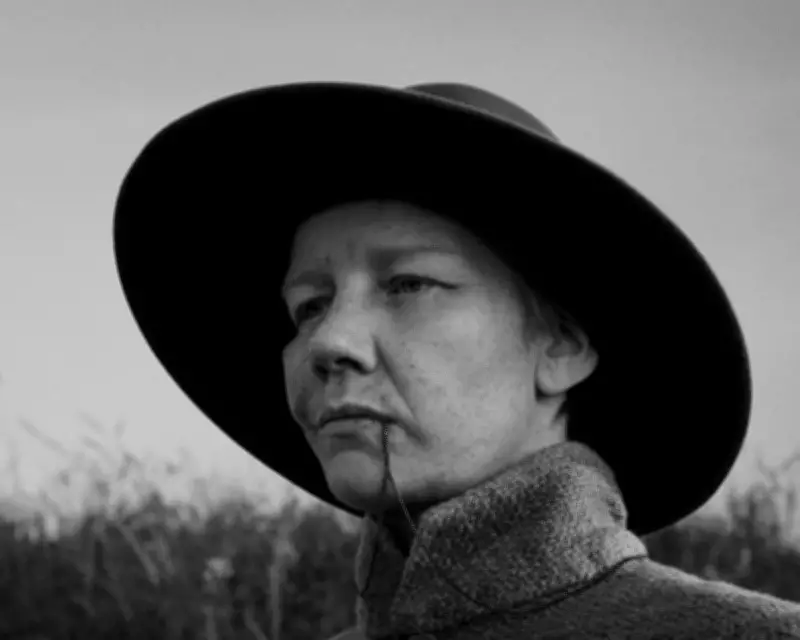
The film effectively conflates real-life cases of women passing as men in early modern Europe with the well-known history of the French false claimant Martin Guerre. Sandra Hüller gives a superb performance as Rose, a young woman who has posed as a man her entire life, serving as a soldier in this guise. She wears dour, shapeless clothes and moves with the brisk, economical physicality of an old soldier, her face marked by a livid scar that gives her a worldly, unfeminine grimace.
Rose claims the scar resulted from a bullet, which she now wears around her neck on a cord as a kind of unlucky charm and reminder of her survival. After the war, she arrives in what she says is her home village to take ownership of a derelict farmstead. By recounting local anecdotes only the genuine claimant could know, she convinces the elders and quickly makes a success of the farm through disciplined hard work, even winning hearts by killing a marauding bear with her military musket.

Unexpected Twists and Legal Intrigue
A prosperous neighbour agrees to sell Rose land on condition she marries his daughter Suzanna, played by Caro Braun, a plain and biddable figure of bovine piety. However, the contract stipulates that if Suzanna does not get pregnant, it becomes void, sparking village gossip. Astonishingly, Suzanna soon announces she is pregnant, leaving Rose and others questioning the father's identity.
This mystery is posed twice in the film: first by Rose to Suzanna, who remains silent, and later by a judge at Rose's trial. Rose answers with defiant calm, reminiscent of Renée Jeanne Falconetti in Dreyer's The Passion of Joan of Arc, but does not reply to the paternity question. The judge also avoids pressing the point, perhaps to avoid complicating the prosecution or creating a martyr-like mystique around Rose, who is gaining celebrity status among the public.
Influences and Performances
The chief influence on Rose is clearly Michael Haneke's icy black-and-white film The White Ribbon from 2009, on which Schleinzer worked as casting director. Schleinzer shares Haneke's interest in leaving audiences with an intractable, insoluble mystery—a problem that refuses to tie up neatly. Hüller's quiet, sinewy performance provides the film's form and musculature, portraying a character who has endured countless crises on the battlefield and learned the watchfulness needed to survive.
Braun is also very good as the unexpectedly spirited Suzanna. The film explores the power and violence lurking beneath bürgerlich calm, a stratum that becomes obvious when challenged. With another outstanding star performance from Hüller, Rose screened at the Berlin film festival, cementing its place as a thought-provoking period drama.