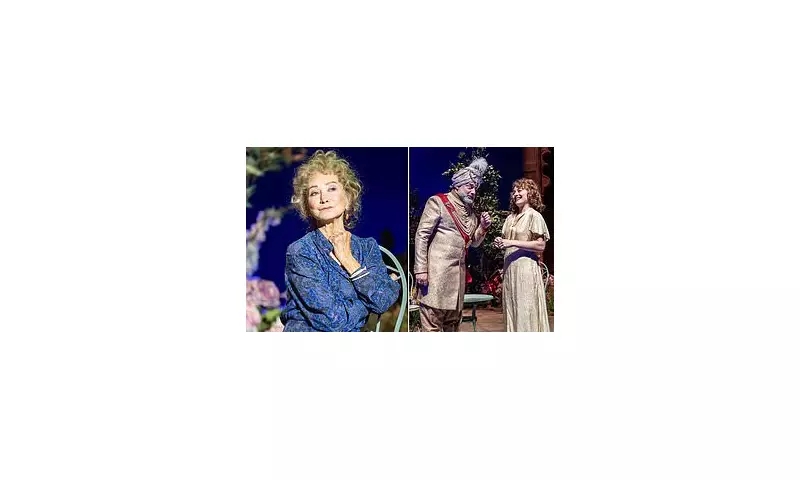
The Hampstead Theatre in London is currently hosting a deeply poignant and significant theatrical revival. Felicity Kendal is starring in a new production of Tom Stoppard's 'Indian Ink', a play written specifically for her three decades ago, following the recent passing of her former partner and the playwright last month.
A Personal and Theatrical Journey
For Kendal, the experience is intensely personal. She was in rehearsals for the show when Stoppard died, adding a profound emotional layer to her performance. Now 79, the actress, who spent her childhood in India, plays Nell, the sister of the central character Flora Crewe. The narrative unfolds across two time periods: 1930s India and 1990s England.
In the story, Flora, a fictional English poet portrayed with captivating charm by Ruby Ashbourne Serkis, travels to India hoping the climate will ease her terminal tuberculosis. There, she becomes the subject of a portrait by a young Indian artist and corresponds with her sister Nell back home. Sixty years later, in her English country garden, Nell receives biographers seeking insights into Flora's life.

Performances Anchored in History
Despite the emotional weight, Kendal delivers a masterful performance. Critics note she has lost none of her stage presence, employing a repertoire of subtle smiles to portray a character who is a staunch, quick-witted defender of the British Raj. Her counterpart, Ruby Ashbourne Serkis (daughter of actor Andy Serkis), is delightful as the ailing Flora, capturing her enchantment with India and her impatience with stifling British colonial attitudes.
Director Jonathan Kent's elegant production, which runs for two hours and forty minutes, sees both lead actors seated in their respective garden settings for much of the play, yet their magnetic performances command the stage entirely.
A Light Touch on Heavy Themes
Stoppard's script approaches the heavyweight subject of British rule in India with a charmingly patrician and often lightweight tone. The play presents Indian characters as outwardly deferential to their impeccably mannered British counterparts, while also engaging in comical hierarchies amongst themselves. Even the central love story between Flora and her portraitist carries an uneven dynamic, with Flora treating him somewhat like a project.
The most powerful moment arrives at the conclusion, as the two women, separated by decades, face one another. This poignant glance seems to look back not only through the narrative but through the play's own history and the personal history of its cast.
Ultimately, for all its occasionally antiquated perspectives, this revival stands as a warm and moving tribute to its late author. 'Indian Ink' continues its run at the Hampstead Theatre until 31st January.