PETA Activists Stage Graphic Chicken Slaughter Protest Outside London KFC
PETA Stages Graphic Chicken Slaughter Protest at London KFC

Graphic PETA Demonstration Simulates Chicken Slaughter Outside London KFC

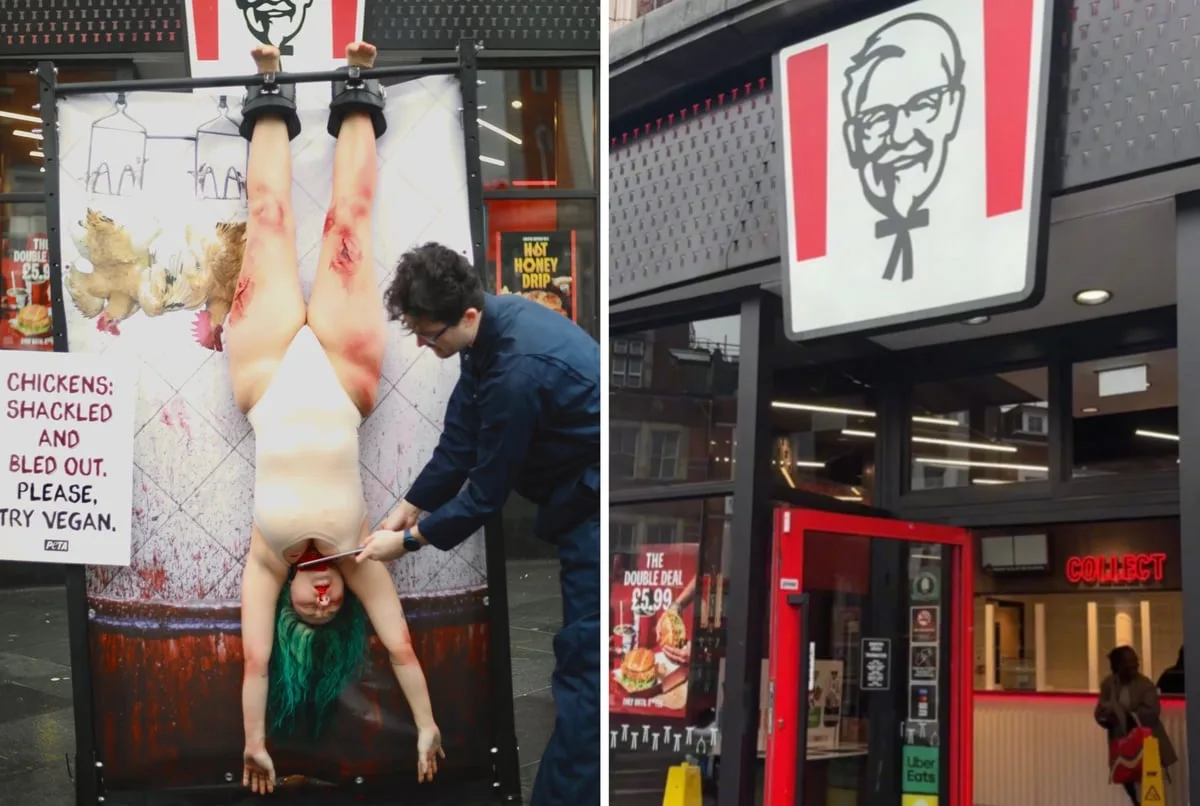
Animal rights campaigners from PETA have staged a highly provocative and visually arresting protest outside a KFC restaurant in London, employing dramatic tactics to draw attention to the methods used in chicken slaughter within the food industry. The demonstration, which took place on Brixton Road in Lambeth at midday on Wednesday, saw activists simulate the shackling and throat-cutting processes that some chickens endure.

Shocking Simulation of Slaughterhouse Practices

Two female activists, wearing only beige bodysuits, were suspended upside down by shackles around their ankles, directly mimicking the way many birds are hung in traditional slaughter systems. Their legs displayed fake wounds and were smeared with artificial blood prior to the main performance. A male protester, dressed in blue overalls, then approached them wielding a prop meat cleaver.

In a carefully choreographed sequence, he pretended to cut the women's throats, with fake blood spurting from their necks to enhance the graphic nature of the display. One of the suspended activists was photographed pretending to scream during the simulated killing, adding to the visceral impact of the demonstration.

Campaign Messages and Public Reaction

The protest was accompanied by placards bearing stark messages such as 'Chickens: Shackled and bled out. Please, try vegan'. This action was deliberately timed during Veganuary, the annual campaign that encourages people to adopt plant-based diets throughout January. Video footage from the scene showed numerous passersby stopping to watch, many capturing the event on their mobile phones, indicating the demonstration successfully garnered public attention.

Elisa Allen, PETA's Vice President of Programmes, emphasised the organisation's stance, stating: 'Chickens are curious, social, and full of personality, and they don't want to be killed for a fleeting taste of their flesh any more than any human would. PETA is encouraging diners to leave chickens in peace, not pieces, by choosing delicious plant-powered foods instead.' She further highlighted that chickens possess complex cognitive abilities, including forming social structures, dreaming during sleep, and experiencing worry about future events.

Controversial Slaughter Methods in the UK Poultry Industry

The protest specifically targeted traditional slaughter techniques that remain in use at some British facilities. While the RSPCA notes that most chickens bred for meat in the UK are now killed using gas systems—a method introduced in 1996—certain slaughterhouses still employ older practices. These involve hanging conscious birds upside down, stunning them via water tanks and electric currents, and subsequently cutting their throats.

Animal welfare advocates have long criticised this method, arguing that shackling and hanging conscious birds induces significant stress and pain. There are also concerns that stunning is not always effective, meaning some chickens may remain conscious during the killing process. The activists' backdrop for the protest was designed to resemble a real slaughterhouse, reinforcing their message about the harsh realities of industrial poultry production.

Broader Context of PETA's Recent Campaigns

This latest demonstration is part of a sustained campaign by PETA over the past twelve months targeting the chicken industry. Previous actions have included erecting advertisements outside chicken shops promoting vegan burger alternatives, placing similar ads on London buses, and installing a large billboard directly above a chicken shop in Stockwell urging customers to consider vegan options.

Just last month, PETA activists also disrupted the 2025 Fashion Awards, with a protester running onto the red carpet to protest against the use of leather, holding a sign reading 'Leather is destroying the planet. Wear your own skin.' These coordinated efforts underscore the organisation's multifaceted approach to raising awareness about animal welfare issues across different sectors, from food to fashion.