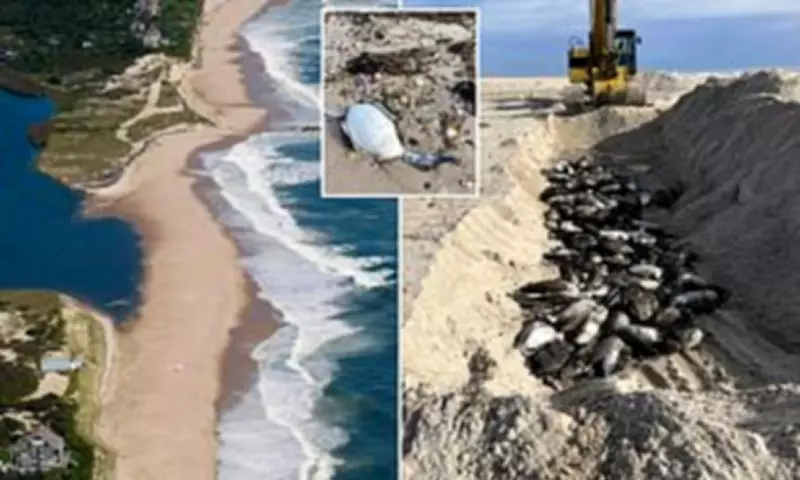
Hamptons Beach Transformed into Mass Grave for Bird Flu Victims
Residents of the exclusive Hamptons enclave have expressed shock and anger after discovering that hundreds of dead Canada geese, believed to have succumbed to avian influenza, were unceremoniously dumped into a shallow trench on Georgica Beach in East Hampton. Disturbing photographs circulating on social media reveal a mechanical digger excavating a pit in the sand before depositing what appears to be approximately 750 lifeless birds in a haphazard mass burial.
Public Health and Environmental Concerns Mount
The burial site, located mere yards from the ocean shoreline in an area typically bustling with families, tourists, and pets during the summer months, has ignited fierce debate. Additional images show numerous carcasses and partially decomposed birds scattered across the beach and adjacent rocky areas, highlighting the scale of the viral outbreak that has devastated the local waterfowl population. Community members have voiced alarm about the potential exposure risks as the shallow grave may not contain the remains, posing threats to public health and local wildlife.
Community Backlash and Official Response
Social media platforms erupted with criticism as residents questioned the approval of such a disposal method in a prominent public space. One Instagram user demanded explanations from local authorities, writing, "How is this the right decision? Obviously the deceased birds have to go somewhere, but honestly this is not it." The post included an alleged message from an anonymous source claiming that the East Hampton town trustees conducted the operation following instructions from the Georgica homeowners association, without consulting state, county, or CDC health departments.

Local resident Jenny Balderon recounted her frustrating experience contacting the trustees' office, stating she was told to "call my landscaper" when inquiring about assistance for sick birds. She criticized the office as "inept" and noted that existing state guidelines for disposing of infected birds were apparently ignored.
Scale of the Avian Influenza Outbreak
State officials confirmed that nearly 800 dead geese were discovered around Georgica Pond over approximately one week, with many suspected to be infected with highly pathogenic avian influenza (H5N1). The New York State Department of Environmental Conservation explained that Canada geese and other waterfowl tend to congregate in large numbers when waterways freeze during winter, facilitating the rapid spread of the virus. This particular strain, which originated in Canada in late 2021, has been recurrent in wild bird populations across North America since 2022, causing severe illness and mortality in various species including ducks, raptors, and poultry.
Health Risks and Official Guidance
Despite the alarming scenes, health authorities maintain that the risk to the general public remains low. The Centers for Disease Control and Prevention has reported 71 human cases nationwide since 2024, resulting in two fatalities, primarily among individuals with close contact to poultry or livestock. However, environmental experts strongly advise the public to avoid any contact with sick or dead birds. The DEC recommends steering clear of carcass clusters and using protective gear such as gloves, masks, and eye protection if handling is necessary, emphasizing the use of tools like shovels to prevent direct exposure.
Broader Regional Impact
Bird flu incidents have been documented elsewhere on Long Island, including Heckscher Park in Huntington, where dead geese tested positive for the virus. Wildlife officials have also detected infections in Nassau and Suffolk counties among species such as bald eagles, snowy owls, and red-tailed hawks. Experts acknowledge that containing the virus in wild migratory populations presents significant challenges, as it circulates naturally without feasible intervention methods.
The controversy underscores ongoing tensions between affluent community interests, environmental stewardship, and public health protocols in one of New York's most prestigious coastal destinations.