Canal Catastrophe: Narrowboats Plunge into 50-Metre Chasm as Waterway Collapses
Paul Stowe awoke at 4.05am on December 22nd with an ominous feeling that something was terribly wrong. Peering from his canal boat window, he witnessed millions of gallons of water rushing past at extraordinary speed. Opening the rear door revealed utter carnage – the peaceful Shropshire waterway was collapsing before his eyes.
Midnight Escape in Pyjamas
The boat moored ahead had already been torn from its berth, sinking at a 90-degree angle into what Paul describes as a "deep void." After urgently waking his wife Sarah and their adult son, the family fled their vessel in pyjamas, powerless spectators as the canal continued disintegrating. A second narrowboat tumbled into the expanding chasm while their own home, the Pacemaker, teetered perilously over the precipice.
"I felt like I was on a movie set," recalls Paul, 55. "It was like something out of Titanic, boats upending and falling into the hole. Horrendous."

Gaping Rift Remains Three Weeks Later
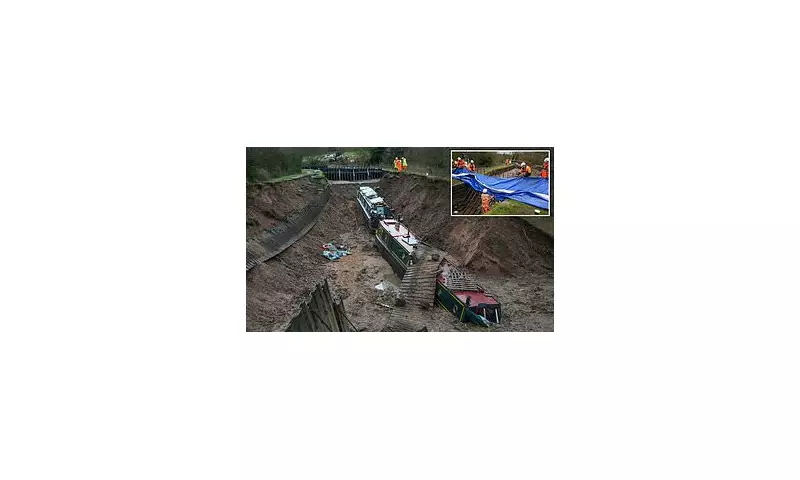
Three weeks following the disaster, the breach on the Llangollen Canal near Whitchurch has left a gaping 50-metre rift. The two sunken vessels, Sefton and Ganymede, remain at the crater's bottom in a scene of maritime devastation. Miraculously, occupants of both boats escaped unharmed with mere seconds to spare.
Paul's boat survived the initial collapse and was dragged 50 feet to safety by the Canals and Rivers Trust (CRT), the charity managing most of Britain's canal network. Yet beyond the thousands in repair costs lies deeper distress about waterway safety.
"By pure luck, no one has lost their life yet," Paul states. "But I'm getting really upset about the safety of the waterways. I'm getting angry."
Increasing Incidents Across the Network
Evidence suggests Britain's canals are becoming increasingly hazardous. While CRT emphasises such severe breaches remain rare, embankment collapses appear to be multiplying across the network.
- Last January, heavy rainfall caused the Bridgewater Canal embankment to fail, draining 1.9 miles of water and displacing 1,000 residents
- The Huddersfield Canal experienced complete closure following embankment collapse last year
- Devon's Stover Canal suffered a 60-metre embankment breach
The financial consequences prove staggering – the Llangollen breach alone requires £2 million repairs and will keep the canal closed for approximately one year.
Ageing Infrastructure and Climate Pressures
Constructed during the Industrial Revolution, England and Wales's 2,500-mile canal network now creaks with age. Most channels feature puddle clay linings, six inches to a foot deep, which Victorians compacted using sheep to maximise impermeability.
Julie Sharman, CRT's chief operating officer, explains that while some seepage remains acceptable, "leakage can draw finer material out and create larger routes for water passage," gradually destabilising surrounding soil.
Additional factors include:
- Overtopping: Heavy rainfall or human activity forcing water over embankment edges
- Climate change: Drought conditions creating cracks in canal bed foundations
- Funding shortages: Real-term reductions exceeding £300 million over ten years
Maintenance Questions and Missing Safety Equipment
Paul questions whether climate change primarily caused the collapse, noting the canal received inspection weeks before the breach without catastrophic weather intervening. "Either the inspection was inadequate, or something was known that hasn't been reported," he suggests.
During the emergency, Paul discovered critical safety equipment missing. "Stop planks" – removable wood or steel barriers designed to halt water flow during crises – were absent from both nearest bridges. "We probably lost two to three hours because the stop planks weren't available," he estimates.
CRT confirms stop planks aren't stored at every bridge but at strategic locations, with those used arriving from Ellesmere Yard approximately 15 minutes away.

Trapped Boaters and Growing Despair
Paul and Sarah purchased their 60-foot narrowboat for £72,000 eighteen months ago, trading their St Ives cottage for aquatic living. Having moored at Llangollen Canal merely two days before Christmas shopping, they now face uncertain insurance coverage and £5,000 costs just to lift their vessel for inspection.
Other boaters experience different hardships. Gardener Kevin Ringer, 53, finds himself stranded 11 miles away at Ellesmere. "I can't get off this canal until they've fixed that breach," he explains. "They've said it could be a year, but I suspect that's optimistic. I think this could have been avoided if they'd maintained the canals properly."
Kevin describes deteriorating conditions elsewhere, including Worcestershire's Stourport area where leaking locks create navigation uncertainties.
Looking Toward an Uncertain Future
CRT maintains they prioritise maintenance based on potential failure consequences, distinguishing between lock conditions and embankment stability. Chief executive Campbell Robb acknowledges ongoing investigations should yield "more conclusive ideas" within weeks regarding the Llangollen collapse's causes.
For Paul Stowe, the immediate challenge involves convincing his wife – and himself – to return to canal living once repairs complete. Staring into the abyss that nearly claimed his family, he admits this represents "a tough ask, especially as I'm struggling to convince myself."
As Britain's historic waterways face mounting climate pressures and funding constraints, this Shropshire catastrophe highlights urgent questions about preserving these iconic landscapes while ensuring public safety.