The Independent's journalism receives support from our readers. When you make purchases through links on our site, we may earn commission.
Human Migration Patterns Blamed for Escalating Bear Attacks in Remote Communities
Experts have identified a troubling connection between demographic shifts and the rising frequency of bear attacks in rural Nepalese communities. Research indicates that the outmigration of younger residents is making these dangerous encounters more imminent while simultaneously complicating potential solutions to this growing problem.
A Personal Encounter with Ursine Danger
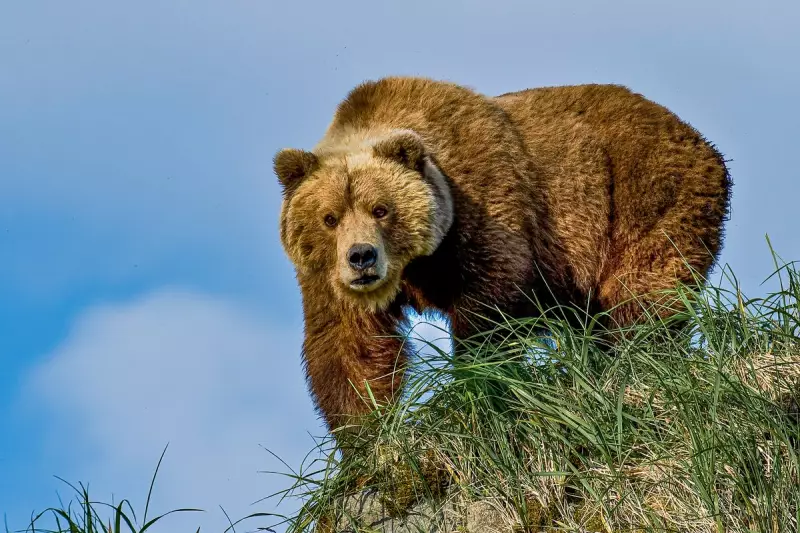
Dorje Dundul, a 71-year-old resident of Nubri, recently experienced his third violent bear encounter in five years when a brown bear gnawed on his foot. Recounting his first attack to researchers, Dorje described how he went to investigate reports of a bear eating corn from his maize field.

"The bear was just sitting there; it attacked me," Dorje told the research team. "I dropped to the ground, but the bear ripped open my shirt and tore at my shoulder. I started shouting and the bear ran away."
Researchers Dolma Choekyi Lama, Tsering Tinley, and Professor Geoff Childs spoke with Dorje as part of a three-year study examining aging and migration patterns in the Buddhist enclave of Nubri, located in Nepal's highlands.
The Demographic Connection to Wildlife Conflict
The connection between bear attacks and demographic change in Nepal reveals a complex interplay of social and environmental factors. Across Nepal, communities have witnessed a significant increase in bear attacks, a phenomenon documented in both news reports and academic studies.
Residents of Nubri find themselves at the forefront of this troubling trend, with outmigration identified as a primary contributing factor. Young people are increasingly leaving rural areas for educational and employment opportunities elsewhere, depleting household labor forces dramatically.
Research indicates that over 75% of individuals born in the Nubri valley who are now aged 5 to 19 have left the region to live elsewhere. This demographic shift leaves many older residents, like Dorje and his wife Tsewang, living alone without the support networks traditionally provided by younger family members.
The Vanishing 'Scarebear' Tradition
Traditional methods of bear deterrence are becoming increasingly difficult to maintain due to demographic changes. Historically, when corn ripened in the fields, communities would dispatch young people to light bonfires and create noise throughout the night to ward off bears.
The scarcity of young people available to act as deterrents, combined with the abandonment of outlying agricultural fields, is creating conditions that encourage bears to forage closer to human residences. This proximity dramatically increases the likelihood of dangerous encounters between humans and wildlife.
Multiple Factors Accelerating Population Aging
Outmigration in Nubri and similar villages stems largely from limited educational and employment opportunities. However, the problems created by the departure of younger residents have been intensified by two additional factors contributing to rapid population aging.
Improved healthcare and sanitation have extended life expectancy significantly, while fertility rates have declined substantially since the early 2000s, dropping from more than six to less than three births per woman. These demographic forces have been accelerating population aging for some time, as illustrated by population pyramids constructed from household surveys conducted in 2012.
A Regional Pattern of Human-Wildlife Conflict
Nepal is not experiencing this phenomenon in isolation. Similar dynamics are occurring elsewhere in Asia, with bear attacks reportedly increasing in Japan as well, partly driven by comparable demographic trends.
Historically, agricultural areas served as buffer zones between wildlife habitats and urban settlements. However, rural depopulation is enabling bears to encroach upon more densely populated regions, creating conflicts between safety concerns and conservation efforts.

Modern Solutions and Traditional Wisdom
Following his most recent attack in October 2025, Dorje required emergency medical evacuation to Kathmandu, an undertaking that cost approximately $2,000 by village standards. He is not alone in his suffering, with other elderly residents reporting similar dangerous encounters with bears during routine activities.
Potential responses to the increasing bear attacks present complex challenges. Dorje explained that communities previously set lethal traps when bear encroachments became too dangerous, but this option disappeared with the creation of the Manaslu Conservation Area Project in the 1990s, which strictly prohibits killing wild animals.
"At first, I felt that we should kill the bear," Dorje reflected. "But the other side of my heart says, perhaps I did bad deeds in my past life, which is why the bear bit me. The bear came to eat corn, not to attack me. Killing it would just be another sinful act, creating a new cycle of cause and effect."
An Uncertain Future for Rural Communities
As younger generations continue to leave rural areas for opportunities elsewhere, those who remain behind face mounting threats to their lives and livelihoods from increasing bear encounters. The outmigration of younger residents is making these perils more immediate while simultaneously limiting the community's capacity to develop and implement effective solutions.
The situation in Nubri highlights broader challenges facing rural communities worldwide as they navigate the complex intersections of demographic change, wildlife conservation, and human safety in increasingly interconnected ecosystems.
Dolma Choekyi Lama and Tsering Tinley made significant contributions to this research as members of the author's project team studying population in an age of migration.