It all started as a bit of a joke, but seven years after the launch of 'Scouse Flowerhouse', areas around Liverpool have been utterly transformed with colourful wildflowers, bringing joy to residents and helping to bring people together.
What is Scouse Flowerhouse?
Scouse Flowerhouse is an organisation dedicated to bringing wildflowers and creative ecology projects to areas across the city, aiming to connect people to the land around them. It is part of the wider Northern Flowerhouse group, started in 2017 and led by Richard Scott, and it has been such a success that it is now affiliated to the Eden Project.
The 'Northern Flowerhouse' said the concept began as a playful, local joke in Everton, and as a creative counterpoint to the government's 'Northern Powerhouse' economic strategy. Today, it functions as a network dedicated to treating wildflowers as part of Liverpool's essential urban infrastructure.

Landmark Event at The Lutyens Crypt
As a way of spreading awareness, experience and expertise, Scouse Flowerhouse put on an event at The Lutyens crypt today (June 18), examining long term wildflower work in Liverpool. The landmark event hopes to unite communities across the North, combat biodiversity loss, and transform urban landscapes through collective action. It is supported by the Royal Horticultural Society and is officially aligned with British Flowers Week (June 15 to June 21).
In a statement released ahead of the event, organisers said: 'Underpinning the entire event is the foundational belief that flowers inherently bridge all cultures, transcend barriers, and possess a unique power to make people smile. This impact is visible across the city right now.'
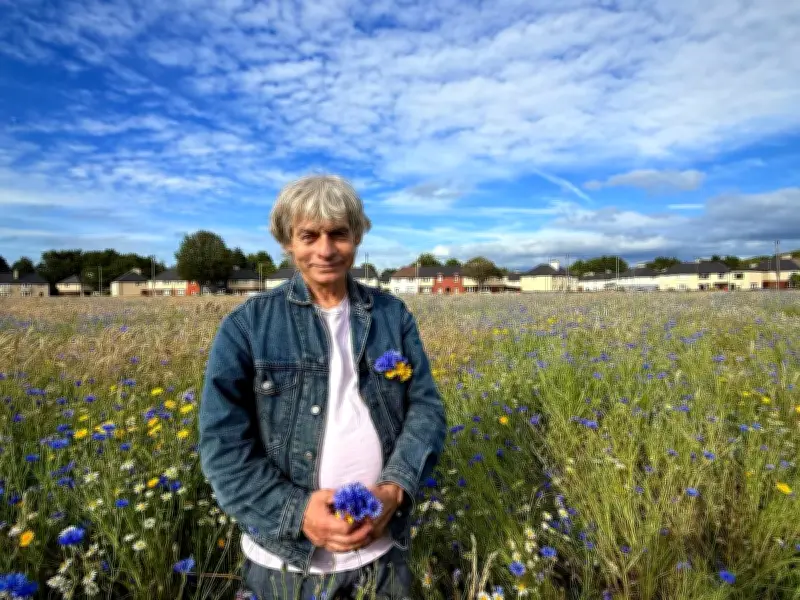
'Commuters and residents can currently experience breathtaking pops of urban colour, including bright poppies flowering in the heart of Liverpool's Chinatown and a magnificent, vibrant field of cornflowers blanketing Abingdon Fields in Walton.'
'By celebrating the peak of the British growing season, the summit highlights how local flora acts as a joyful catalyst for community cohesion, shared identity, and cross-cultural connection.'
Transformation of Abingdon Fields
The ECHO met with Richard Scott the evening before the event and paid a visit to the Abingdon Fields site. It is located down Richard Kelly Drive, across the street from Philbeach Road, and approximately 100 metres away from Walton Hall Park. As you approach the fields, you can see a large patch of green space filled with some of the rarest flowers in the whole of Europe.
Only four years ago, residents said this was a largely unused playing field with some incidents of fly-tipping. But since Richard enlisted the help of the community to plant wild flowers, the area has been transformed into a sea of colour.
Pointing to one of the blossoming blue flowers, Richard told us: 'This one's practically extinct in the countryside. In fact, it is one of the rarest flowers in Europe.'
'These kinds of arable habitats are actually very easy to create, but they're not allowed to exist in the countryside anymore because of the way the countryside is managed. So, it's really special that you can bring this into towns and cities.'
'Work like this does have a very long history in Liverpool, and from the time before the Garden Festival, really. That's why it's really interesting now to turn these things on their head and try to create a city in a garden, rather than a garden festival in a city.'
'Not only is this an amazing space, but there's an opportunity to spread this to other areas because the seeds from one meadow are enough to seed a hundred meadows.'
'In any culture in the world, flowers are a positive thing. Nobody can sort of really knock flowers too much.'
'People have told us how these projects bring something really positive to their lives, uplifting their spirits, and that's great to hear.'
'In many ways, the spaces speak for themselves, and we see people naturally drawn to them, and just enjoying them for what they are.'
Community Involvement and Future Plans
Also present on the field is Scouse Flowerhouse's researcher and producer, Polly Moseley, who added: 'We really want people to take co-ownership and be part of the sewing of the seed and the celebrating of the flowers, as well as caring for them.'

'It's very much about working with people at a grassroots level in communities, and we want each site to have its own character.'
Accompanying Richard and Polly was Jacques Soignon, who is visiting Liverpool from Nantes in France and is a wild flower expert. Jacques said he was delighted to receive the invitation and is already very impressed with what he has seen.
We also spoke to several local residents, some of them walking their dogs, who all said they had fallen in love with the flowers, which had 'really improved' the area.
Before we left, Richard, Polly and Jacques spoke about several other locations around Merseyside, including wildflower sites in Kirkby, Chinatown in Liverpool city centre, Croxteth, Norris Green and many others.
As we left the fields, we walked over to Walton Hall Park where it appeared another wildflower site was blooming, with others already seeded and waiting to blossom.
The group has the support of Liverpool City Council, and it is hoped the number of sites will continue to increase across the city and beyond.