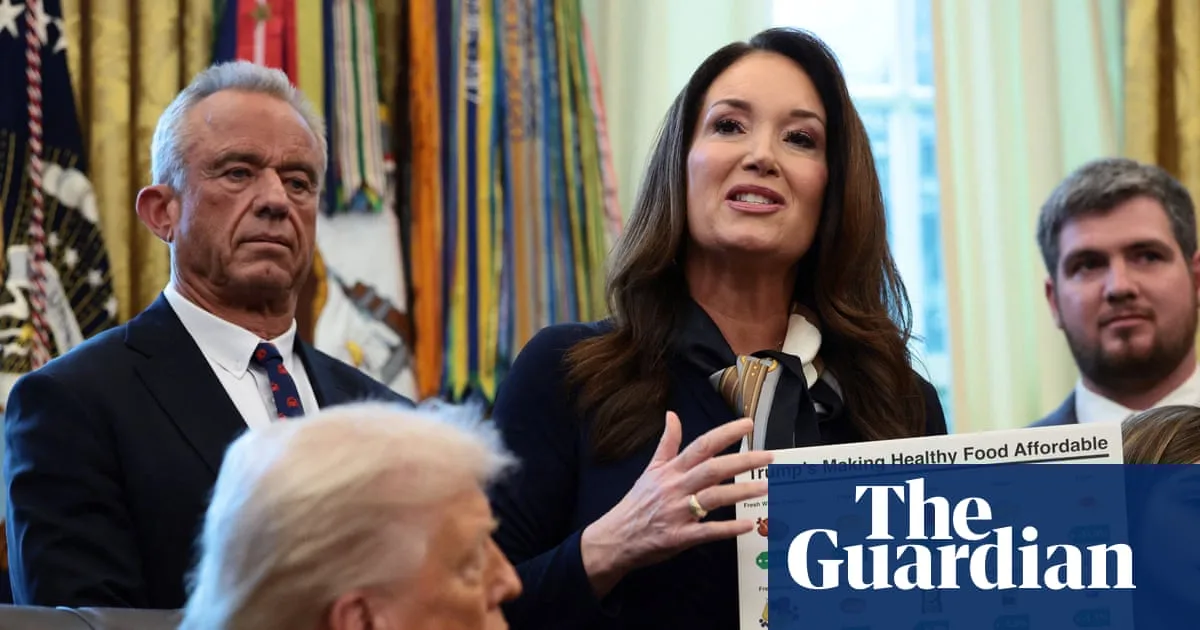
US agriculture secretary Brooke Rollins has been ridiculed by Democratic lawmakers after suggesting that Americans can save money by eating a meal consisting of “a piece of chicken, a piece of broccoli, a corn tortilla and one other thing” for around $3.
Rollins made the comments during an interview with NewsNation, where she was asked how average Americans could afford to follow new dietary guidelines from the White House that emphasise red meat, full-fat dairy and saturated fats while discouraging ultra-processed foods and sugar. The rising cost of groceries has been a major concern for many households.
“We’ve run over 1,000 simulations. It can cost around $3 a meal for a piece of chicken, a piece of broccoli, you know, a corn tortilla and one other thing,” Rollins said. She also claimed that food prices were coming down, despite official data showing a 0.7% month-on-month increase in December, the largest since October 2022.

Democrats seized on the remarks as evidence of the administration being out of touch. The House Ways and Means Committee Democrats shared an AI-generated image of a cafeteria tray with a small piece of chicken, a lone broccoli floret, a tiny tortilla, and a foil-wrapped “mystery item”. Representative Ted Lieu posted a photo of a similarly sparse meal, while Senator Sheldon Whitehouse sarcastically asked if the mystery item was “wondering why costs have gone up so much under Trump”.
Congresswoman Pramila Jayapal called the suggestion “a slap in the face to struggling working families”, and Senator Ed Markey said the administration had “no idea how much dinner costs”. The controversy highlights ongoing concerns about grocery affordability in the US.