While global attention focuses on flashpoints elsewhere, Yemen's devastating civil war, ongoing since 2014, has slipped from the headlines. Beneath the radar of a world grappling with at least ten major conflicts in early 2026, the Yemeni people endure a catastrophic and escalating humanitarian emergency.
A Forgotten Crisis Deepens
The statistics paint a grim picture. By the end of 2025, approximately 23 million people – two-thirds of Yemen's population – required humanitarian assistance. The nation is ranked as the world's second-largest food crisis, with nearly half of all children under five chronically malnourished. Yet, the international response is failing. Funding cuts initiated by figures like Donald Trump have seen humanitarian aid slashed, with only 24 per cent of requirements met in 2025, creating a staggering $1.8 billion shortfall.
Oxfam Yemen, a key aid organisation, revealed its funding collapsed by 80 per cent in 2025 compared to a typical year. Operations are further crippled in the north, where Houthi forces have arbitrarily detained aid workers, including 69 UN staff and dozens of civil society employees over 18 months, forcing some international NGOs to withdraw.

"The humanitarian crisis in Yemen is no longer in the headlines, which is really sad because you go into the streets here, and you can see the despair," Nada Al-Saqaf from Oxfam Yemen told The Independent. "So often we hear about the ‘resilience’ of the Yemeni people... It’s romanticising our struggle, when we are only trying to survive."
Conflict and Climate: A Vicious Cycle
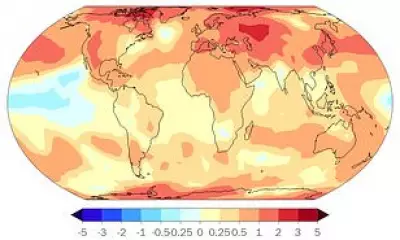
Compounding a conflict that has claimed an estimated 400,000 lives, Yemen is also one of the world's most climate-vulnerable countries. It faces increasingly frequent flash floods, droughts, and extreme heat. World Bank data shows precipitation in the arid nation has fallen by an average of 6.25 millimetres per decade since 1971. Combined with crumbling water infrastructure, overall water availability has plummeted by 60 per cent since 1990.
"Climate change was not the cause of the conflict, but it deepens the wounds," explains Al-Saqaf. "It multiplies the problems farmers are facing." With half the workforce in agriculture, changing weather patterns are causing chaos. Farmers like 37-year-old Ahmed Mohammed Naji Abdullah in Taiz describe battling scorching heat, erratic rain, and pests. "The heat burned our seedlings, and the cold damaged what survived. Everything became unpredictable," he recalls.
For 51-year-old Mujib Mohammed Ali, also in Taiz, water access is the paramount crisis. Dried-up wells force long, arduous journeys to collect water. "Even our animals had no place to graze," he says. "Life becomes harder every day."
Exclusive research from the ODI Global think tank reveals these climate stresses are fuelling local conflict. In Taiz, a region split between Houthi and government control, an "absence of trust" and a "regulatory void" have led to unregulated borehole drilling – described as "anarchy" – and "notable escalations" in disputes over wells, land, and resources.
"War is obviously the immediate crisis, but climate stress doesn’t pause during conflict; it comes on top of it," Mauricio Vazquez of ODI's Global Risks and Resilience programme stated. "If you ignore climate, you make recovery harder and conflict more protracted."
Glimmers of Hope Through Adaptation
Despite the immense odds, targeted support is yielding small victories. In Taiz, Ahmed received training, drought-resistant seeds, and materials for a greenhouse from Oxfam. He now grows avocado, pomegranate, and papaya. "Before, heat and wind destroyed everything," he says. "Now, with the greenhouse, my seedlings grow faster, stronger, and with real profit."
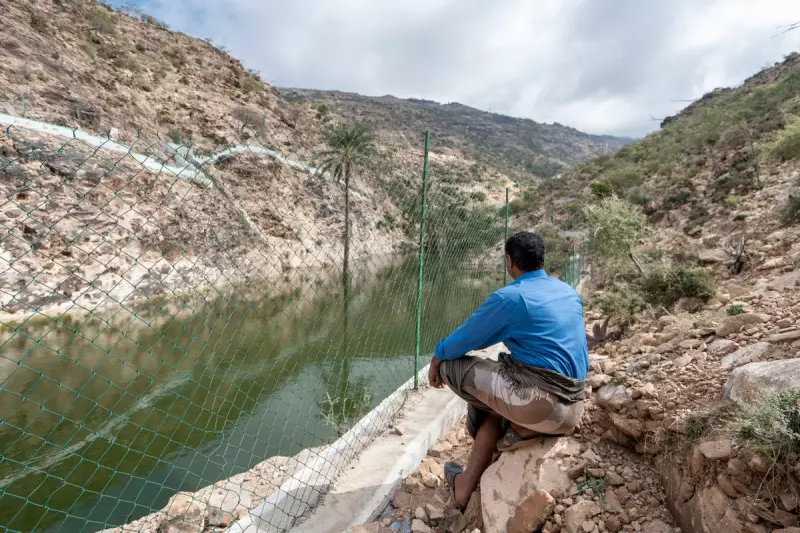
In Mujib's community, Oxfam constructed a floodwater barrier that retains soil moisture and replenishes wells. "People’s spirits have returned," Mujib reports. "We feel secure again." Another resident, 55-year-old Jameel Mahyoub Saif, saw his village's well and reservoir rehabilitated with concrete, ending the need to buy expensive water or walk long distances to fetch it.

Mohammed Hassan, Oxfam’s programme manager in Taiz, notes the NGO has provided greenhouses for 16 farmers, trained 58 others, built two dams, and restored water tanks. The focus is on hard-to-reach communities. "It’s short-term funding, but this is long-term investment," he says.
Yet, these individuals remain the exception. Millions of smallholder farmers face climate- and conflict-driven challenges alone. "These projects are small in cost, but the impact is huge," stresses Nada Al-Saqaf. "Yemen cannot be forgotten." As the country's Environment Minister Tawfeeq Al-Sharjabi warned at COP30, building lasting peace is impossible while communities fight for the last drop of water, underscoring the urgent need for climate action amidst war.