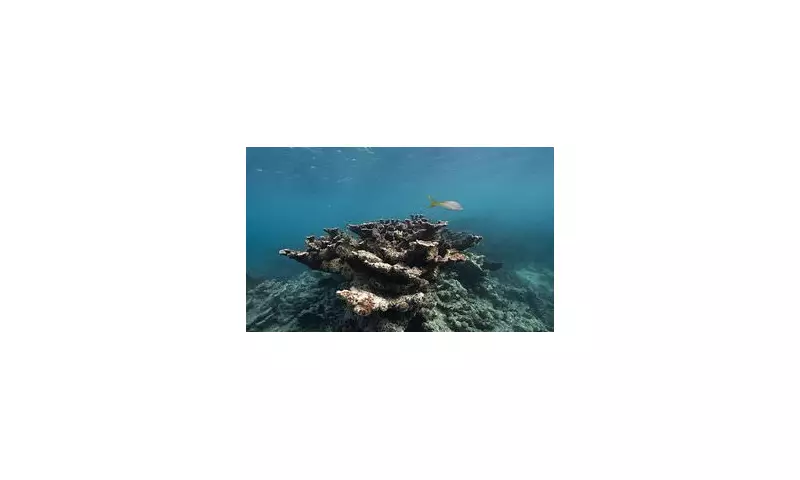
A leading marine scientist has issued a stark warning that the world's coral reefs could face irreversible collapse as soon as 2026, pushed past a critical tipping point by human-caused climate change.
The Looming Tipping Point
Dr Samantha Garrard, a marine ecosystem expert from the Plymouth Marine Laboratory, states that the losses expected over the next year could be 'catastrophic'. Her analysis hinges on the destructive cycle of the El Niño–Southern Oscillation (ENSO) in the Pacific Ocean, which is being supercharged by global warming.
We have just emerged from a devastating El Niño phase, during which 84 per cent of the world's reefs were subjected to heat exposure severe enough to cause bleaching. The brief recovery period before the next expected El Niño in 2026 may be insufficient for reefs to heal.
'The question is whether this will be the year a global tipping point is reached for warm-water coral – a point beyond which their fate is sealed, and even the most resilient species can no longer recover,' Dr Garrard wrote.
Why Reefs Are So Vulnerable
Coral reefs are biodiversity powerhouses. Covering just one per cent of the ocean surface, they support around a quarter of all marine species. Yet, they are exquisitely sensitive to temperature changes.
When stressed by excess heat, corals expel the symbiotic algae living in their tissues, turning white in a process known as bleaching. Prolonged heat leads to mass mortality events from which reefs may never bounce back.
Human greenhouse gas emissions have driven ocean temperatures to record highs, making extreme marine heatwaves more intense and frequent. This warmer baseline also amplifies the impact of El Niño events, where Pacific surface temperatures rise significantly, affecting global weather.
A Dire Prognosis and a Glimmer of Hope
The scientific consensus is grim. The second Global Tipping Points report, authored by 160 scientists, warned that coral reefs have already passed their thermal tipping point at 1.2°C above pre-industrial averages. With warming now at approximately 1.4°C, the report suggests a 99 per cent chance that all large-scale reefs will be lost.
Professor Tim Lenton of the University of Exeter's Global Systems Institute confirms that saving reefs in their current form is no longer possible. The focus must shift to identifying and protecting cooler refuges and reducing local pressures like pollution.
However, Dr Garrard notes it may not be universally too late. Some resilient populations, such as those in the Gulf of Aqaba and deeper offshore reefs, show higher heat tolerance. Their survival, and the potential for partial recovery elsewhere, depends on immediate, aggressive action.
To give corals a fighting chance in the 21st century, three critical steps are needed:
- Aggressively cut carbon emissions to cool ocean waters.
- Reduce local stressors like pollution and overfishing.
- Incorporate selective breeding of heat-tolerant corals into restoration plans.
The clock is ticking. The next El Niño in 2026 could deliver a blow from which the world's coral ecosystems may not recover, marking a profound loss for global marine biodiversity.