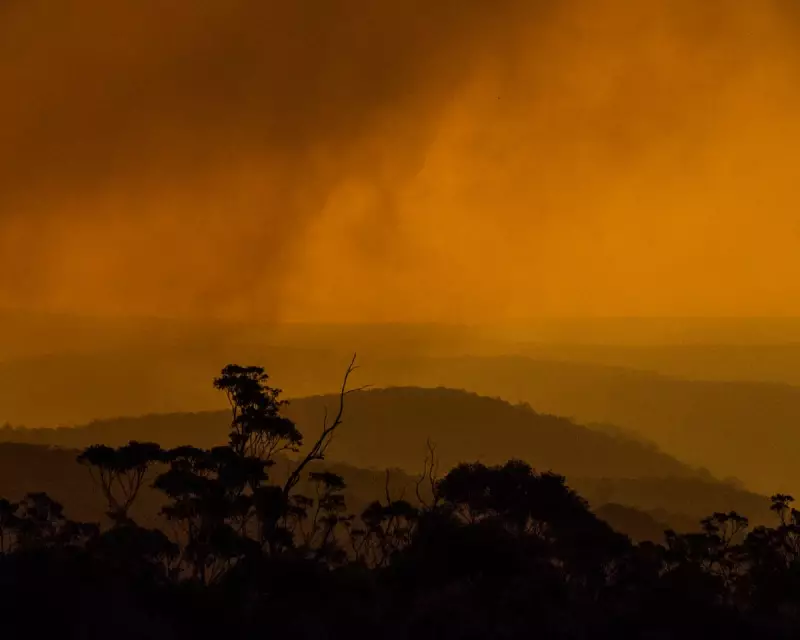
As forecasts predicted a severe heatwave sweeping across south-eastern Australia this week, the mind of climate scientist Sarah Perkins-Kirkpatrick was cast back to the nation's devastating 'Black Summer'. The current event marks the worst period of extreme heat since the catastrophic 2019-2020 bushfire season.
From Ash-Filled Skies to a New Heatwave Emergency
During Black Summer, Professor Perkins-Kirkpatrick experienced a haunting moment with her young daughters. Seeking relief at a pool in western Sydney as the Gospers Mountain fire burned in the Blue Mountains, ash began to fall from the sky. "The delicate black flakes landed gently on top of the heads of my young children, a poetically quiet omen for their future," she recalls.
Now, six years later, a severe to extreme heatwave is gripping large parts of South Australia, Victoria, New South Wales, and the Australian Capital Territory (ACT). Major cities are facing scorching temperatures, with both Melbourne and western Sydney forecast to reach the low 40s Celsius. Regional towns are expected to be even hotter, while Canberra is bracing for consecutive days in the high 30s.
The situation is set to become exceptionally dangerous from Friday, when strong winds associated with a cold front will push across Victoria and New South Wales. This creates a perilous fire weather setup, reminiscent of the conditions that led to the deadly 2009 Black Saturday fires.
The Inescapable Link to a Warming Climate
While some preconditions are less severe than in 2009 or 2019—Australia is not currently in a multi-year drought, meaning vegetation is less dry—the overarching threat of climate change looms large. The link between heatwaves and climate change is unequivocal, with rising global average temperatures directly increasing the frequency, duration, and intensity of such events.
Professor Perkins-Kirkpatrick, based at the Australian National University (ANU), emphasises that while the explicit influence of climate change on this specific heatwave is still being analysed, her estimation is that it will be "very substantial". She stresses that extreme heat is Australia's silent killer, claiming more lives than all other natural hazards combined.
The recent period of La Niña weather patterns provided a temporary respite from extreme heat, breaking the link between drought and intense temperatures. However, drier conditions returning to the south-east are allowing that dangerous connection to re-form.
Beyond Net Zero: The Imperative for Adaptation
The professor presents a sobering long-term outlook. Even achieving net zero emissions will not provide immediate relief; global temperatures may stabilise, but the benefits could take a century or more to materialise. Recent research indicates Australian heatwaves will continue to worsen for at least 1,000 years, with delays to net zero targets drastically worsening conditions for centuries to come.
This reality forces a critical conclusion: net zero, while imperative, is no longer sufficient on its own. Effective and permanent adaptation must be legislated and pursued in tandem. This requires:
- Dramatically increased investment in public health systems to cope with heat-related illness.
- Ongoing public awareness and education campaigns.
- Robust national frameworks, like the fire danger index, to guide preparedness.
Returning to the memory of her children in the ash-filled pool, Professor Perkins-Kirkpatrick notes a key difference today. Her daughters, once oblivious, are now asking questions about drought, fires, heatwaves, and climate change. "They deserve answers," she states. If the younger generation is to confront future heatwaves head-on, society must commit to doing far better, combining urgent emission cuts with decisive action to adapt to the hotter world already upon us.