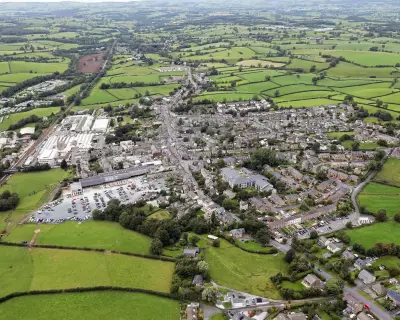
Fairfield, Montana, is confronting a severe water shortage as a combination of failing, decades-old infrastructure and a worsening regional drought strains the water supply for residents and local farmers. Chuck Dale, Fairfield’s water supervisor, expressed little optimism after recent rain, noting it was insufficient to refill the town’s depleted wells. The town of 800 people, located about 35 miles west of Great Falls, is struggling to maintain adequate water flow.
Infrastructure Failures and Water Loss
According to a report from Great West Engineering, Fairfield’s water system loses approximately half of the water it extracts from its wells. Engineer Austin Egan noted that a standard municipal water system typically loses about 15%, more than three times lower than Fairfield’s loss. Engineers attribute much of this attrition to leaks in old, deteriorating pipes, with nearly two-thirds of the system’s pipes installed in 1946. Jake Garcin, a spokesperson for the Montana Department of Environmental Quality, stated that such water loss is typical for an old system and that other small Montana towns, including Fairview, Alberton, Martinsdale, and Circle, have recently addressed similar aging infrastructure.
Current Supply and Demand Challenges
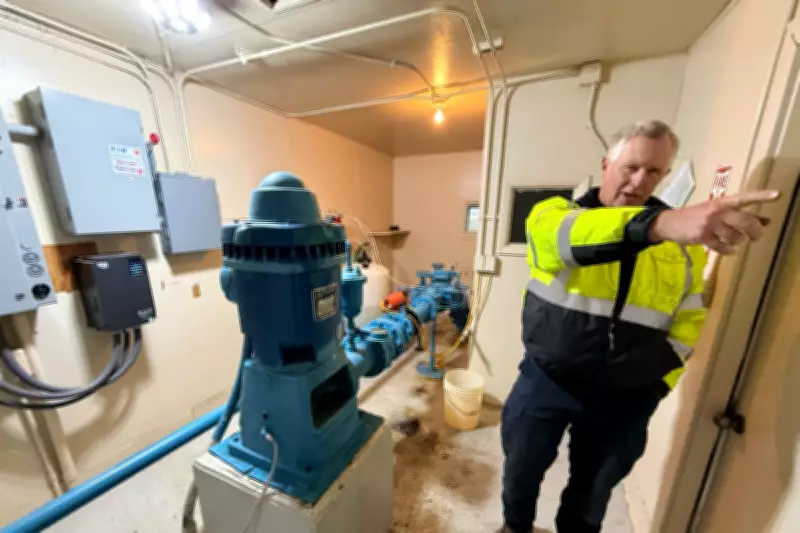
In summer, Fairfield’s water demand climbs to 650 gallons per minute for 16 hours a day, but currently, the town can only pump about 450 gallons per minute for about seven hours daily. Dale worries that if the next two wells go dry, the town will be down to about 250 gallons per minute, potentially requiring portable toilets for schools and businesses. The town last shipped in outhouses 23 years ago, after which a new deeper well was drilled. Dale noted that despite that investment, the problem has resurfaced.

Impact on Residents and Agriculture
Resident Christi Hardin, who has lived in Fairfield most of her life, said she usually grows tomatoes and peppers but plans to skip gardening this summer due to the shortage. She described last year as bad, but this year as worse. The surrounding Sun River Project, an agricultural area with two irrigation districts, hundreds of miles of canals, and about 93,000 acres, is also facing a shortage. Farmer Susie Konen, who irrigates barley fields, said limited water makes her more dependent on weather, affecting production. Rancher Karli Johnson, north of the Sun River Project, has reduced her cattle herd due to declining hay yield from years of drought.
Snowpack and Irrigation Outlook
Eric Larson, a water supply forecaster with the Natural Resources Conservation Service, reported that snowpack melted out in record time across much of the state, including areas feeding the Sun River. This shortens the window for irrigation districts to capture mountain snow. Erling Juel, manager of the Greenfields Irrigation District, said he is holding back as much water as possible after two dry years. The district’s snowpack is at about half of typical levels, leading to an expected 25% reduction in water for the 550 farmers and ranchers it serves. Canals will open two weeks earlier than usual, in early May, to use runoff, but relief will be temporary.
Aging Infrastructure Challenges
Both Juel and Dale work with infrastructure 80 to 110 years old. Refurbishing and replacing equipment could maximize efficiency and extend the irrigation season, but such upgrades cost millions and take decades. Juel highlighted the challenge of replacing aging infrastructure while facing immediate shortages. For residents like Ken Naylor, who has lived in the area for decades, the situation has become a new normal. He understands the restrictions but laments another summer without his garden, having bought fake plants last year. He recalled having a garden like you couldn’t believe and hopes to garden again soon.