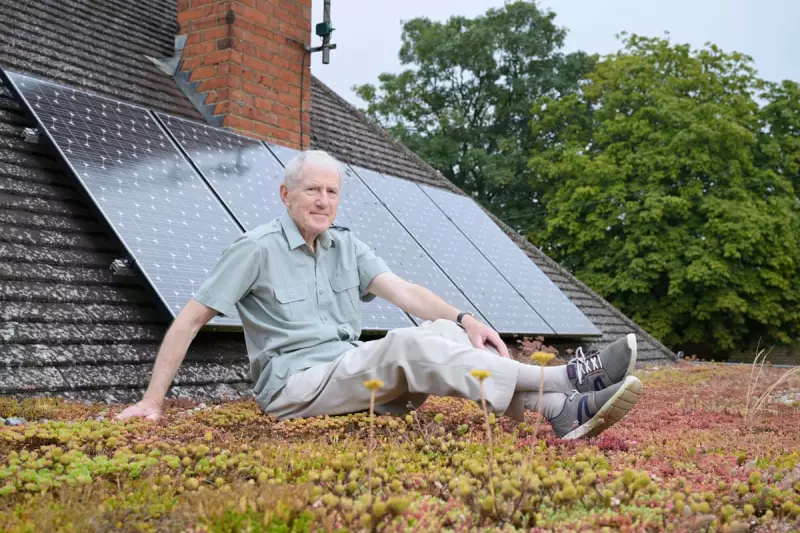
In a poignant and powerful reflection from his hospital bed, Paul Brown, the Guardian's esteemed former environment correspondent, has delivered what many are calling his final warning on the climate emergency and the fate of civilisation.
A Legacy of Truth-Telling on Political Failure
In his article published on 28 November, Brown laid bare the persistent failure of political leaders to act on the most profound issue of our time. He observed that politicians have routinely failed basic leadership principles, with the US government taking this to "appalling levels" and much of the UK opposition attempting to follow suit.
His decades of work, alongside that of colleague John Vidal and now continued by journalists like Fiona Harvey, Damian Carrington, Phoebe Weston, and Damien Gayle, has consistently highlighted the dangerous chasm between scientific consensus and political inaction.
Experts Echo the Call for Immediate Action
The warning has been amplified by leading scientists and figures. Professor Phoebe Barnard of the University of Washington responded, stating that "billions of lives, millions of species and societal stability are at risk." She pointed to a recent national emergency briefing on 27 November, where scientists warned of severe climate-related risks to the UK economy and security.
Barnard expressed hope that UK parliamentarians would finally heed the messages of figures like Chris Packham, Lt Gen Richard Nugee, Professor Tim Lenton, and Professor Kevin Anderson. She also highlighted a glimmer of hope in the actions of young leaders, such as Iceland's climate minister Jóhann Páll Jóhannsson at Cop30, who are stepping up with honest appraisals of responsibility and security risks.
The Critical Scrutiny of Nuclear Power
Beyond broader climate policy, Brown's reflections also underscored the need for rigorous scrutiny of proposed solutions like nuclear power. Attorneys Michel Lee and Susan Shapiro from New York praised his call, citing their experience with the environmental and safety risks.
They raised a stark alarm about the US Advance Act of 2024, which they claim changed the mission of the Nuclear Regulatory Commission from protecting public health to also promoting nuclear power—objectives they view as incompatible. They argued that nuclear subsidies sabotage the transition to cheaper, safer renewables like solar-plus-batteries and geothermal cooling, particularly criticising the push for small reactors to power AI data centres.
"No industry and no government is immune from corruption and human folly," they wrote, warning of grave consequences within the international military-industrial-nuclear complex.
A Torch Held High for Civilisation
Former Environmental Audit Select Committee chair Joan Walley added her voice, thanking Brown for his objective approach over the years, particularly on the shortcomings of nuclear energy. Following the disappointments of Cop30, she urged that his words ring out as a clarion call for the decisive action needed to secure humanity's future.
The collective response to Brown's article forms a unified, urgent plea. As Professor Barnard concluded, Brown and other tireless journalists will not be forgotten, for they have kept the torch alight on the future of our environment and civilisation. "Literally everything we know and love is at stake," she stated, a sentiment that encapsulates the profound weight of this final warning from a veteran observer of our planet's plight.