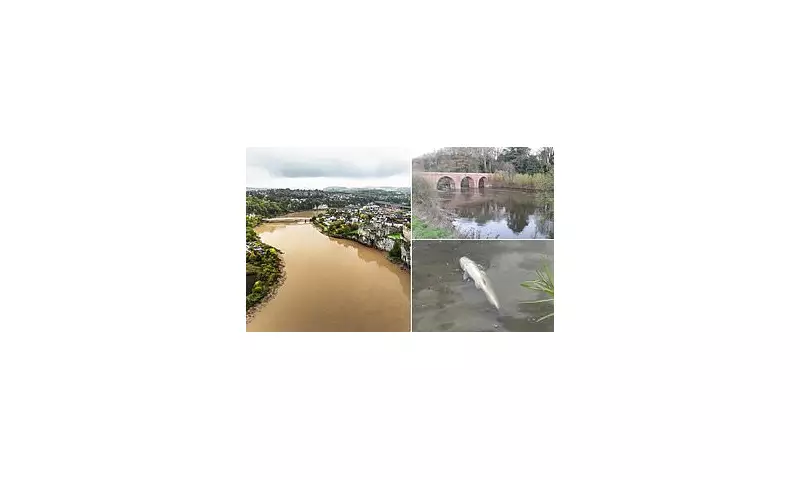
The River Wye's Tragic Transformation: From Romantic Idyll to Ecological Emergency
For generations, the River Wye represented one of Britain's most cherished natural treasures. A leisurely walk along its banks would almost certainly reward observers with the spectacular sight of Atlantic salmon leaping from its crystal-clear waters. This stretch of idyllic countryside, immortalised by William Wordsworth and fellow Romantic poets, maintained its serene daily rhythms undisturbed—a strong contender for the nation's most beautiful secret landscape.
That era now feels like a distant memory. The arrival in recent years of numerous industrial-scale chicken farms along the Wye's banks has triggered a dramatic and alarming deterioration in the river's health. Environmental campaigners estimate that more than twenty million birds are housed in these facilities, producing enormous quantities of phosphate-rich manure. This waste is subsequently spread across agricultural fields, where it inevitably leaches into the watercourse.
A River in Distress: Multiple Pollution Sources
Compounding the problem, both treated and untreated sewage discharges directly into the river have become regular occurrences. These combined assaults have left the once-glistening Wye reeling, with experts warning it may never fully regain its former glory. A particularly devastating blow came in 2023 when Natural England, the government's environmental advisory body, downgraded the river's status to 'unfavourable declining'.

However, the Wye's devoted admirers are mounting a determined fightback. In October, law firm Leigh Day initiated what is believed to be the largest environmental pollution claim in UK legal history. The lawsuit targets Avara Foods poultry group—allegedly responsible for approximately 75% of the area's poultry production—and Dŵr Cymru Welsh Water, which oversees sewage management in the region. The action alleges their role in polluting not only the Wye but also its tributaries, the Usk and the Lugg.
Voices from the Riverbank: Lives and Livelihoods Impacted
The legal claim represents more than 4,000 local residents exasperated by the river's decline. If successful, it would compel the alleged polluters to undertake comprehensive cleanup operations. Among those affected is Justin Connolly, a 55-year-old fishing guide whose livelihood has been decimated. Where he once caught dozens of salmon each season and worked with learner anglers five to seven days weekly, he has not landed a single salmon in years.
'The state of the river put fishermen off, and it came to a point where I had to change my career,' Mr Connolly explained. 'I was probably cancelling 40% of my clients over the last three years. This isn't sustainable as a business anymore.' He described the riverbed as now covered in thick, heavy algae, creating oxygen-depleted conditions that suffocate aquatic life.
The pollution presents serious public health concerns. Mr Connolly revealed that the water is frequently unsafe for swimming, with reports of dogs dying after exposure and children becoming seriously ill. 'My friend's son was swimming in the Wye and was in intensive care for some time. They put that down to swimming in the water,' he said.
Olympic Swimmer's Dreams Dashed
Former Olympic swimmer Roland Lee moved to Bredwardine on the Herefordshire stretch of the Wye in 2020, hoping to practice open-water swimming near his new home. Instead, he encounters polluted water that is often opaque and foul-smelling. 'People need to wash themselves thoroughly after getting out, and be careful of taking any water in,' he warned. 'There are things now that are guaranteed to make you sick.'
Mr Lee, a finalist in three Olympic Games, has joined the legal action. He now travels almost an hour to fee-charging pools for training, lamenting that canoeing the entire length of the Wye has become a 'pipe dream'. 'It's a beautiful part of the world, and at the moment there's a real edge to that beauty, which is horrible,' he added.

Ecological and Economic Consequences
The Wye's deterioration extends beyond environmental damage to significant economic impacts. Tourism businesses reliant on canoeing, swimming, and fishing report declining visitor numbers. Matthew Cartwright, who purchased a property in Leominster for conversion to rental accommodation, faces a planning moratorium affecting the River Lugg tributary. He estimates the delay has cost him tens of thousands of pounds and missed development opportunities.
'Herefordshire desperately needs to increase available housing,' Mr Cartwright stated. 'It's been like economic negligence squared for five years. Even during this moratorium, chicken factories were getting approved for development.'
A Glimmer of Hope Through Legal Action
Local resident Jenny-May While, who returned to the area five years ago hoping to share river swimming with her children, described the Wye as now being 'suffocated' and sometimes 'very smelly'. 'It's an apocalyptic landscape,' she said emotionally. 'I've cried quite a lot about it. It is really heartbreaking because it is so unnecessary.'
Despite the grim situation, many residents express cautious optimism about the legal challenge. 'It's great what Leigh Day are doing because it's difficult for individuals to make any difference,' Ms While noted. 'We felt so impotent and helpless before. I think there's a tipping point where, if they stop it, then nature will come back in.'
The phosphate pollution from chicken waste has caused extensive algae blooms, making the water murky and reducing light penetration and oxygen levels. This has devastated the already declining salmon population, which had previously suffered from years of overfishing.
Industry Response and Future Prospects
In response to the allegations, an Avara Foods spokesperson stated: 'We share concerns about the condition of the River Wye, but we believe this legal claim is based on a misunderstanding. No manure is stored or spread on poultry-only farms that supply Avara Foods. Individual farmers are responsible for how nutrients are used in their arable operations.' The company emphasised its employment of approximately 1,500 people in the catchment area and commitment to high production standards.
As the legal battle unfolds, the River Wye stands at a critical crossroads. Designated as a Special Area of Conservation and containing stretches protected as Sites of Special Scientific Interest, the river's future now depends on whether pollution can be curtailed and restoration efforts implemented. For the thousands who love this historic waterway, the fight to reclaim its ecological health represents not just an environmental campaign, but a battle for the very soul of a landscape that has inspired generations.