Trump's Controversial Pardon Reopens Honduras's Wounds
When former US president Donald Trump announced his pardon of Juan Orlando Hernández, the convicted former Honduran leader, environmental defender Anna* felt a profound sense of shock and betrayal. This decision, made in December last year, has sent chilling ripples through Honduras, a nation already grappling with what human rights organisations describe as a severe crisis of impunity.
A Narco-State Leader's Conviction Erased
Hernández, known widely as JOH, made history as only the second world leader ever convicted on drug trafficking charges in the United States. Extradited in 2022, he was found guilty of conspiring to smuggle over 400 tonnes of cocaine into the US and sentenced to 45 years in prison. His presidency, from 2014 to 2022, was marked by rightwing policies that aggressively promoted extractive industries like mining, hydroelectric projects, and large-scale agribusiness, often on Indigenous and Afro-descendant lands.
To activists like Anna, Hernández's government is notorious for investing nearly $72 million to expand palm oil production, leading to severe violence and deforestation that scars the landscape today. His trial had been seen by environmental defenders as a rare beacon of accountability, proving that even the most powerful could face justice. Trump's pardon has extinguished that light.

Honduras: The World's Deadliest Country for Environmentalists
Honduras has long held the tragic distinction of being one of the most dangerous countries globally for environmental activists. Data from Global Witness reveals that more than 90% of human rights violations against defenders go unpunished, with many cases never formally investigated. The country earned the grim title of the "world's most deadly country to be an environmentalist" in 2016, a reputation it has never shaken.
Toby Hill, an investigator with Global Witness, states: "The massive scale of impunity is at the root of this bleak reality, particularly as state capacity and judicial institutions are weakened by rampant corruption." He warns that Trump's pardon risks reinforcing this crisis, leaving defenders exposed and vulnerable without recourse against threats and violence.
The Ghost of Berta Cáceres and Incomplete Justice
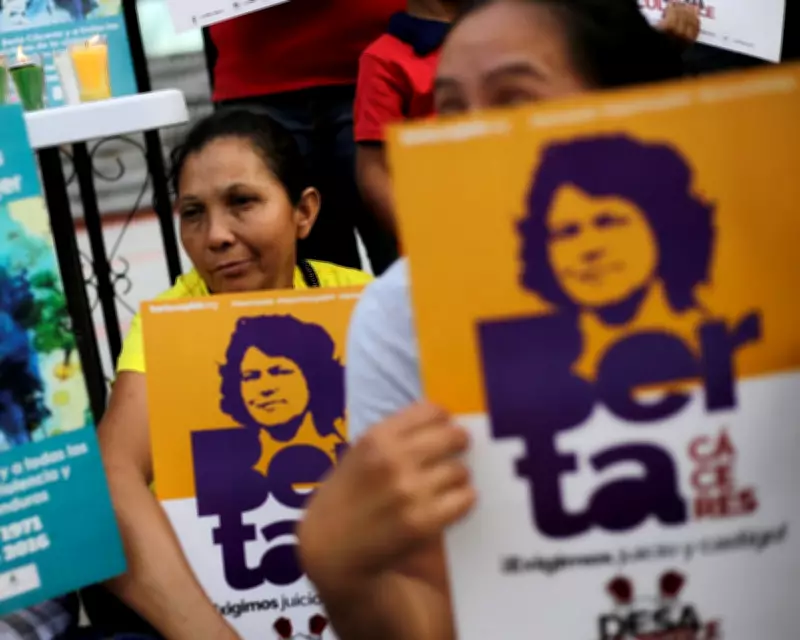
The case of Indigenous leader Berta Cáceres, murdered in 2016 for opposing a hydroelectric dam, epitomises Honduras's justice struggles. While several perpetrators have been convicted, those who instigated and funded her assassination remain largely beyond reach. Daniel Atala Midence, from one of Honduras's wealthiest families and investigated for his alleged role, fled before arrest and remains a fugitive.
Camilo Bermúdez of the Council of Popular and Indigenous Organizations of Honduras (Copinh) notes: "Even in the strongest case Honduras has ever had, justice is incomplete. We have evidence, convictions, international attention and still the most powerful actors remain beyond reach." The recent presidential election victory of Nasry Asfura from Hernández's National Party, by a margin of less than 0.8%, has further dismayed activists, seen as a setback after leftwing president Xiomara Castro's promises of justice.
A Regional Pattern of Authoritarian Embrace
Delphine Carlens and Jimena Reyes of the International Federation for Human Rights (FIDH) argue that Honduras's crisis extends beyond impunity to selective justice and state capture. Reyes explains: "In many cases, especially in Honduras, you have a few families owning a large share of the domestic economy, who capitalise on that power and influence the justice system to advance their interests."
She warns that Trump's pardon and the administration's endorsement of authoritarian leaders who target defenders could have a regional impact, legitimising state capture and undermining judicial independence across Latin America. This creates an environment where, as Anna observes, communities resisting large projects feel "exposed" and that "the brakes are off again."

Lives Lost and Futures Threatened
The human cost is stark. Between 2012 and 2024, Global Witness documented at least 155 murders of land and environmental defenders in Honduras, the vast majority unresolved. In February last year, defender Juan Bautista and his son were ambushed, dismembered, and discarded in a canyon. No arrests have followed, with family members fearing reprisals if they pursue justice.
Selvin David Ventura Hernández, one of Bautista's sons, said in 2025: "We know who operates the logging here. But there is nothing we can do, or we will end up dead as well. No one here will follow in my father's footsteps." For Anna, Trump's pardon sends a clear message: "If drug trafficking and corruption can be wiped clean through political loyalty, what protection do communities have? Justice here has always been fragile. Now it feels optional."
* Names have been changed due to fear of reprisals.