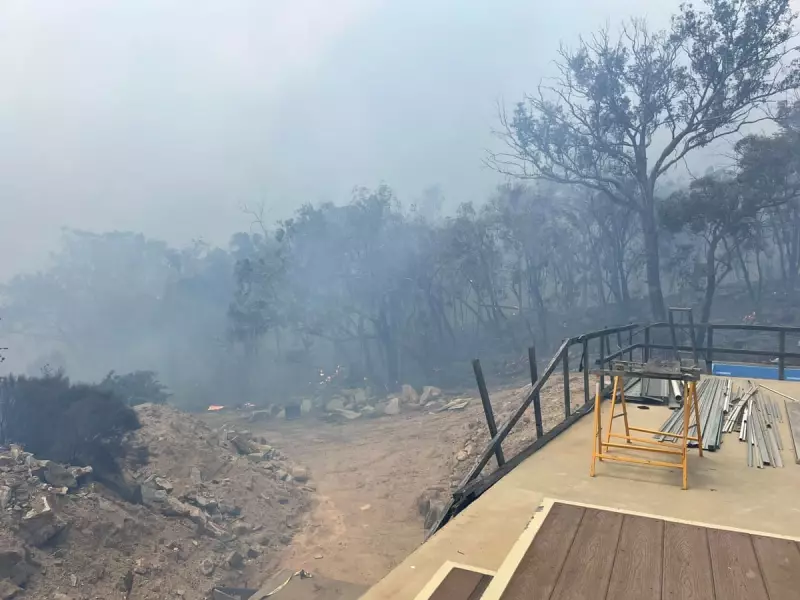
In a harrowing ordeal that has become tragically familiar across parts of Australia, a Victorian man named Ken spent a terrifying night watching his property be consumed by flames. The bushfire, which swept through the area, left a trail of destruction in its wake, yet Ken considers himself fortunate to have survived.
A Long and Terrifying Night of Fire
The incident occurred on the night of January 8th, 2026, as a fierce bushfire, fuelled by dry conditions and wind, bore down on Ken's property. With the fire front advancing, Ken had no choice but to stay and defend his home, a scenario faced by many in rural communities during the Australian bushfire season.
Ken described the experience as surreal and deeply frightening, as he monitored the encroaching blaze throughout the dark hours. The intense heat and roaring sound of the fire created an apocalyptic atmosphere. He witnessed outbuildings and sections of his land being utterly destroyed by the relentless flames, a sight that will be indelibly etched in his memory.

The Aftermath and a Stark Realisation
As dawn broke on January 9th, the full scale of the damage became painfully clear. While his main residence was spared complete destruction, the surrounding property was severely scorched. The landscape he knew was transformed into a charred and smoking ruin.
Despite the significant loss, Ken's perspective is one of grim gratitude. He firmly believes he is "one of the lucky ones," a statement that underscores the brutal reality of bushfire disasters where others often lose everything, including their lives. His survival highlights the critical importance of having a bushfire plan and the immense personal risk involved in staying to defend a property.
A Broader Context of Climate and Risk
This event is not an isolated one. It forms part of a pattern of increasingly severe and frequent bushfire seasons in Australia, which experts frequently link to broader climate change trends. The resilience of individuals like Ken is tested against these ever-growing environmental threats.
The community now faces the long and arduous process of recovery. This includes dealing with:
- Structural damage assessment and repair.
- Ecological restoration of burnt land.
- Addressing the ongoing psychological impact on residents.
Ken's story serves as a powerful and sobering reminder of the raw force of nature and the fragility of human settlements in its path. It amplifies conversations about land management, emergency service funding, and climate adaptation policies crucial for future safety. His testimony of watching his Victorian property burn, yet counting his blessings, adds a deeply human voice to the statistics of disaster.