Victoria's Mallee Region Endures Historic Heatwave as Temperatures Soar
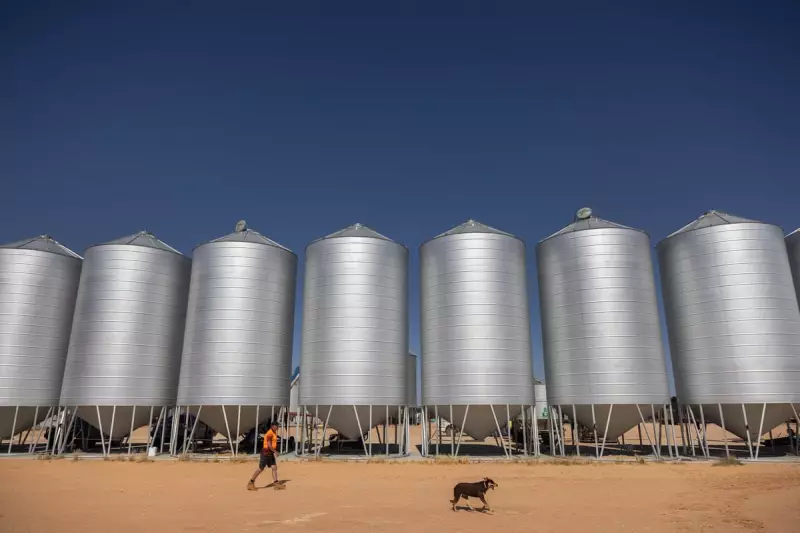
In the vast, flat landscapes of Victoria's Mallee region, the summer sun beats down with relentless intensity. The small town of Ouyen, located approximately 450 kilometres north-west of Melbourne, finds itself at the epicentre of what may become the state's hottest recorded period. Fields that typically shimmer with life now appear bleached and barren, their golden hues masking the severe drought conditions that have persisted for weeks.
Record-Breaking Temperatures Challenge Local Resilience
Recent meteorological data reveals an alarming trend. On Tuesday, preliminary readings indicated that nearby towns Hopetoun and Walpeup reached a staggering 48.9°C. However, the Bureau of Meteorology suggests that temperatures at the Ouyen Post Office could have climbed even higher. This follows a pattern of extreme heat, with Ouyen recording 47.5°C just two weeks prior and 44.3°C on Monday.
These figures are not merely uncomfortable statistics; they represent the highest temperatures ever documented in Victoria's history. The region is currently experiencing its fifth consecutive day above 40°C, with forecasts predicting four more days of similarly oppressive conditions. The absence of substantial rainfall since before Christmas has transformed the earth into a sweeping expanse of red dust, exacerbating the already critical situation.

Farming Communities Adapt to Drier, Hotter Conditions
For fourth-generation farmer Deane Munro, these extreme conditions demand significant adjustments to daily routines and long-term agricultural practices. "When it gets hot like that, not many people are out working unless you have to be," Munro explains. "Most places just bunker down – do a bit in the mornings and bunker down in the afternoons. We just try to make sure we work our week out so you don't have to work in those conditions."
Munro, who cultivates wheat, barley, lentils, hay, oats, and vetch across 25,000 acres alongside his brother, acknowledges the challenges posed by changing climatic patterns. While he does not attribute these shifts directly to human activity, he expresses genuine concern about their impact. "We're at 12-inch rainfall. We don't have to miss out on any more than one or two rains and we can't grow a crop, so we are very worried about that," he states.
Over the past two decades, Munro's family has implemented various adaptations to cope with drier conditions. These include more frequent crop rotations and planting techniques that minimise soil disturbance. "Our moisture conservation over summer has been exceptionally good," Munro notes. However, he cautions that such measures have limits. "We're doing a lot of things like that, that allows us to grow bigger crops on less rainfall. But it's going to come to a point where that doesn't work at all."
Heightened Fire Risks and Wildlife Vulnerabilities
The extreme heat brings with it an elevated risk of bushfires across the parched plains. Munro recalls a recent fire at Boinka that consumed over 55,000 hectares of land, resulting in devastating wildlife losses. "I've never seen so many dead animals. It was just so fast-moving and so hot – I've never seen such a hot burn there either. There were literally tens of thousands of dead animals. That was really disappointing to see," he recounts.
While low winds have somewhat mitigated immediate fire concerns this week, the threat remains ever-present. Livestock and native wildlife are particularly vulnerable during such heatwaves. "There won't be anyone that's got livestock that's not checking their water once or twice a day making sure everything's right," Munro observes. "But certainly wildlife does suffer in these conditions."
Historical Perspectives on Coping with Extreme Heat
For long-term residents like 86-year-old Lillian Hickmott, current conditions evoke memories of a time before modern conveniences. Hickmott, who grew up in Nyah West with sixteen siblings on a fruit block, recalls innovative cooling methods from her childhood. "When it was hot, like these days, Mum would say, righto, the coolest place is out under the peppercorn trees," she reminisces.

Her family's corrugated iron home, lined with hessian, became unbearably stuffy in summer. They would burn cow pats to repel mosquitoes and sleep outside on limestone with mattresses, only retreating indoors a few hours before dawn when temperatures dropped. Hickmott reflects that contemporary generations are "absolutely spoiled" by air conditioning, noting that many young people "wouldn't survive the way we did" without such technological aids.
Broader Climatic Context and Future Projections
Australia's national average temperatures rose by 1.23°C in 2025, marking the country's fourth-warmest year on record according to the Bureau of Meteorology. Scientific consensus indicates that the climate crisis has increased both the frequency and severity of extreme weather events, including heatwaves and bushfires. Long-range forecasts predict hotter-than-average days and nights continuing until April for much of the nation.
As the heat becomes increasingly heavy and insistent, pressing through clothing, sunglasses, windows, and walls, emergency authorities have issued statewide warnings. These alerts highlight particular health dangers for elderly individuals, very young children, and those with pre-existing medical conditions or social isolation. Yet for many raised in this challenging climate, extreme heat remains a familiar, if daunting, aspect of daily life.
The resilience of Mallee communities like Ouyen is being tested as never before. With each record-breaking temperature, the urgency of adaptation grows, underscoring the complex interplay between traditional agricultural practices, environmental changes, and human endurance in one of Australia's most demanding landscapes.