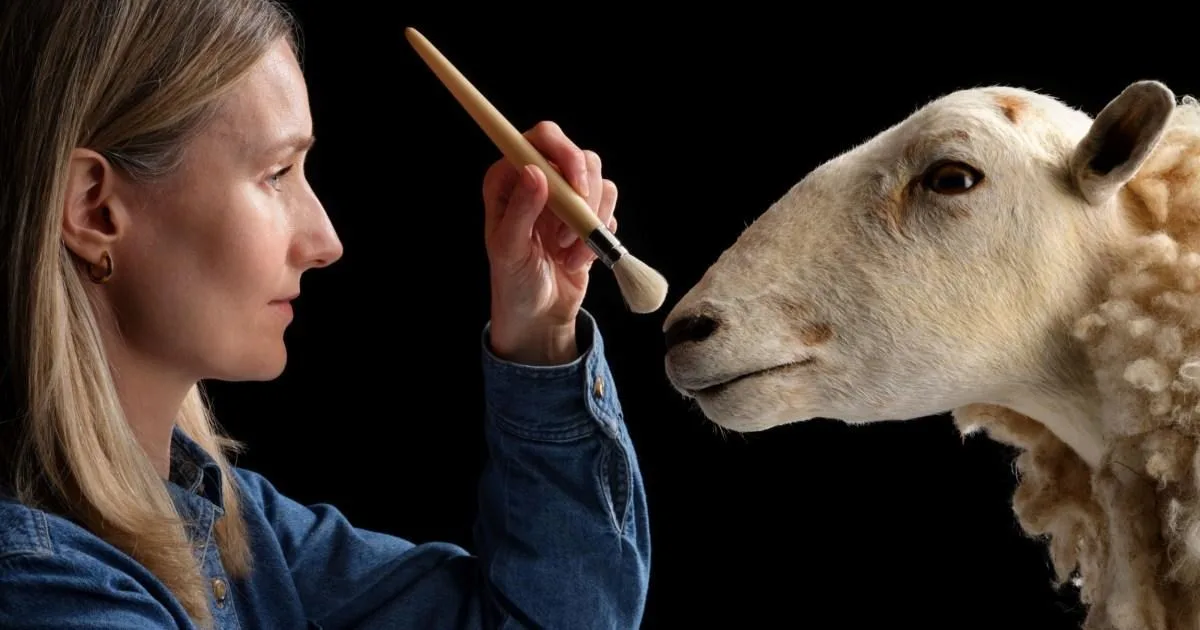
A cloned sheep that helped pave the way for Dolly the sheep has gone on permanent display at the National Museum of Rural Life in East Kilbride, Scotland. Morag, along with her identical twin Megan, were the first mammals cloned from differentiated cells in 1995, a breakthrough that showed cloning complex beings was possible.
The sisters were born in June 1995 at the Roslin Institute in Edinburgh. Their creation used a process called nuclear transfer, where the nucleus from a donor cell is inserted into an egg cell that has had its own nucleus removed. For Morag, the donor cell was an early embryonic cell called a blastocyst, which is already differentiated.
Morag’s success paved the way for Dolly, the first mammal cloned from an adult somatic cell, born in 1996. Dolly’s birth sparked global debate and continues to influence science and ethics. Professor Andrew Kitchener of National Museums Scotland said it is fitting that Morag forms the centrepiece of the new display, exploring the role of cutting-edge science in farming.

Morag died in 2000 and was previously displayed at the National Museum of Scotland in Edinburgh. The new exhibit at the National Museum of Rural Life highlights the scientific significance of these early cloning experiments.