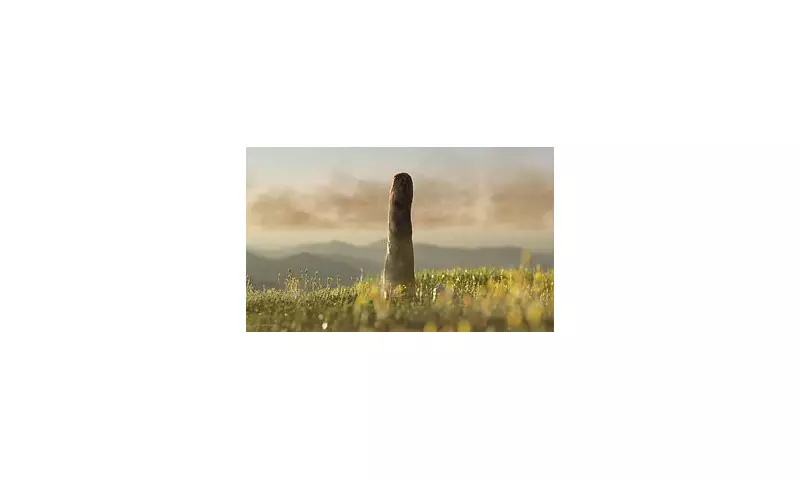
In a groundbreaking discovery that rewrites our understanding of prehistoric life, scientists have revealed that a colossal organism which once stood at an astonishing 26 feet (eight metres) tall belonged to an entirely extinct evolutionary branch. This remarkable lifeform, known as Prototaxites, roamed the Earth approximately 410 million years ago before vanishing from the planet around 360 million years ago.
A Century-Old Mystery Finally Solved
For over 165 years, paleontologists have debated the true nature of Prototaxites, with previous theories suggesting it was a form of fungus. However, a comprehensive new fossil analysis conducted by researchers from National Museums Scotland has definitively overturned this long-standing assumption. Through meticulous examination of both the chemistry and anatomy of these ancient specimens, the scientific team has concluded that Prototaxites represents something far more extraordinary.
Neither Fungus Nor Plant
The research reveals that Prototaxites displayed anatomical and chemical characteristics distinct from both fungal and plant life, placing it in a category all its own. Dr Sandy Hetherington, co-lead author of the study, expressed the significance of this finding, stating: "It's really exciting to make a major step forward in the debate over Prototaxites. They are life, but not as we now know it, displaying anatomical and chemical characteristics distinct from fungal or plant life, and therefore belonging to an entirely extinct evolutionary branch of life."

This conclusion marks a pivotal moment in paleontological research, as Prototaxites now stands as evidence of an independent evolutionary experiment in building large, complex organisms that has no modern counterpart on Earth.
The Rhynie Chert: A Prehistoric Treasure Trove
The crucial fossil evidence was discovered in the Rhynie chert, a sedimentary deposit located near Rhynie in Aberdeenshire, Scotland. This site represents one of the world's oldest fossilised terrestrial ecosystems, renowned for its exceptional preservation quality and diverse array of ancient organisms.
Dr Corentin Loron, co-lead author of the study, emphasised the importance of this location: "The Rhynie chert is incredible. It is one of the world's oldest, fossilised, terrestrial ecosystems and because of the quality of preservation and the diversity of its organisms, we can pioneer novel approaches such as machine learning on fossil molecular data."
The research team's analysis involved comparing their new specimens with existing material from the Rhynie chert already held in museum collections, providing crucial context for their groundbreaking conclusions.
An Independent Evolutionary Experiment
Laura Cooper, co-first author of the study, explained the implications of their findings: "As previous researchers have excluded prototaxites from other groups of large complex life, we concluded that prototaxites belonged to a separate and now entirely extinct lineage of complex life. Prototaxites, therefore, represents an independent experiment that life made in building large, complex organisms, which we can only know about through exceptionally preserved fossils."
This discovery highlights the incredible diversity of life forms that once existed on our planet, many of which have left no descendants in the modern world.
Museum Collections: Vital Resources for Scientific Discovery
The newly analysed Prototaxites fossils have now been formally added to the collections of National Museums Scotland in Edinburgh, where they will be preserved for future study and public education. Dr Nick Fraser, keeper of natural sciences at National Museums Scotland, commented on the importance of museum collections in advancing scientific knowledge: "We're delighted to add these new specimens to our ever-growing natural science collections which document Scotland's extraordinary place in the story of our natural world over billions of years to the present day. This study shows the value of museum collections in cutting-edge research as specimens collected over time are cared for and made available for study for direct comparison or through the use of new technologies."

The research demonstrates how carefully preserved historical specimens, combined with modern analytical techniques, can continue to yield revolutionary insights into Earth's distant past.
Understanding Life's Ancient Diversity
This discovery of Prototaxites as a distinct evolutionary branch adds another layer to our understanding of how life has experimented with different forms throughout Earth's history. The fact that such a massive, complex organism could evolve outside the familiar categories of plants, animals, and fungi suggests that prehistoric ecosystems may have been far more diverse than previously imagined.
The research team's work not only solves a longstanding paleontological mystery but also opens new questions about what other unusual life forms might have existed during Earth's early history, waiting to be discovered in exceptional fossil deposits like the Rhynie chert.