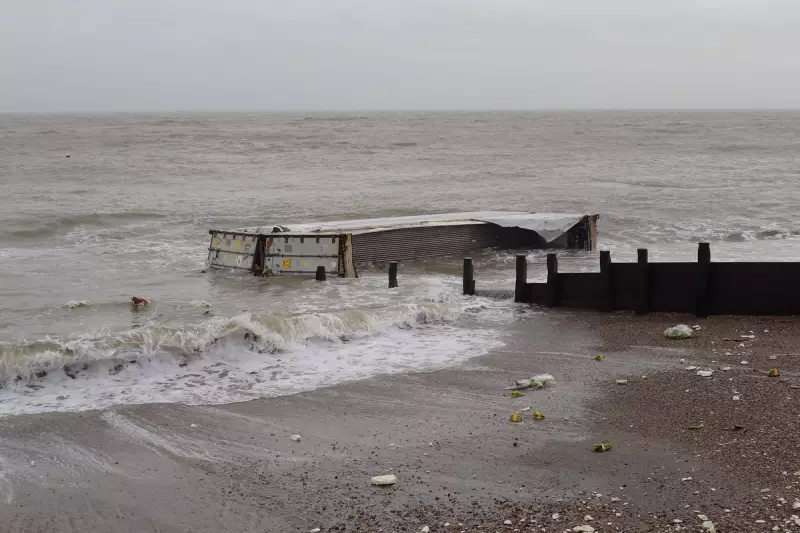
Vegetables, bananas, and insulation foam have been appearing unexpectedly on beaches along England's south-east coastline over recent weeks, creating unusual scenes for coastal walkers and residents. The source of this bizarre flotsam has been traced to shipping containers lost from cargo vessels during severe winter storms, with onions and chips among the latest items to wash ashore in Sussex.
The Accidental Ocean Experiment
For most beachgoers, discovering potatoes or snack foods on the shoreline represents either a nuisance or an amusing curiosity. However, for ocean scientists studying tides and marine currents, these container spills provide valuable real-world data about how the ocean moves objects across vast distances. Think of it as nature's own large-scale message in a bottle experiment, offering rare insights into oceanic circulation patterns that are difficult to observe under normal circumstances.
Modern Shipping's Hidden Vulnerability
The phenomenon of cargo falling from ships is hardly new – maritime traders have experienced losses since ancient times. What has transformed in recent decades is the standardisation of global shipping into containerised systems. Today, aside from bulk commodities like oil, gas, and grain, virtually all manufactured goods spend part of their journey inside these uniform metal boxes.

With more than 250 million containers transported annually across the world's oceans, these workhorses of global trade carry over 80% of household goods at some point in their supply chain journey. Despite these staggering numbers, actual container losses remain relatively rare statistically. Industry data from the World Shipping Council indicates an average annual loss of approximately 1,274 containers globally over the past decade, though individual incidents can dramatically spike these figures.
Historical Precedents and Environmental Risks
Some container losses have achieved unexpected fame through their contents. In January 1992, when 28,800 plastic bath toys spilled into the North Pacific from a single container, oceanographers tracked these friendly floatees for over a decade, using their journeys to refine scientific models of ocean circulation. More recently, researchers have monitored how similar floating objects navigate Arctic passages.
Not all spilled cargo proves so benign or scientifically useful. The 2007 MSC Napoli incident in the English Channel saw 114 containers lost, with contents ranging from desirable consumer goods like wine and BMW motorcycles to hazardous materials including explosives, industrial chemicals, and agricultural substances. Beyond their contents, the containers themselves present navigation hazards, sometimes remaining semi-submerged just below the water surface where they're difficult to detect but capable of causing serious vessel damage.
Engineering Limitations in Storm Conditions
Modern container ships represent marvels of logistical efficiency, with the largest vessels stretching 400 metres and carrying up to 25,000 individual containers stacked high above deck. Standardised locking mechanisms allow rapid port operations but face limitations during extreme weather events. When storms generate forces exceeding design specifications, particularly for containers positioned at vessel edges, dislodgement becomes increasingly likely.
Completely eliminating such risks would require fundamental redesign of global shipping systems – smaller vessels with internal cargo storage, reduced efficiency, increased fuel consumption per tonne transported, and ultimately higher consumer costs. Such changes would also strain port capacities worldwide, creating logistical bottlenecks that would reverberate through supply chains.
Why the South Coast Experiences These Incidents
The English Channel represents one of the planet's busiest maritime thoroughfares, regularly subjected to North Atlantic weather systems. Combined with Southampton's status as a major global container port capable of accommodating the largest vessels, this creates conditions where container losses occasionally become visible along southern English shores. The region's coastal communities thus find themselves unwitting participants in these maritime mishaps.

Future Challenges and Regulatory Responses
Looking forward, multiple factors suggest these incidents may become more frequent rather than diminishing. Climate change contributes to intensifying storm systems as ocean temperatures rise, while global trade volumes continue expanding alongside vessel sizes. In response, new international regulations effective from January 2026 will require shipping companies to report all container losses and their contents through collaboration between the World Shipping Council and the International Maritime Organization.
While these reporting requirements won't prevent losses occurring, they should enhance tracking capabilities, recovery efforts, and corporate accountability. For members of the public encountering containers or their contents on beaches, authorities emphasise reporting discoveries to coastguard services rather than treating them as unexpected windfalls. In the United Kingdom, legal ownership of washed-up items falls under the jurisdiction of the Receiver of Wreck, and removing items could constitute theft. More importantly, containers may contain hazardous materials posing serious risks to public safety and coastal environments.