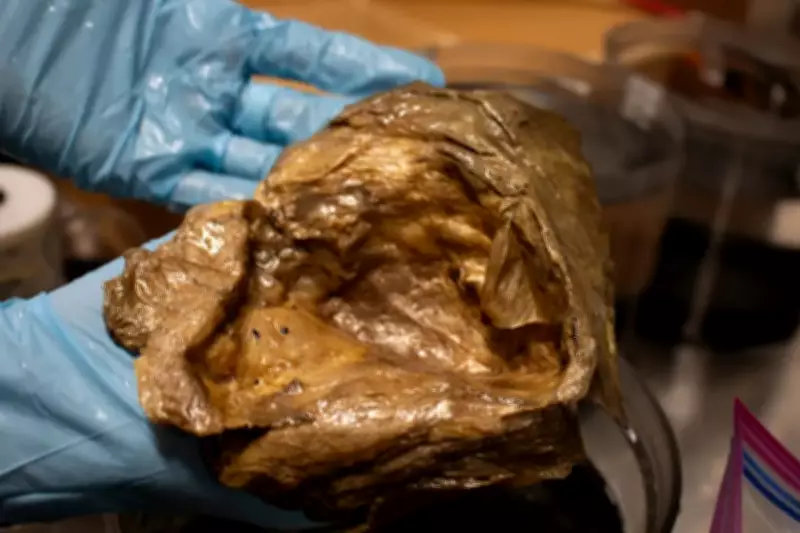
NOAA Scientists Solve Deep-Sea 'Golden Orb' Mystery After Years of Research
Scientists from the National Oceanic and Atmospheric Administration have finally identified a mysterious "golden orb" discovered at the bottom of the ocean in 2023. After more than two years of intensive research and analysis, researchers have determined that the object is not an extraterrestrial egg or marine sponge, but rather the relic of a giant deep-sea anemone species known as Relicanthus daphneae.
Discovery in the Gulf of Alaska Depths
The expedition team found the unusual object more than two miles beneath the surface waters of the Gulf of Alaska. The gold-colored base, typically hidden underneath the living animal, was left behind on a rock formation. NOAA officials explained in a new video detailing their findings that the top portion of the anemone might have died or relocated to a new habitat, leaving researchers to speculate about its ultimate fate.
Initial examination revealed the four-inch wide orb was tightly adhered to a rock, with a small hole providing a glimpse into its interior structure. Scientists utilized the remotely operated vehicle Deep Discoverer to locate and collect the specimen using its specialized suction tool before transporting it to the Smithsonian National Museum of Natural History for comprehensive laboratory analysis.

Complex Scientific Investigation Process
Zoologist Dr. Allen Collins, director of NOAA Fisheries' National Systematics Laboratory at the museum, described the investigation as particularly challenging. "We work on hundreds of different samples and I suspected that our routine processes would clarify the mystery," Collins explained. "But this turned into a special case that required focused efforts and expertise of several different individuals."
The scientific team employed multiple approaches to unravel the orb's identity:
- Morphological analysis revealing fibrous material with layered surfaces containing sting cells
- Genetic testing that initially proved inconclusive due to contamination from microscopic organisms
- Whole-genome sequencing that ultimately confirmed the specimen's animal origins
Researchers identified the specialized cells as spirocysts, which are limited to the Hexacorallia group of invertebrates. Advanced DNA sequencing techniques showed the specimen's genetic material was "genetically almost identical to a known Relicanthus daphneae reference genome," definitively solving the mystery.
Significance of Deep Ocean Exploration
Captain William Mowitt, acting director of NOAA Ocean Exploration, emphasized the importance of such discoveries. "So often in deep ocean exploration, we find these captivating mysteries, like the 'golden orb'. With advanced techniques like DNA sequencing, we are able to solve more and more of them," Mowitt stated.
The identification process highlights how modern scientific methods can unravel even the most perplexing marine mysteries. Collins is scheduled to discuss the discovery further during an online presentation on Thursday, April 30, providing additional insights into this remarkable deep-sea finding and its implications for marine biology research.