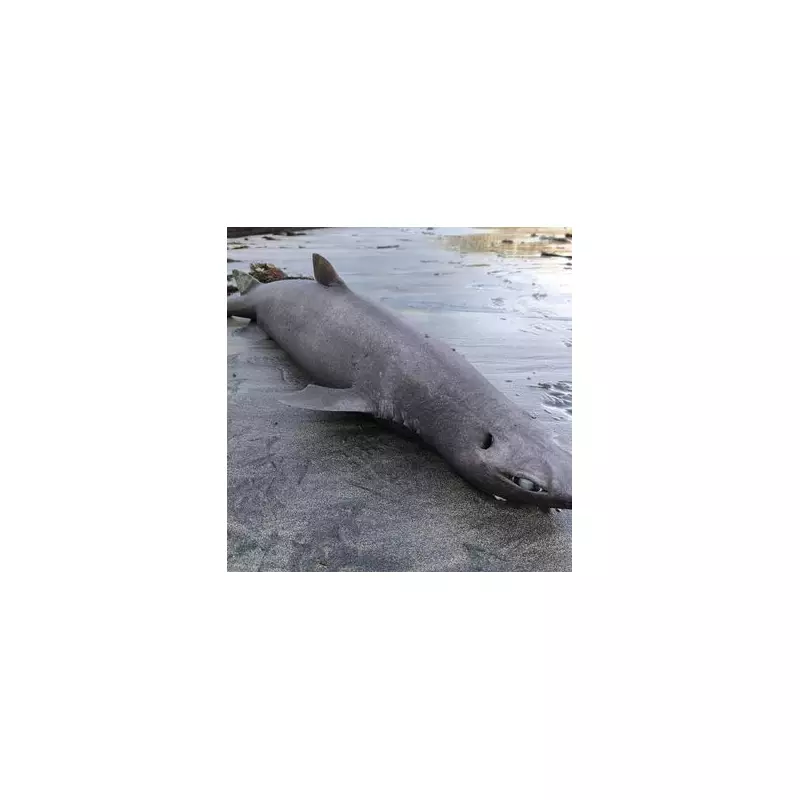
The body of a rare and bizarre-looking deep-sea shark, carrying a litter of eggs, has been discovered on a popular tourist beach in northern Spain, sparking both awe and concern among marine experts.
A Deep-Sea Leviathan Out of Place
The creature, identified as a Portuguese shark (Centroscymnus coelolepis), was found on Luarca Beach, located west of Gijón, on Saturday. This species is a denizen of the extreme deep, typically inhabiting depths of up to 3,500 metres, where pressures are immense. The stranded specimen measured 4ft 8in (1.45m) in length and weighed 40lbs (18kg).
Locals were quick to note the shark's unusual, almost mythical appearance, comparing its features to characters like Toothless and Shadow from the How to Train Your Dragon film franchise. However, for scientists, the discovery signalled a probable tragedy.

Autopsy Reveals a Pregnant Specimen and Suspected Cause
Luis Laria, president of the Centre for Studies and Protection of Marine Species, performed an autopsy on the shark. The examination revealed the animal was pregnant, carrying 12 large eggs, each 7cm in diameter, containing developing embryos, and a further nine undeveloped eggs.
While no definitive cause of death was established internally, a key clue was found. A 3.5cm tear was discovered in the wall of the shark's oesophagus, and blood was present in its mouth and digestive tract. Experts strongly suspect the shark was accidentally hooked by a fishing crew, likely on a longline.
"The hook, possibly from a longline, became embedded, and the animal managed to free itself, expelling it, but not before causing irreversible damage through tearing and haemorrhaging, which led to its subsequent stranding," explained Luis Laria.
A Species in Perilous Decline
The incident highlights the precarious state of the Portuguese shark species. Once commonly fished for its meat and liver oil, it is now classified as 'Near Threatened' by the International Union for Conservation of Nature (IUCN).
Its population has suffered from overfishing and a naturally poor reproductive rate, making the loss of a pregnant female a significant blow. Catching this species is now banned, but accidental bycatch remains a serious threat to its survival in the deep waters of the Atlantic.
The discovery serves as a stark reminder of the hidden impact of human activity on even the most remote and mysterious creatures of the ocean deep.