A hazardous smog blanket has descended upon India's capital, New Delhi, triggering unusual public demonstrations as residents protest against deteriorating air quality that's exacerbating a major public health emergency.
Severe Pollution Levels Recorded
On Monday morning, New Delhi's air quality index reached 344, a level classified as 'severe' and posing significant health risks according to World Health Organization guidelines. The thick smog filled the atmosphere with an acrid smell, creating visible haze across the city of over 30 million people.
Citizens Take to the Streets
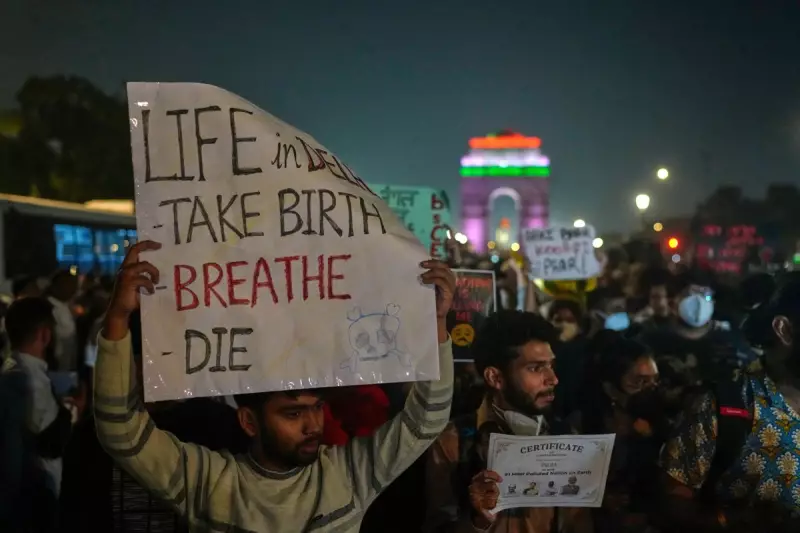
Hundreds of protesters, including concerned parents and environmental activists, gathered at New Delhi's India Gate on Sunday evening in a rare display of public frustration. Demonstrators wore protective masks and carried placards with poignant messages such as 'I miss breathing'.
One participant, Meghna, who provided only her first name, expressed her concerns: 'I am here just as a citizen who cares and who is worried about the state of situation that we are in with respect to the lack of clean air to breathe.'
Police subsequently intervened, confiscating banners and asking the crowd to disperse, citing lack of official permission for the demonstration.
Annual Health Emergency Worsens
The deteriorating conditions have generated widespread anger among residents suffering from persistent coughs and headaches. Frustration continues to mount toward political leaders accused of engaging in blame-shifting rather than implementing effective policies to address what has become a recurring seasonal health crisis.
According to a recent report from Switzerland-based air quality monitoring organisation IQAir, India contains six of the world's ten most polluted cities, with New Delhi maintaining its position as the most polluted capital city globally.
The situation typically deteriorates further during winter months when farmers in neighbouring states burn crop residue. Cooler temperatures then trap this smoke, which combines with vehicle emissions and industrial pollution. The problem intensifies as Delhi's dry, windless winter conditions cause toxic particles to linger, sometimes pushing pollution concentrations to twenty times the WHO's safe limit.
Authorities have implemented temporary measures including construction bans, restrictions on diesel generators, and even attempted cloud seeding to induce rainfall. However, critics argue that only comprehensive, long-term strategies to reduce emissions will provide meaningful relief from the annual environmental crisis.