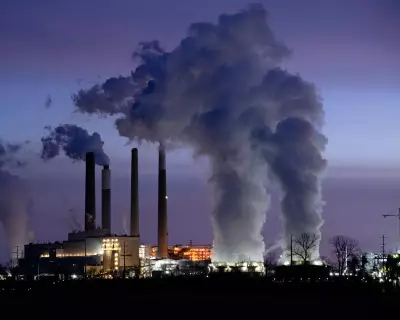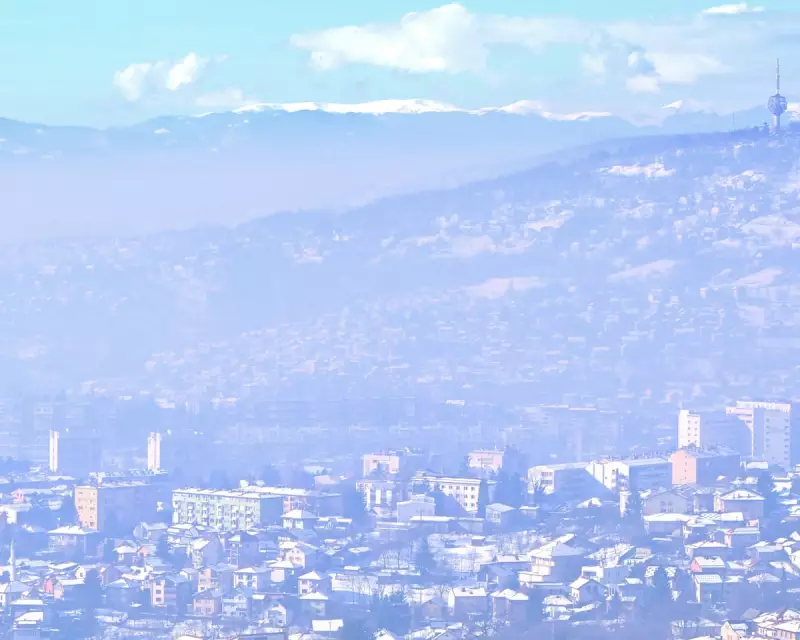
When considering the globe's most polluted urban centres, visions of Delhi or Beijing typically dominate the conversation. However, startling new data has uncovered an acute pollution crisis much closer to the heart of Europe, with the Balkan region bearing an alarming burden.
Europe's Pollution Epicentre
Groundbreaking research has identified particle pollution in the Balkans as the highest across the entire European continent. The study, led by scientists from Switzerland's Paul Scherrer Institute (PSI), indicates that pollution levels in this region frequently surpass those recorded in Beijing and, on certain days, rank among the most severe anywhere in the world.
"In winter, the particle pollution in the Balkans is the highest in Europe," explained Professor Andre Prevot of the PSI. "Particle pollution levels are often higher than in Beijing and on some days they are among the highest in the world. Sulphur dioxide concentrations in winter can be over thirty times greater than the norms observed in western Europe."

A Mobile Laboratory in Sarajevo
To accurately capture the complex pollution profile of a city, the PSI research team employed an innovative mobile approach. They equipped a specially adapted van with state-of-the-art air pollution sensors, complete with sample pipes mounted on the roof. This mobile laboratory then conducted repeated circuits through Sarajevo during the winter months.
Each circuit lasted approximately ninety minutes, with the team undertaking up to six drives in a single day. "One of the hardest parts of the study was spending so much time in traffic, driving in the narrow streets up and down the hills," noted Michael Bauer of the PSI. The researchers encountered visibly smoggy evenings in the west of the city and detected clear odours of wood and coal smoke in residential districts.
Sources of a Toxic Mixture
The analysis revealed a dangerous cocktail of pollutants. The team examined a portion of the particle pollution mixture, finding it exceeded the World Health Organization's daily guideline for sixty-six percent of the monitoring period. Often, levels were more than eight times higher than the recommended limit.
The most severely affected areas were residential neighbourhoods, where air pollution was primarily driven by domestic heating practices. The burning of wood, coal, and even rubbish releases high concentrations of cancer-causing polycyclic aromatic hydrocarbons into the atmosphere.
"Our results confirm the priority areas," Bauer stated, referencing a 2023 United Nations Development Programme study that identified nine key zones in Sarajevo requiring urgent intervention. That report recommended measures including home insulation, the installation of central heating and heat pumps, stove inspections, and public awareness campaigns. Existing plans aim to reduce solid fuel heating in these priority areas by ninety percent by 2033. "These plans are desperately needed," Bauer emphasised, while cautioning that other pollution sources would remain significant and should not be overlooked.
Additional Contributors to the Crisis
The city's ageing vehicle fleet compounds its air quality problems. The average vehicle in Sarajevo is nineteen years old, with ten percent of vehicles predating modern European exhaust emission standards. For context, in the United Kingdom, the average car age in 2024 is ten years, with vans and lorries averaging between eight and nine years old.
In Sarajevo's city centre, restaurant cooking emerged as a dominant source of particle pollution. "Cooking contributes a non-negligible amount to air pollution in the city centre, mainly since home heating is not as important here," Bauer explained. Professor Prevot added a sensory observation: "The smell of grilling in the city centre was amazing. On some days it felt like being in northern India … you can almost taste it in the mouth."
A Dire Public Health Toll
The human cost of this environmental failure is stark. It is estimated that approximately 3,300 people die prematurely each year in Bosnia and Herzegovina due to particle pollution. This figure underscores the urgent need for comprehensive and effective policy responses to mitigate the sources of pollution and protect public health across the region.