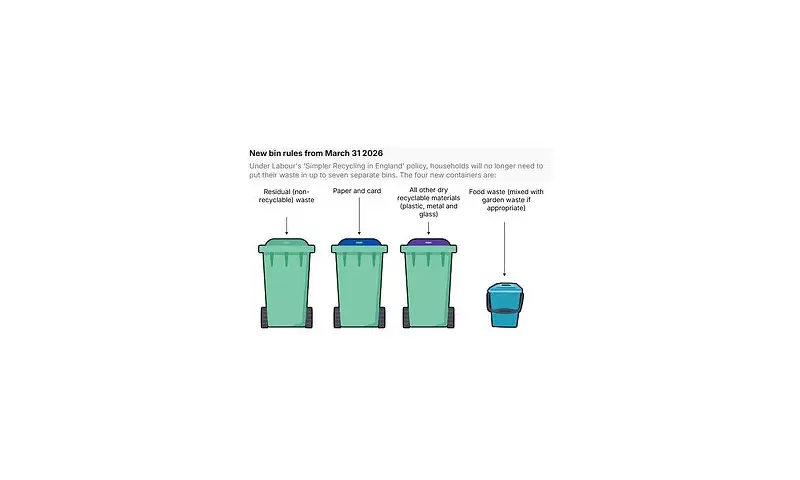
Taxpayers across England are set to foot a multi-million pound bill for the nationwide introduction of a simplified four-bin recycling system, with councils facing huge upfront costs and warnings of cluttered pavements.
The New Four-Container System
From March 31 this year, local authorities in England are mandated to provide residents with four separate containers for their waste. This move, designed to standardise collections and end the recycling 'postcode lottery', will see households receive bins for: non-recyclable waste; food and garden waste; paper and cardboard; and other recyclables like plastic, metal and glass. The containers can be bins, bags, or stackable boxes.
The government legislation also requires weekly food waste collections to be introduced. However, the rollout is proving expensive. Northumberland Council estimates the changes will cost around £21 million. Elsewhere, Wolverhampton is spending £1.3 million on ten new collection vehicles, while North Tyneside has budgeted £2.1 million for 15 new food waste vans and home receptacles.

Costs, Clutter, and Contract Delays
Even seemingly minor changes carry a significant price tag. East Suffolk Council approved £350,000 just to change the lids on its existing green garden bins to avoid confusion with new paper and card containers, arguing that full bin replacement would have exceeded £1 million.
Critics have immediately raised concerns about the practical impact. Legal expert and 'binfluencer' Gary Rycroft told the BBC that the new bins in Lancaster were "causing a bit of a hazard" for parents with prams due to pavement obstruction. The TaxPayers' Alliance warned that residents would be "furious" if their cash was "thrown away on costly new bins."
Furthermore, the reform has exposed a stark postcode delay. Due to pre-existing long-term contracts with waste firms, some areas will wait over a decade for new food waste services. Residents in South Tyneside, Sunderland, and Gateshead may not get separate food waste collections until 2039, with Cumbria waiting until 2034. Green Party councillors have expressed devastation and frustration at these delays, citing prohibitive contract alteration costs.
Fines, Flexibility, and Stagnant Recycling Rates
The new rules stem from the Environment Act 2021. While aiming to simplify a system where some households previously needed up to seven bins, councils retain some local flexibility in implementation and can even miss the March deadline. This has led to accusations that commercial interests are being placed before environmental targets.
Householders who do not follow their council's specific rules on bin presentation can face fixed penalty notices of between £60 and £80, with some reports of fines up to £400 for issues like putting bins out on the wrong day.
The government insists the changes will "end the postcode lottery" and clean up streets. However, the initiative launches against a backdrop of stagnant recycling rates in England, which have remained at around 45% since 2015. A recent analysis found English households dumped 5.6 million tonnes of packaging in 2023, with over 2 million tonnes incorrectly placed in residual waste bins.
A Defra spokesperson stated the reforms would "make recycling easier" with a universal standard, while the Local Government Association emphasised the need for "adequate funding and support" for councils to deliver the new services effectively from April 2026.