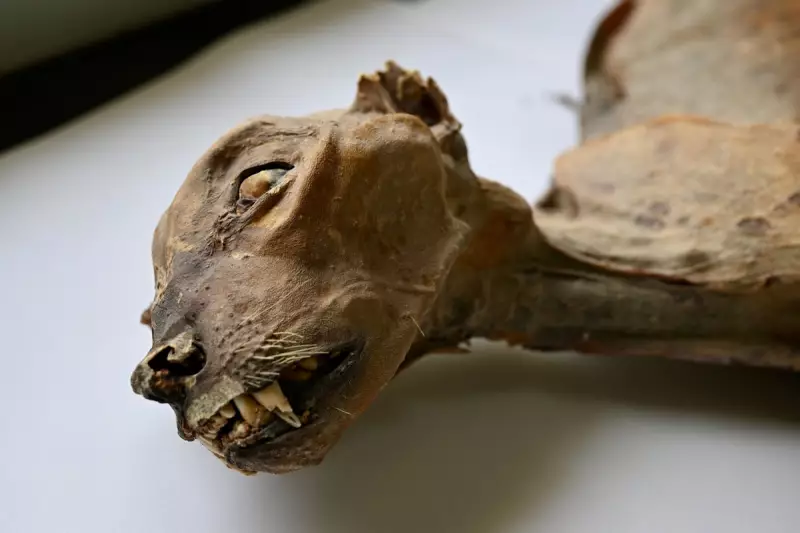
In a remarkable discovery with profound implications for conservation, scientists have unearthed a collection of naturally mummified cheetah remains from caves in northern Saudi Arabia.
A Rare Glimpse into the Ancient Past
The find, detailed in a study published in the journal Communications Earth and Environment, includes seven remarkably preserved mummies and the bones of 54 other cheetahs. The remains were excavated from a site near the city of Arar and range dramatically in age, with the oldest specimens dating back more than 1,800 years and the youngest being around 130 years old.
Natural mummification, which prevents decay without human intervention, is exceptionally rare for large mammals. It requires a very specific environment where carcasses can dry out quickly and avoid being consumed by scavengers. "It's something that I've never seen before," remarked Joan Madurell-Malapeira from the University of Florence, who was not part of the research team. The mummies, described as having cloudy eyes and shrivelled limbs, were likely preserved by the caves' dry conditions and stable temperatures.

Unanswered Questions and Genetic Insights
Researchers remain uncertain why so many cheetahs were present in the caves. One leading theory suggests the location may have served as a denning site where mothers gave birth and raised their cubs. This discovery is particularly significant as cheetahs vanished from the Arabian Peninsula decades ago, their decline driven by habitat loss, unregulated hunting, and dwindling prey.
In a scientific first for naturally mummified big cats, the team successfully analysed the ancient genetic material. The results showed the mummified cheetahs were most closely related to modern cheetah populations in Asia and northwest Africa. This genetic data is a treasure trove for conservationists, providing a clearer picture of the region's lost biodiversity and informing potential future reintroduction efforts.
Implications for Modern Conservation
This discovery starkly highlights the dramatic range contraction of the cheetah, which now inhabits just 9% of its historical territory. The well-preserved state of these specimens offers an unprecedented opportunity to study the genetics, health, and ecology of populations that thrived before modern pressures caused their local extinction.
The findings underscore the importance of paleontological research in guiding contemporary wildlife conservation. By understanding the genetic makeup of past populations, scientists can make more informed decisions about protecting the cheetah's future, potentially one day restoring this iconic predator to landscapes it once roamed.