Major Wildlife Trafficking Operation Uncovered in California
In a significant crackdown on the illegal wildlife trade, three individuals have been arrested in California after authorities seized hundreds of elephant tusks, rhinoceros horns, and other protected animal parts. The operation represents one of the largest cases of trafficking illegal animal products discovered in recent years, according to officials from the California Department of Fish and Wildlife.
Interception of Falsely Labeled Shipment
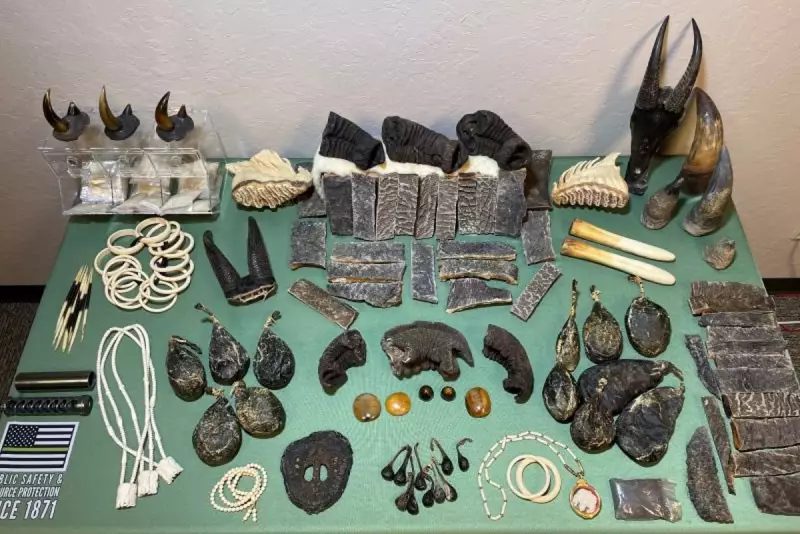
The investigation began earlier this month when authorities in Fresno intercepted a shipment from Thailand that had been falsely labeled. Inside, officers discovered four elephant trunks determined to be from Asian elephants, a species protected under the Convention on International Trade of Endangered Species (CITES). The seizure also included hundreds of illegal products crafted from ivory and elephant materials, alongside other items from poached animals.
The confiscated items comprised:

- Rhino horns
- Walrus tusks
- Suspected bear gall bladders
- Saiga antelope parts
- Turtle shells
Arrests and Ongoing Investigation
The three suspects, whose identities have not been publicly disclosed, have been booked into the Fresno County Jail. They are facing charges related to wildlife trafficking violations under the California Fish and Game Code. Charges are set to be filed with the Fresno and Madera County district attorney's offices.
Nathan Smith, Assistant Chief of Special Operations for the Law Enforcement Division at California Fish and Wildlife, emphasised the scale of the case in an interview with Fox 26. "We have discovered cases like this across the years, for the past 10 years. But this one definitely marks one of the larger cases for sure," Smith stated.
While three arrests have been made, the California Department of Fish and Wildlife indicated there are approximately seven suspects in total. More arrests are anticipated as the investigation progresses.
Connected Illegal Activities
On the same day as the major seizure, officers in Madera County, located just north of Fresno, shut down an illegal rooster-fighting ring. During this operation, they also found illegal derivatives of protected kestrel falcons. Smith explained the connection: "Those were residences that we had in Madera County that were connected to the Fresno facility. So everything had a nexus back to the Fresno facility. Still, those were home residences of some of the employees, where we believed that they also possessed illegal wildlife parts."
Demand for Illegal Wildlife Products
Allan Crawford, vice president of the World Wildlife Fund, provided insight into why these illegal items remain in high demand. He noted that products like rhino horn are often sought after for various purposes, including traditional medicine and as status symbols in certain circles.
"For rhino horn, Asia has typically been the primary demand centre, but there are other regions, and the US is no exception," Crawford told Fox. "And those can be used for traditional medicine. There's also, they're also used almost as a party drug in some countries, where they believe it helps you party all night. And also the mis-founded belief that it will cure cancer as well."
This case highlights the ongoing challenges in combating wildlife trafficking, which continues to threaten endangered species worldwide. The California Department of Fish and Wildlife's operation serves as a reminder of the extensive networks involved in this illicit trade and the importance of international cooperation in addressing it.