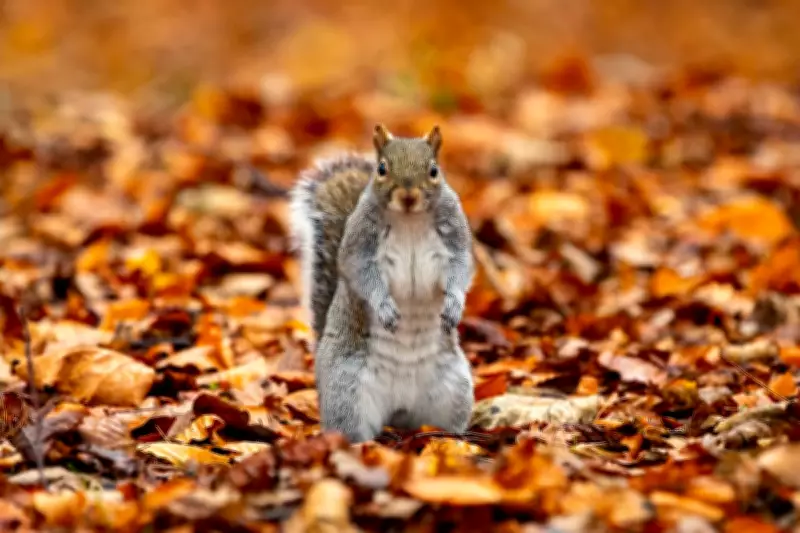
The government is actively supporting scientific research into developing an oral contraceptive specifically designed for grey squirrels. This innovative approach aims to curb the destructive impact of this invasive species on Britain's native woodlands and the critically endangered red squirrel population.
Parliamentary Debate Sparks Controversial Comparison
During a recent parliamentary discussion on wildlife management, one MP provocatively described grey squirrels as the 'Hamas of the squirrel world', highlighting the intense feelings surrounding this environmental issue. This forms part of a comprehensive, multi-faceted government strategy to address what officials term a significant ecological threat.
Alarming Population Statistics Reveal Crisis
The scale of the problem is staggering. Since their introduction from North America in the 19th century, grey squirrel numbers have exploded to approximately 2.7 million across Great Britain. Meanwhile, native red squirrel populations have catastrophically declined to just 38,900 individuals, now confined largely to England's geographical fringes.

Grey squirrels aggressively out-compete their red counterparts for food resources and, more devastatingly, transmit the squirrel pox virus. This pathogen proves almost always fatal to red squirrels while rarely affecting the greys, creating a perfect storm for population collapse.
Economic and Environmental Damage Quantified
The environmental impact extends beyond species competition. Grey squirrels cause severe damage to woodlands by stripping bark from trees, particularly targeting young saplings. Government officials have calculated the direct economic cost of this destruction at an estimated £37 million annually in England and Wales alone, a figure that excludes broader ecological consequences.
Five-Year Action Plan Unveiled
In an update to its 2014 grey squirrel action plan, the government has committed to a five-year programme of intervention. This includes:
- Providing financial incentives and expert advice to encourage landowners to implement control measures on their properties
- Offering grants for new equipment, including humane traps, to facilitate management efforts
- Supporting specialised training programmes for volunteers and professionals in grey squirrel population management
- Encouraging the use of well-trained, competent volunteers who currently lead much of the practical conservation work
Fertility Control Research Gains Momentum
The Environment Department (Defra) has acknowledged that current control methods are frequently criticised as 'ineffective'. With growing public support for non-lethal alternatives, the government will continue backing research into developing an oral contraceptive delivered through specialised feeders accessible only to grey squirrels.
Heather Harris, Communications Officer for the Red Squirrel Recovery Network, commented: 'The government's new squirrel strategy rightly acknowledges grey squirrels as a widespread non-native species, posing a serious threat to red squirrels and the health of woodland ecosystems.'
She added: 'The RSRN supports research led by the Animal and Plant Health Agency into non-lethal fertility control. This work remains in the research and development phase, where we will support landscape-scale trials of the feeder mechanisms to assess safety, effectiveness and practicality.'
Natural Predator Reintroduction Shows Promise
Alongside contraceptive research, officials are monitoring the impact of reintroduced pine martens, natural predators of squirrels. Once common in English woodlands but largely vanished due to habitat loss and persecution, pine martens have shown promising results in reducing grey squirrel numbers in Ireland and Scotland.
Government agency Forestry England will continue monitoring pine marten populations, particularly following the Forest of Dean reintroduction project in Gloucestershire. Between 2019 and 2021, 35 pine martens were reintroduced to this area, with their effect on local grey squirrel populations under careful observation.

Urgent Call for Coordinated Action
Conservationists have issued stark warnings about the timeline for potential extinction. Heather Harris emphasised: 'Red squirrels have now almost disappeared from England, Wales and Northern Ireland, and are under serious pressure in Scotland. Without sustained and effective grey squirrel management, red squirrels could disappear from UK woodlands in 10 years.'
The priority, according to wildlife experts, must now be translating policy into coordinated, long-term action on the ground. This requires sustained funding, community engagement, and scientific innovation to reverse one of Britain's most pressing conservation challenges before time runs out for the native red squirrel.