In a remarkable display of urban wildlife drama, a live television news report from San Francisco was unexpectedly gatecrashed by a coyote while covering the capture of a young mountain lion. The incident occurred on Tuesday, January 27, 2026, in the city's affluent Pacific Heights neighbourhood, providing viewers with an ironic and unforgettable moment.
An Unexpected Guest on Live Television
ABC7 News reporter Frances Wang was delivering a live update on the successful tranquilisation and capture of a two-year-old mountain lion when an uninvited guest made a surprise appearance. As Wang continued her report, a coyote calmly strolled through the background of the shot, seemingly oblivious to the television cameras and the unfolding wildlife operation.
The station quickly acknowledged the surreal moment on social media platform X, posting: "Your eyes do not deceive you. That's a coyote strolling on by during ABC7's Frances Wang live shot. Ironically, she was reporting on the capture of a 2-year-old mountain lion who was seen roaming around San Francisco streets."

Reporter's Reaction to the Surprise Visitor
Wang herself expressed amusement at the unexpected turn of events, taking to social media to comment on the peculiar nature of live broadcasting. "This is why I love live TV," she wrote. "You just never know what you'll get sometimes!"
The video footage of the coyote's impromptu appearance quickly gained traction online, with viewers appreciating the visual irony of one wild predator being carefully removed from the urban environment while another roamed freely in the background.
The Mountain Lion Capture Operation
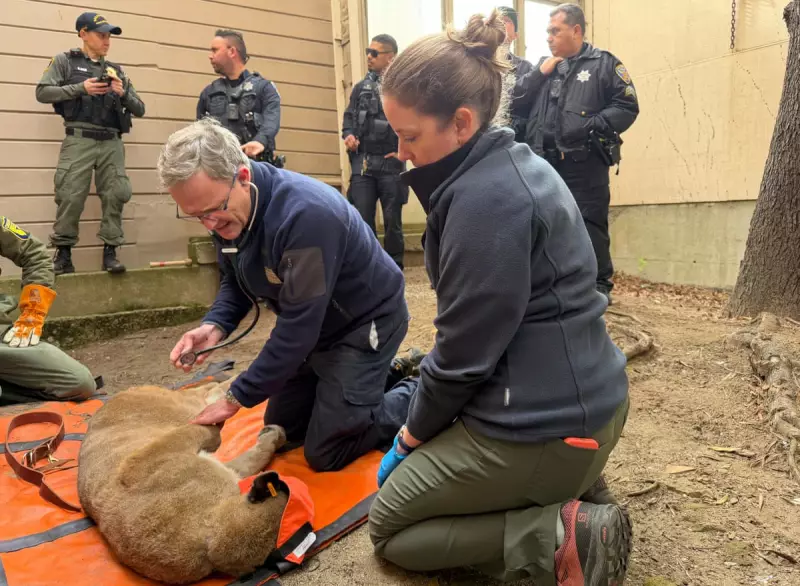
The primary subject of the news report was a 77-pound male mountain lion, approximately two years old, that had been spotted roaming San Francisco streets. Initial sightings were reported late on Monday, with further observations occurring early Tuesday around Lafayette Park.
San Francisco Animal Care and Control officers eventually located the young cougar wedged between buildings on California Street, between Laguna and Octavia. Authorities closed nearby streets as officials used several tranquiliser darts to safely sedate and secure the animal.
Wildlife experts have confirmed that the mountain lion will be released back into its natural habitat. They believe the juvenile male likely entered the city while searching for new territory, a common behaviour among dispersing young mountain lions that may have travelled from the southern hills along the Pacific coast.
San Francisco's Complex Relationship with Urban Wildlife
Both incidents – the mountain lion capture and the coyote's television appearance – serve as striking examples of San Francisco's long-standing coexistence with wildlife within its urban boundaries. While mountain lion sightings remain relatively rare within the city limits, they do occur occasionally as young animals venture into urban areas.
Coyotes, by contrast, have become a relatively common sight in San Francisco's numerous parks and green spaces, having adapted remarkably well to urban environments. Their presence in the city has become increasingly normalised over recent years.
Recent Coyote Headlines in the Bay Area
Perhaps the television-appearing coyote felt inspired by a relative who recently made headlines in the Bay Area. Earlier in January 2026, another coyote stunned observers by swimming to Alcatraz Island, braving the treacherous waters surrounding the notorious former prison in full view of tourists recording video.
That particular coyote is believed to be the first ever to reach Alcatraz by swimming, covering approximately 1.25 miles (2 kilometres) from San Francisco or nearby islands where coyotes have been previously spotted. While the motivation for the swim remains uncertain, the remarkable feat captured public imagination and highlighted the extraordinary adaptability of urban coyotes.

These consecutive wildlife incidents underscore the dynamic and sometimes unpredictable relationship between urban development and natural ecosystems in California's coastal cities. As human populations expand into traditional wildlife habitats, such encounters between species are likely to continue, creating both challenges for authorities and unexpected moments of natural theatre for residents and viewers alike.