New Book Reveals Overlooked World of Female Birdsong
When we hear the melodious call of a bird from a high branch, conventional wisdom often tells us it is likely a male—singing to claim territory or serenade a potential mate. However, as the annual dawn chorus reaches its peak this spring, a new guidebook is urging us to reconsider this assumption and tune into the hidden world of female birdsong.
Correcting Historical Under-Representation
The songs, sounds, and sights of female birds have historically been neglected in field guides and sound archives. In 2016, a mere 0.01% of bird sounds in the global Xeno-Canto sound library were labelled as female, while another archive recorded just 0.03% female sounds in a 2018 study. This under-representation is now being addressed by The Sound Approach to Birding 2, a new book that aims to properly explain and highlight female birdsong.
According to Lucy McRobert, a writer and researcher who studied the issue for the guidebook, female birds sing for various reasons, including territorial displays, warding off other females, and attracting additional males. "We've got a completely false narrative around female bird sounds and female birdsong," McRobert said. "The common narrative is that males sing to compete for territory and female attention. Actually, the situation is far more complicated than that. Female birds do sing. Many species have female song repertoires, and you can separate some males and females by song."

Global Insights and Surprising Revelations
Male European ornithologists were not necessarily sexist, but they exported their assumptions about male birdsong worldwide, based on the predominance of male song among songbirds in the Western Palearctic. In reality, globally, up to 70% of female bird species sing. Among many tropical birds, females sing just as vividly as males—engaging in duets for pair bonding, defending territories, or advertising availability.
The book comes with its own library of 300 sounds from 200 species, accessible via web or app. These clips are drawn from the larger online archive of Sound Approach, a birdsong project founded in 2000, which has confirmed recordings of females for 41% of species in the Western Palearctic, a region encompassing Europe, north Africa, and most of the Middle East.
Mark Constantine, author of the new book and co-founder of Lush cosmetics, shared his enthusiasm: "Everything we believe about our birdsong isn't true. I love the fact that Donald Duck is actually a female—he quacks like a female. Most people don't realise that the female mallards quack and the males don't."
Inspiring Change and Future Research
Constantine was inspired to examine female bird sounds more closely by Jasmine Donahaye, author of Birdsplaining, which critiques the sexism in field guides from the 1950s to the 1980s. Donahaye noted how male birds were often depicted in "upright, bold, declarative" positions, while females were shown in the background, "bent over, submissive and demure." She explained, "Female birds are always described in these field guides in relation to the description of male birds. She's always 'paler' or 'duller'—some kind of negation of him."
Constantine asked McRobert to "Donahaye" the new book, ensuring female bird sound was fully considered, leading to surprising revelations:

- Alpine accentor females sing an irresistible song when alone, attracting male company and copulation, with older females who lay larger clutches having more elaborate songs.
- The tawny owl's "tu-whit" call is often thought to be female, answered by a male's "to-who," but both sexes can make either call. Constantine suggests Shakespeare's "tu-whit, to-who" actually matches the long-eared owl, while tawny owls sound more like "ker-wick" followed by a quavering "woooo."
- Female robins sing during certain winter periods, as proven by ringing and recording, though distinguishing features of their song remain unidentified.
Constantine also argues that female birds influence song trends, with research showing males who sing in the latest style gain better territories and mates. "The female bird conducts the orchestra. She chooses in all regards what the male birds are going to sing—that's mind-boggling," he said.
Donahaye expressed hope for future insights: "How much have we missed because we weren't asking a question because the assumption was that males sing for all these reasons and females don't sing? It will be very interesting to see what more research shows up."
Examples of Female Birdsong
Mallard (Anas platyrhynchos): Females quack, while males produce a quieter rasping call. This challenges common perceptions, as seen with Donald Duck's quack resembling a female.
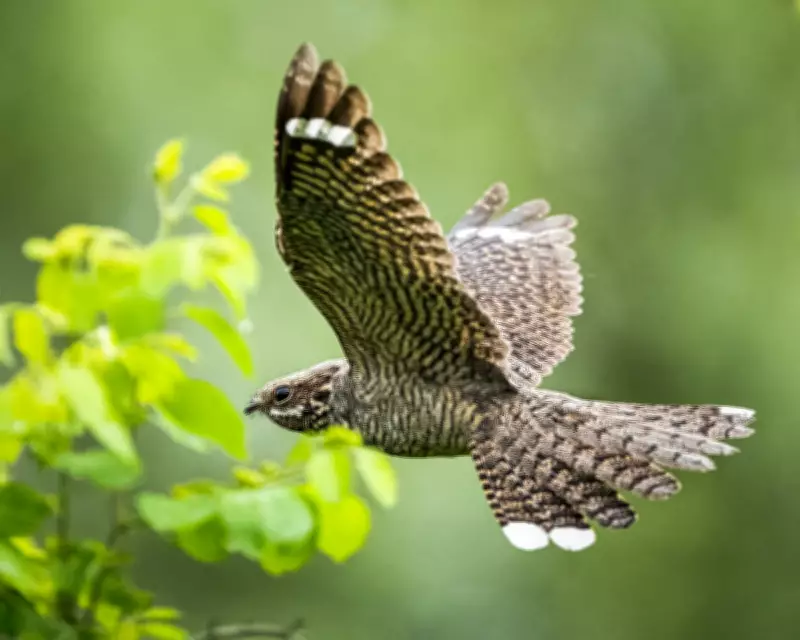
Nightjar (Caprimulgus europaeus): Both sexes produce a distinctive nocturnal "churring" sound, though females do so less frequently, such as when moving nest sites.
Barn Swallow (Hirundo rustica): Females sing alongside males during courtship, using twitter-warbles and rapid-fire whirrs. Females may also jam male songs to prevent them from advertising to other females.