The familiar harbingers of winter, the fieldfare and redwing, have made a dramatic and belated arrival across the British countryside following the sharp drop in temperatures around the New Year.
A Frosty Welcome for Winter Visitors
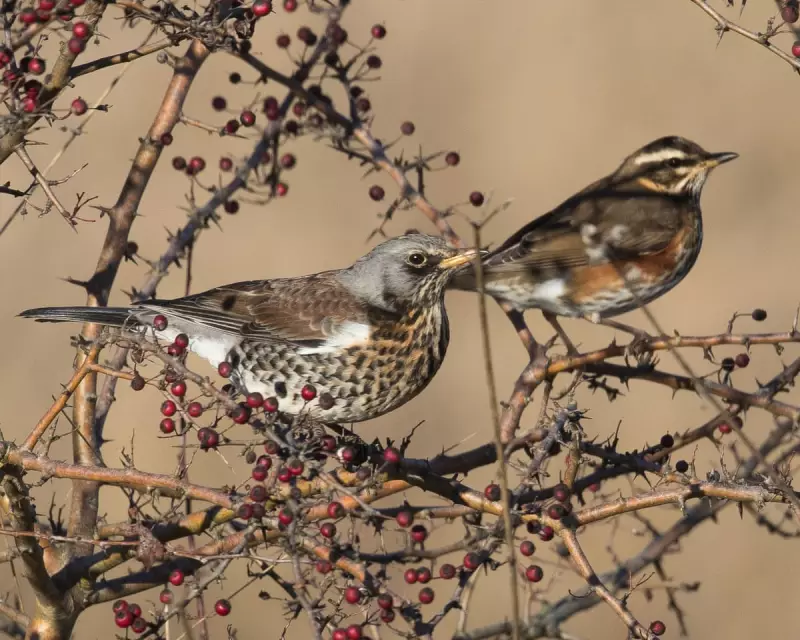
For many birdwatchers, the autumn and winter months are defined by the presence of these two charismatic thrush species, much as swallows and swifts signal summer. However, this season was marked by an unusual absence. In areas like Somerset, hedgerows laden with uneaten hawthorn berries stood quiet, lacking the usual bustling activity of these migratory birds.
This all changed with the recent cold spell. Over 600,000 fieldfares and 700,000 redwings have now crossed the North Sea to spend the winter in the UK. Their sudden appearance has transformed frosty landscapes, with large flocks erupting from fields and hedges during the early morning.

Identifying Our Seasonal Guests
On closer inspection, bird enthusiasts can distinguish the two species by their distinct markings. The redwing, a smaller and neater bird, is notable for its rusty-red flanks and a bold, creamy stripe above its eye. The larger, more angular fieldfare presents a striking palette of a grey head, chestnut back, and a yellowish breast heavily speckled with black.
The air is now filled with the fieldfare's distinctive 'chacking' call, a sound that echoes across frost-hardened earth and signals the true onset of the winter birdwatching season.
Migration Patterns and an Uncertain Future
These birds undertake remarkable journeys. They spend roughly half the year in the UK before departing in spring to breed. Fieldfares travel to eastern Europe, while redwings head to Iceland, with both species overlapping in Scandinavia.
A tiny number of pairs, perhaps a dozen redwings and even fewer fieldfares, attempt to breed in northern Britain. However, climate breakdown is causing this already small number to fall, threatening their status as UK breeding birds. A pressing question for conservationists is whether warmer winters will one day mean these winter visitors stop coming altogether.
For now, their vibrant presence enlivens the British winter. Their sudden, frost-driven arrival serves as a powerful reminder of the intricate links between weather, migration, and the changing rhythms of the natural world on our doorstep.