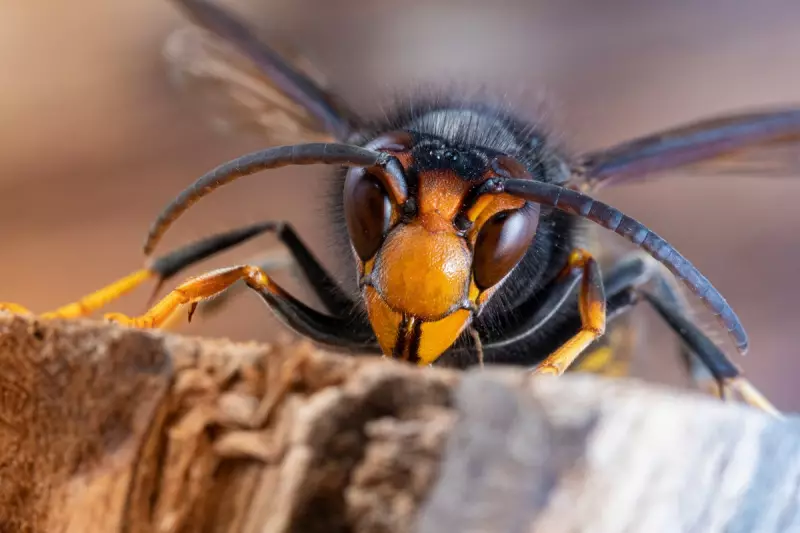
A significant environmental alert has been issued following the first confirmed discovery of an Asian hornet nest in Wales, located near the town of Wrexham. This marks a concerning milestone as the invasive insect species, known for its devastating impact on honeybee populations, establishes a foothold in Welsh territory for the very first time.
Invasive Predator Threatens Local Ecosystems
The Asian hornet, also referred to as the yellow-legged hornet or Asian predatory wasp, is indigenous to Southeast Asia. It initially arrived in Europe approximately two decades ago, transported in a cargo of pottery from China to France. Since then, it has spread rapidly across the continent, posing a severe threat to native pollinators.
This voracious predator primarily preys on honeybees, with a single hornet capable of killing up to fifty bees in a single day. This feeding behaviour has led to the devastation of bee colonies in countries like France and Italy, where the species has become established.

UK Presence and Containment Efforts
The hornet was first sighted in the United Kingdom in 2016. Since that initial appearance, there have been regular confirmed sightings, with forty-four recorded in 2024 alone. Most of these occurrences have been concentrated in Kent and East Sussex.
Authorities have implemented a rapid response strategy to destroy individual hornets and their nests, which has so far been successful in preventing the species from becoming widely established across Britain. The discovery of the deceased nest in Wales represents a new front in this ongoing battle.
Welsh Government Calls for Public Vigilance
The finding near Wrexham has prompted immediate action from the Welsh Government. Officials are urging residents to remain "vigilant" in the coming months and to report any suspected sightings of the insect immediately.
Huw Irranca-Davies, the Deputy First Minister of Wales, emphasised the importance of public awareness and cooperation. "The National Bee Unit has years of experience tracking and locating yellow-legged hornets so their expertise will be invaluable in helping us take action against the insect in Wales," he stated.
Irranca-Davies extended thanks to beekeepers and members of the public for their continued alertness. He stressed the need for everyone to familiarise themselves with the hornet's appearance, particularly as warmer spring and summer weather approaches, which is when the insects become more active.
Understanding the Hornet's Diet and Impact
While the Asian hornet is a predator of crucial pollinators like honeybees, it is not generally aggressive towards humans unless provoked. However, its ecological impact is severe.
Groundbreaking research conducted last year by scientists from the University of Exeter provided detailed insights into the hornet's feeding habits. Using a genetic analysis technique called "deep sequencing," researchers examined the gut contents of over 1,500 hornet larvae from 103 nests across Jersey, France, Spain, and the UK.
The study identified an astonishing 1,449 different prey items that adult hornets had fed to their larvae. More than half of these (55%) could be pinpointed to a specific species. The prey spectrum was remarkably broad, including:
- A wide variety of flies
- Various wasp species
- Multiple bee species
- Butterflies and moths
- Spiders
The most commonly found prey were honeybees, common wasps, and blow flies. Crucially, honeybees were present in all nests and almost every sample analysed, confirming the hornet's strong preference for them.
Opportunistic Feeding and Broader Ecological Consequences
The research revealed that Asian hornets are highly "opportunistic" predators. While they favour honeybees, they will readily prey on any abundant creatures in the vicinity of their nests. This adaptability makes them a particularly formidable invasive species.
Among the top fifty prey species identified in the study were Europe's three most important crop pollinators:

- The honeybee
- The buff-tailed bumblebee
- The red-tailed bumblebee
The presence of these critical pollinators in the hornet's diet underscores the potential for widespread agricultural and ecological disruption if the species becomes established in new regions like Wales. The discovery near Wrexham serves as a stark warning and a call to action for continued monitoring and public reporting to protect native wildlife and food security.