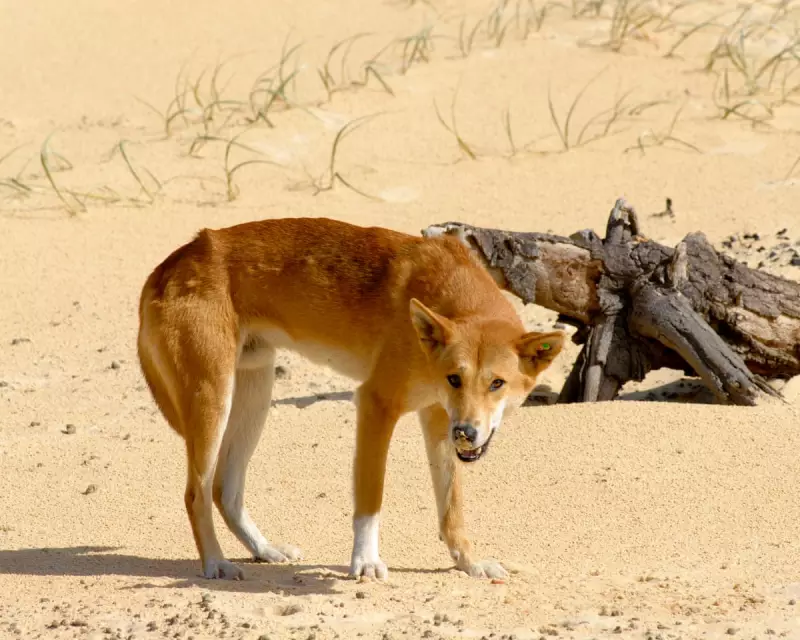
Concerns are mounting over the future of K'gari's dingo population following the tragic death of a Canadian backpacker, with experts warning that a government-ordered cull could trigger an extinction crisis. The Queensland administration has confirmed the killing of six out of a ten-strong pack linked to the incident, a move that has drawn sharp criticism from scientists and traditional owners alike.
Genetic Vulnerability and Conservation Risks
Dr Kylie Cairns, a leading dingo genetics specialist at the University of New South Wales, expressed deep frustration at the decision, highlighting the precarious state of the island's dingoes. She pointed out that the population, estimated at between 70 and 200 individuals, suffers from low genetic diversity and high levels of inbreeding due to its isolation over thousands of years.
Removing ten animals represents a significant blow, potentially having a disproportionately large impact on their survival. Dr Cairns cautioned that this genetically constrained group is already susceptible to diseases, and further reductions could lead to pups being born with disfigurements or mothers experiencing stillbirths.

Extinction Vortex Looming
The expert described a scenario where the loss of these dingoes could push the population into an extinction vortex, a downward spiral from which recovery becomes increasingly difficult. She emphasised that scientific evidence on the dingoes' fragile state is being overlooked in the decision-making process, undermining conservation efforts.
Moreover, killing the pack may disrupt social structures, prompting other dingo family groups to move into the vacant territory, which could exacerbate conflicts rather than resolve them. We are punishing animals for doing what wild animals do in a way that likely won't help people in the future, Dr Cairns remarked, questioning the efficacy of such measures.
Human Behaviour Versus Animal Management
Dr Bradley Smith, an authority on human-dingo interactions at Central Queensland University, labelled the cull as a kneejerk reaction and poor management strategy. He argued that culling fails to address the root cause of incidents, which often stems from human behaviour rather than inherent aggression in dingoes.
This is a people problem, he stated, advocating for changes in how tourists interact with wildlife instead of lethal control. Dr Smith noted that current aggressive behaviour in male dingoes is cyclical, linked to breeding seasons and elevated testosterone levels, and would likely subside in a few months.
Family Reactions and Government Stance
The parents of the deceased tourist, Piper James, offered contrasting perspectives on the cull. Her mother, Angela, expressed that Piper would not have wanted harm to come to the dingoes, acknowledging they were there first. Meanwhile, her father, Todd, suggested that while Piper might not have supported the killing, it could be necessary for island safety due to the pack's behaviour.
The Queensland government defended its actions, citing further aggressive behaviour observed by rangers since the tragedy and asserting that the decision was informed and in the public interest. Environment and Tourism Minister Andrew Powell backed the rangers' advice, emphasising public safety as a priority.
Broader Context and Historical Precedents
This incident marks the first fatal dingo attack on K'gari since 2001, when a nine-year-old boy's death led to the culling of 32 animals. The island, a World Heritage-listed site formerly known as Fraser Island, has faced ongoing challenges balancing tourism with wildlife conservation.
Advisers have previously raised alarms about over-tourism damaging the ecosystem, though the current government has ruled out capping visitor numbers. The tragedy underscores the delicate coexistence between humans and dingoes in this unique environment, prompting calls for more sustainable management approaches.
As the coroner investigates the exact cause of death, with preliminary findings indicating drowning and dingo bite injuries, the debate continues over how best to protect both people and the island's iconic dingo population from future harm.