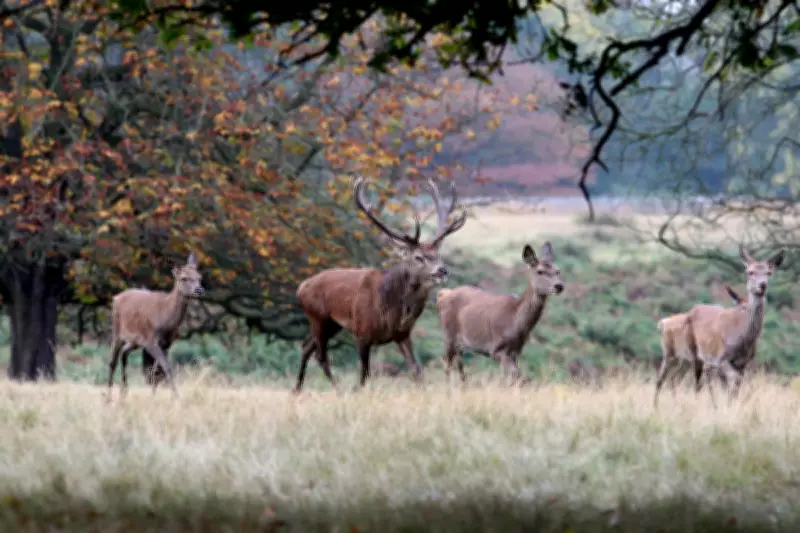
The Lynx Effect: Predator Scent Curbs Deer Browsing, Study Reveals
New research has uncovered a fascinating natural phenomenon: the mere smell of predators such as lynx is enough to significantly reduce the time deer spend browsing on young trees. This discovery offers a promising tool for aiding forest recovery, according to the scientists behind the study. The findings come at a pivotal moment, as conservationists actively explore the possibility of reintroducing lynx to Britain, where they vanished some 800 years ago.
Study Details and Methodology
The research, published in the Journal of Applied Ecology by the British Ecological Society, was conducted in forested areas of south-eastern Germany where wolves and lynx have been successfully reintroduced. Scientists from the University of Freiburg meticulously designed an experiment across 11 separate locations. They applied lynx and wolf urine and scat to plots of saplings, using cow scent and water as control variables for comparison.
To monitor the effects, the team employed camera traps to record the reactions of red and roe deer within the woodlands. They also carefully assessed the saplings planted in each plot for any signs of browsing damage over the study period.

Key Findings and Behavioural Insights
The results were striking. Deer visited the plots infused with predator scents far less frequently and spent considerably less time browsing there, particularly in areas marked with the scent of lynx. This behavioural shift directly translated to significantly less damage to the young trees in those plots.
Interestingly, the deer demonstrated a stronger aversion to the scent of lynx compared to that of wolves. The researchers attribute this to the lynx's nature as an ambush predator, which stalks its prey from close range, making its scent a more immediate and potent signal of danger. They also noted that during the study, wolves were still establishing their presence in the area, whereas the deer had more historical experience with lynx as predators.
Implications for UK Conservation and Reintroduction Debates
While the experiment took place in forests with existing predator populations, the researchers believe the principles apply more broadly. Lead researcher Walter Di Nicola stated that in places like the UK, where large predators have been absent for generations, similar but "weaker" effects on deer behaviour would be expected. "Deer still have some innate fear of predators, even if those predators have been absent for generations," he explained.
This research adds substantial weight to ongoing debates about predator reintroduction. A recent assessment has identified Northumberland as a potential thriving habitat for lynx, with 72% of local residents in the project area expressing support for a potential reintroduction. Concurrently, rewilding charities have launched a consultation regarding a potential reintroduction to the Scottish Highlands, although the Scottish government has currently stated it does not intend to permit the return of "large carnivores" in the foreseeable future.
A Natural Solution for Forest Ecosystems
The study effectively demonstrates how simulating a landscape of fear can alter deer behaviour and alleviate browsing pressure on vulnerable saplings. The reintroduction of lynx, which primarily prey on deer, would offer a dual benefit: directly reducing herbivore numbers and indirectly modifying their feeding patterns through scent-based deterrence.
Conservation strategies that incorporate large carnivores could therefore present a natural, low-intervention solution to the pervasive problem of over-browsing in woodlands. As Di Nicola emphasised, "At a time when debates around large carnivore conservation often focus on conflicts, our study highlights the benefits these species bring to landscapes." This research underscores the profound, yet subtle, role predators play in maintaining healthy and regenerating forest ecosystems.