Urban Mountain Lion Captured After Extensive San Francisco Prowl
A young mountain lion was successfully captured in a residential area of San Francisco on Tuesday morning, concluding a dramatic 30-hour urban prowl that had alarmed local residents. The incident highlights the increasing encounters between wildlife and urban environments in California.
Pacific Heights Capture Operation
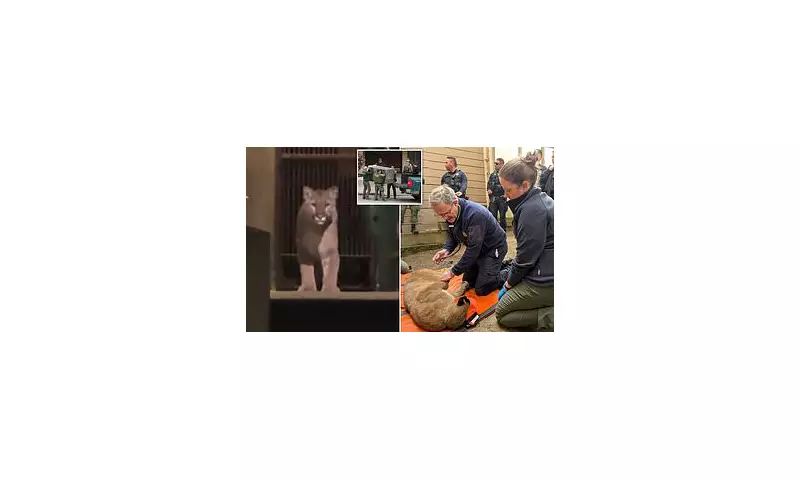
According to reports from the San Francisco Chronicle, the 2-year-old male mountain lion weighing 77 pounds was tranquilised and captured just before 10:30am in the yard of a Pacific Heights apartment building. The operation was conducted by officials from the California Department of Fish and Wildlife, who had been tracking the animal's movements through the city.
Mariano Elias, a spokesperson for the San Francisco Fire Department, confirmed to media outlets that 'He is doing OK. Fish and Wildlife will take him and release him to a natural habitat.' The capture followed extensive monitoring after the mountain lion was first spotted roaming the Pacific Heights neighborhood on Monday night.

Extended Urban Adventure
The mountain lion, identified as 157M and originally born in Santa Clara County, had been running loose throughout San Francisco for approximately 30 hours before his capture. Officials had been attempting to track the animal through a Puma Project collar, but Krysten Kellum, an information officer with the California Department of Fish and Wildlife, revealed that the tracking device had fallen off, complicating efforts to monitor his movements.
Residents received formal warnings about the roaming predator on Monday night, with authorities advising that anyone encountering the animal should slowly back away rather than approach. Madrey Hilton described her early morning encounter to the Chronicle, recalling 'It was so big … not just a regular cat' when she spotted the mountain lion at 6am on Monday while in her car.
Tranquilisation and Relocation Plans
The capture operation intensified when officials spotted the mountain lion around 2am on Tuesday near two large Pacific Heights apartment buildings. As the animal sought refuge in a small space between structures, wildlife officers administered multiple tranquiliser shots until the lion became unconscious and could be safely caged.
According to wildlife experts, the mountain lion was likely searching for new hunting grounds, a common behavior for young males establishing their territory. The California Department of Fish and Wildlife plans to relocate 157M to an area ideally without competing males, providing him with better opportunities to establish his own territory in a more suitable natural environment.
Tracking and Identification
The captured lion will receive a new tracking device to replace the previous collar that had become detached. This technology allows wildlife officials to monitor mountain lion movements and better understand their behavior patterns, particularly as urban expansion continues to encroach on traditional wildlife habitats.
Stephen Sherrill, a San Francisco supervisor whose district includes the capture area, described the incident as a 'true San Francisco moment' to SFGate, emphasizing that 'the critical thing is to protect the safety of everybody in the most humane way possible.'
Broader California Context
This incident follows another notable mountain lion encounter in California recently. On January 21, a six-month-old female cub was observed lying calmly on the centerline of Hillcrest Parkway in Los Angeles during early morning hours. The cub eventually scampered away, prompting an urgent search before being safely rescued from a nearby yard around 5am.
These incidents underscore the complex relationship between California's urban centers and native wildlife populations. Mountain lions, known by various names including cougars, panthers, and pumas across different regions, are increasingly appearing in populated areas as their traditional habitats face pressure from development and human activity.

Wildlife officials continue to emphasize the importance of coexistence strategies and proper protocols for urban wildlife encounters, particularly as climate change and habitat fragmentation drive more animals into human-dominated landscapes.