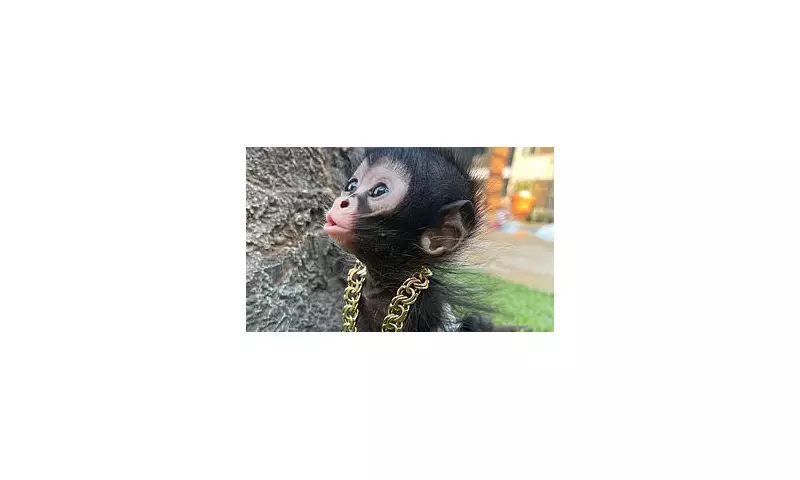
Thousands of privately owned primates across the United Kingdom could be confiscated and potentially euthanised as stringent new animal welfare regulations come into force. The impending ban, which mandates zoo-level living conditions for all kept monkeys, has raised significant concerns about the fate of an estimated 4,000 to 5,000 animals currently residing in domestic settings.
A Drastic Shift in Primate Welfare Legislation
Under legislation introduced by Rishi Sunak's government and signed into law in 2024, private keepers of primates such as marmosets, capuchins, and squirrel monkeys must now prove they can provide exceptionally high standards of care. From April 6th, owners are legally required to obtain a licence by demonstrating their ability to meet 'zoo-level standards', a benchmark previously reserved for professional animal institutions.
Alarmingly Low Licence Applications
Despite applications being open for a full year, a mere three licence requests had been submitted to local authorities in England by the beginning of November, according to data obtained through a freedom of information request. This startlingly low figure suggests widespread non-compliance or inability to meet the rigorous new requirements among the primate-owning community.

The standards themselves are exceptionally demanding, requiring indoor and outdoor access, sufficiently large enclosures with adequate cover, and specific UV light levels to mimic natural habitats. Lord Douglas-Miller, the former Animal Welfare Minister, emphasised that anyone failing to provide these zoo-equivalent welfare standards faces substantial fines and removal of their primates from care.
The Grim Reality for Non-Compliant Owners
With the vast majority of owners unlikely to meet these elevated standards, thousands of primates face an uncertain future. While local authorities have indicated they will allow some time for owners to adapt to the new regulations, the practical challenges are immense. Many primates kept as pets currently live in poor conditions without appropriate diets or sufficient natural daylight, making rapid compliance nearly impossible for most households.
Chris Lewis of the wildlife charity Born Free explained the difficult decisions facing authorities: 'As soon as the local licensing authority seizes an animal, it becomes their responsibility. If primates have serious health conditions, there will have to be decisions made as to what is the kindest thing for that animal.' This statement highlights the tragic possibility that ill or unsuitable primates may face euthanasia rather than rehoming.
The Social Media Influence Behind the Trend
The recent surge in keeping primates as pets has been partly attributed to social media trends and celebrity influence. Notable figures like Justin Bieber, whose pet Capuchin monkey OG Mally was confiscated by German customs officials in 2013, have inadvertently popularised primate ownership. This trend has led to many animals being kept in wholly inappropriate domestic environments that cannot meet their complex biological and psychological needs.
David Bowles, Head of Public Affairs at the RSPCA, strongly supported the legislation, stating: 'Meeting the needs of monkeys and other primates is practically impossible to do in a household, domestic environment. That's why this legislation will be a really important moment for animal welfare – ensuring primates can only be kept in an appropriate environment.' He further noted that RSPCA officers frequently encounter monkeys living in unsuitable surroundings with inappropriate diets, often suffering behind closed doors.
Implementation Challenges and Government Response
The Local Government Association has raised concerns about practical implementation, stating: 'It is essential that the new licensing process for keeping primates is fully funded and that councils are supported to implement it.' This highlights the administrative and financial burdens facing local authorities as they prepare to enforce these groundbreaking regulations.

The Department for Environment, Food and Rural Affairs (Defra) has reiterated the government's position: 'Primates are highly intelligent and complex animals, and new laws mean that, where they are kept by private keepers, they must be provided with zoo-level welfare standards. We urge private keepers to make sure they are licensed and complying with these high welfare standards.' Defra officials confirm they are working closely with local authorities to establish effective enforcement mechanisms for the new licensing scheme.
As the April deadline approaches, the future remains precarious for thousands of primates across Britain. While the legislation represents a significant advancement in animal welfare protection, its implementation may result in the heartbreaking seizure of beloved pets, with only the healthiest animals likely to find sanctuary placements. The coming months will reveal whether owners can miraculously meet the extraordinary standards or whether Britain will witness one of the largest-scale animal welfare interventions in recent history.