Svalbard Polar Bears Defy Climate Expectations by Gaining Body Fat
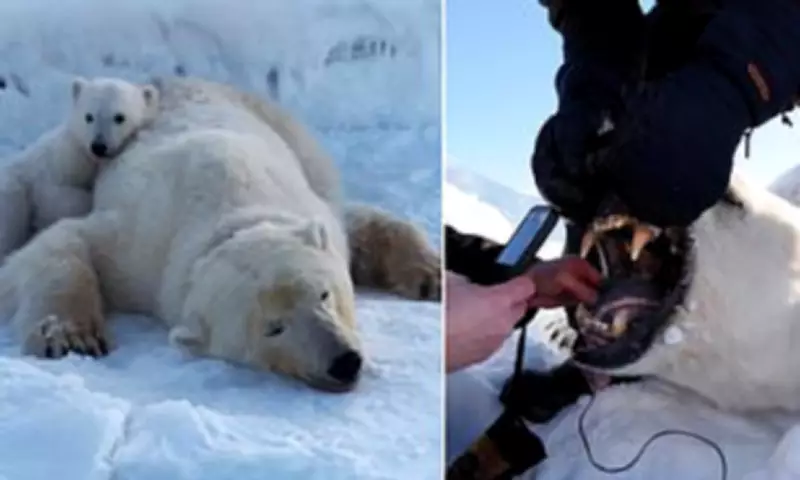
A groundbreaking study published on Thursday has revealed a surprising trend among polar bears in Norway's remote Svalbard archipelago. Contrary to expectations, these iconic Arctic predators have been bulking up rather than wasting away, even as their icy hunting grounds shrink at an alarming rate.
Unexpected Adaptation in a Warming Arctic
The research, published in the prestigious journal Scientific Reports, documents how polar bears in the Barents Sea region have actually improved their physical condition over recent decades. This finding directly contradicts observations from other Arctic regions where polar bear populations have suffered significant declines in body condition due to climate change.
'The increase in body condition during a period of significant loss of sea ice was a surprise,' acknowledged Jon Aars, the study's lead author and a scientist at the Norwegian Polar Institute. 'Had I been asked to predict what would happen to the bears when I started working at NPI in 2003, I would have declared they would likely be skinnier.'

Scientific Analysis Reveals Counterintuitive Results
Scientists conducted comprehensive analysis of body condition index (BCI) measurements from 770 adult polar bears between 1995 and 2019. Their findings revealed:
- Body condition initially declined until around 2000
- Subsequent years showed consistent improvement despite accelerating sea ice loss
- Current physical health surpasses levels recorded 25 years ago
The Barents Sea has experienced particularly dramatic warming, with temperatures rising two to four times faster than the global average. Sea ice habitat has been disappearing at a rate of four days per year between 1979 and 2014 - more than twice as fast as other polar bear habitats.
Dietary Adaptation Explains Weight Gain
The study identifies two key factors behind the bears' unexpected weight gain:
- Land-based prey consumption: Polar bears have increasingly feasted on reindeer and walruses - species that have recovered from historical over-exploitation by humans
- Concentrated seal hunting: Warmer temperatures have caused ringed seals to crowd into smaller remaining ice areas, making them easier targets for bears
Sarah Cubaynes, a researcher at the French environmental research centre CEFE who was not involved in the study, noted: 'The Svalbard findings may seem surprising because they contradict results from other polar bear populations. For example, the physical condition of polar bears in Hudson Bay has greatly declined due to warming.'
Complex Ecological Relationships
The research underscores the intricate relationship between habitat changes, ecosystem structure, and animal energy dynamics. The situation in Svalbard indicates that polar bear survival strategies are more complex than previously understood, with bears demonstrating remarkable adaptability to changing conditions.
'This we expect to see before things get even worse, and survival and reproduction decreases significantly,' Aars explained regarding typical patterns of polar bear decline. The unexpected results highlight the importance of not extrapolating findings from one Arctic region to another, as local ecological factors can create dramatically different outcomes.
Cautious Optimism with Future Concerns
While researchers acknowledge the improved body condition of Svalbard's polar bears represents 'good news' in the short term, they caution that this positive trend may not continue indefinitely. The study warns that these animals are 'likely to be negatively affected in the near future' by continued planetary warming and sea ice reduction.
Aars emphasized that despite their current adaptation: 'We think they still depend on hunting seals on the ice.' The bears' ability to prey on walruses and reindeer provides a temporary buffer, but their long-term survival remains intrinsically linked to sea ice availability for traditional seal hunting.

The total polar bear population of the Barents Sea was estimated between 1,900 and 3,600 in 2004 and may have increased since then, though researchers emphasize that population stability depends on maintaining the complex ecological balance that currently supports their unexpected physical improvement.