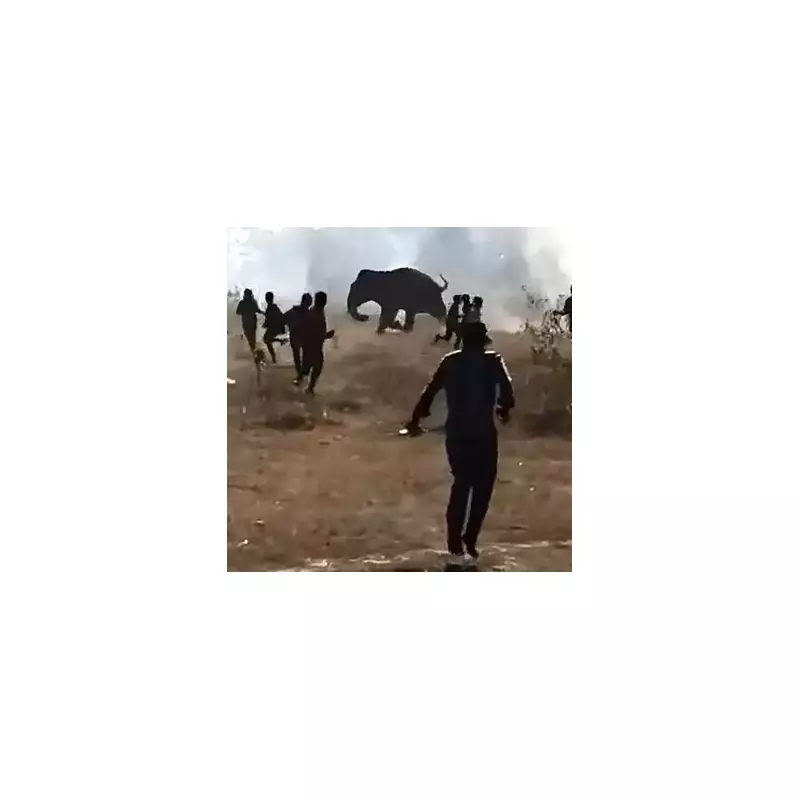
A community in eastern India is living in terror, with many residents forced to abandon their homes and sleep on rooftops, as a violent wild elephant continues a deadly rampage that has now claimed 22 lives.
A Deadly Spree Sparks Panic
The one-tusked young male elephant began its destructive path in the West Singhbhum district of Jharkhand on January 1. Since then, it has trampled victims, smashed through walls, and left a trail of devastation. The death toll tragically includes four children and an eight-month-old baby.
Aditya Narayan, a division forest officer for Chaibasa district, described the unprecedented nature of the attacks. "Anyone who came in front of it was trampled. In one family alone four people were killed. It is unprecedented," he stated. He added that while elephants in the aggressive mating phase known as musth are known, they rarely harm people to this extent.

Desperate Measures for Safety
With the elephant still on the loose, villagers are taking extreme precautions for their safety. Many have fled their homes entirely, while others are spending nights on rooftops or other above-ground locations to avoid a fatal encounter. A small group of local villagers has reportedly joined the official efforts to track the animal.
Indian authorities have deployed at least 80 forest officers to the area. Their strategy is to corner the massive creature and subdue it using tranquilliser darts, though these attempts have so far been unsuccessful in ending the threat.
The Growing Human-Elephant Conflict
According to conservation groups like the International Fund for Animal Welfare (IFAW), such tragic incidents are part of a worsening global issue. Human-elephant conflict is rising as human settlements expand and climate change alters habitats, forcing elephants and people into closer and more frequent contact.
IFAW explains that elephants typically attack only when provoked or feeling threatened. However, as resources like food and water become scarcer, competition intensifies. "The competition becomes fierce and life-threatening—for people and wildlife," the group notes. This incident in Jharkhand is a stark and deadly example of the challenges faced in regions where human and animal territories overlap.