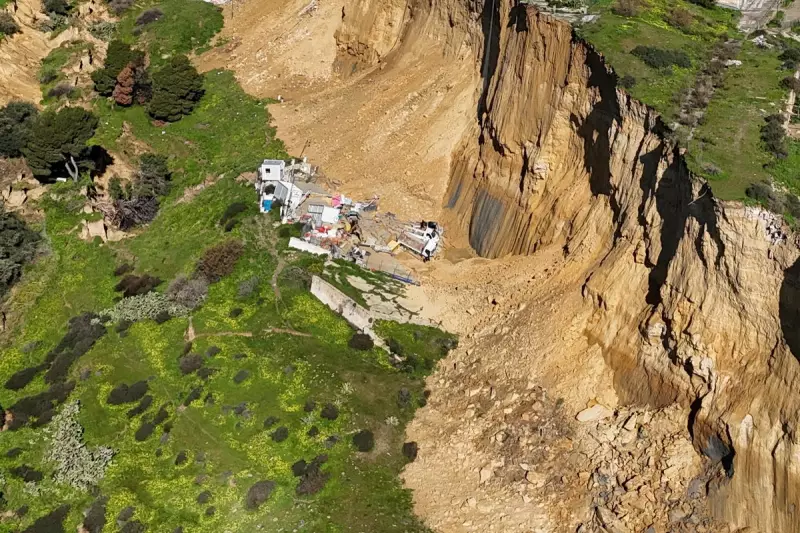
A devastating landslide, triggered by a violent storm, has forced the evacuation of more than 1,500 people from the Sicilian town of Niscemi, leaving homes perilously perched on a crumbling cliff edge. The Italian government has declared a state of emergency for Sicily, Sardinia, and Calabria in response to the severe weather that battered these regions.
Homes Deemed Uninhabitable as Residents Face Relocation
Many homes in Niscemi are now situated on the very edge of the cliff, with some structures deemed uninhabitable due to the instability caused by the landslide. Residents are confronting the grim reality of permanent relocation, as authorities assess the safety of the area. The situation has sparked significant distress among the local population, who are grappling with the loss of their properties and communities.
Financial Impact and Government Response
Damage estimates from the storm in Sicily alone are believed to exceed €1 billion, highlighting the extensive destruction wrought by the extreme weather. In response, the Italian administration has allocated €100 million for initial emergency needs, including support for evacuees and infrastructure repairs. This funding aims to address immediate humanitarian concerns while longer-term recovery plans are developed.

Resident Anger Over Previous Landslide Warnings
Residents have expressed anger and frustration, alleging that previous landslides in Niscemi were ignored by authorities, which they believe contributed to the current crisis. This has raised questions about local governance and disaster preparedness, with calls for improved monitoring and preventive measures to avoid similar incidents in the future.
The ongoing landslide continues to pose a threat, with Italy’s Civil Protection Chief warning that more evacuations may be necessary if conditions worsen. The event underscores the vulnerability of coastal and hilly regions to climate-related disasters, prompting discussions on resilience and emergency management strategies.