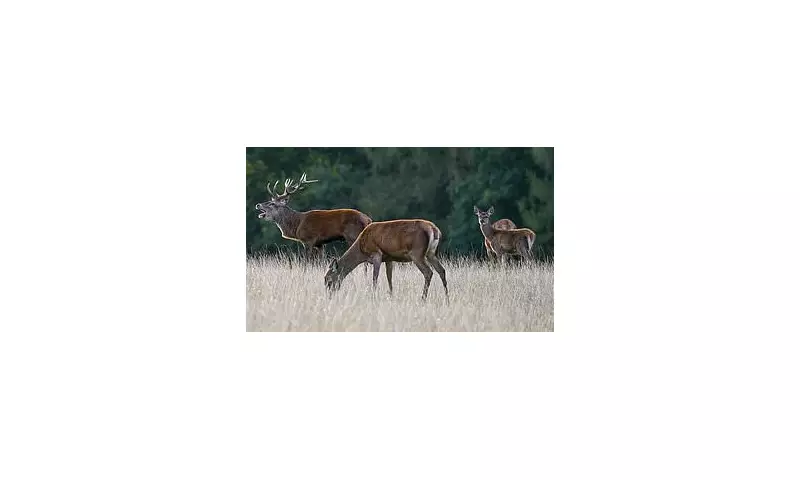
Britain's iconic native red deer are being dangerously outcompeted by a smarter, hardier invasive rival, sparking fears they could follow the red squirrel into catastrophic decline, a new scientific study reveals.
The Relentless Rise of the Sika Deer
Research published in the journal Ecological Solutions and Evidence has uncovered a stark population shift on Scottish estates. Despite increased culling efforts, the number of invasive sika deer grew by 10 per cent in the 2024–25 period. In a direct and worrying contrast, the native red deer population in the same areas fell by 22 per cent.
The sika deer, introduced from east Asia in the 19th century, possess a suite of natural advantages that make them formidable competitors. They are more fertile, can tolerate poorer habitats and harsher weather, and maintain better physical condition on the same amount of food as red deer. Recognisable by their small heads and pointed antlers, their grey winter coat turns brown with distinctive white spots in summer.

A Looming Ecological Crisis
Lead author Calum Brown, from the Karlsruhe Institute of Technology and co–chief scientist at Highlands Rewilding, stated that land managers are witnessing parallels in deer populations with the historical displacement of red squirrels by grey squirrels. "It is often mostly sika and there are very few native deer around, and that might be something that happens more and more," he told the Sunday Telegraph.
Brown warned that current blanket culling approaches, which do not distinguish between species, may be exacerbating the problem. "We could actually move in the wrong direction if sika gets a toehold across larger areas," he said. The situation in Scotland may already be replicating across the country, necessitating a coordinated national and local strategy.
Superior Survival Traits and Hybrid Threat
The sika's dominance stems from superior traits at every life stage. They breed more frequently, survive at higher densities, and consume a wider range of food. Furthermore, they are notoriously difficult to hunt, being a "very clever species" that quickly learns and adapts to threats. They also show greater tolerance to parasites and pathogens.
Experts raise an additional grave concern: sika and red deer can interbreed. The resulting hybrid offspring may inherit competitive advantages, creating an even more complex challenge for the survival of pure native red deer genetics.
Highlands Rewilding, commenting on the study, stated: "Our article highlights the risk that, by managing all deer in the same way, we could inadvertently favour Sika deer over native species." They cautioned that without strategic action, Scotland's landscape could become dominated by a species that is "more invasive, more prolific and harder to manage than its native cousins."
Urgent Call for Targeted Action
The study serves as a direct warning to conservation and land management bodies. To secure the future of Britain's majestic red deer, the UK must focus culling efforts specifically on the invasive sika population. Failure to implement a discerning and effective strategy risks consigning the red deer to the same fate as the red squirrel, whose numbers were decimated following the introduction of the non-native grey squirrel from North America.